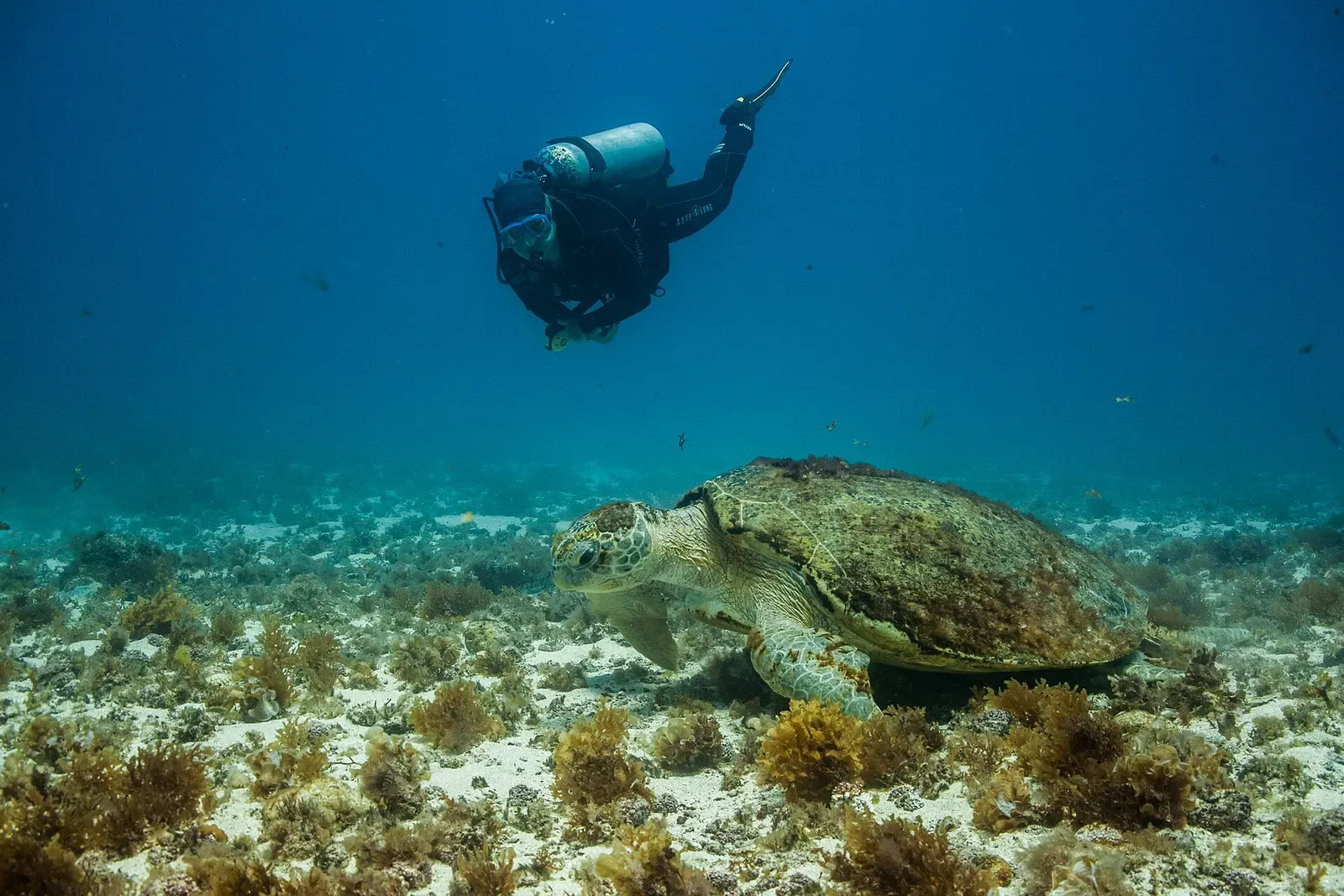
South America · Brazil
Fernando de Noronha
Hundreds of spinner dolphins gather daily in Baía dos Golfinhos.
Photo: João D'Andretta · CC BY-SA 4.0
Fernando de Noronha is a volcanic archipelago 350 km off Brazil's northeast coast, almost entirely protected as a marine national park. Boat dives from Vila dos Remédios reach volcanic pinnacles, small caves and swim-throughs in some of the clearest water on the Brazilian coast, with visibility regularly topping 30 m. Green and hawksbill turtles are resident on the reefs, and a large pod of spinner dolphins gathers daily in Baía dos Golfinhos.
About diving in Fernando de Noronha
Diving here is boat-based and tightly scheduled. Operators load at Porto de Santo Antônio, the island's working harbour, and run morning outings of one or two tanks along the sheltered coast, with afternoon departures when conditions allow. Dives are guided, the number of licensed operators is small, and groups stay modest as a result. Most visitors dive in the morning and keep the afternoon for beaches and trails, so putting your dive days early in a stay leaves room to move them if the wind turns.
The archipelago is the eroded top of an old volcanic massif, and the sites follow that geology: basalt ridges and boulder fields dropping onto pale sand, undercut faces, and short fractures in the rock you can swim through. Most of them sit on the leeward side, the Mar de Dentro; the Atlantic-facing coast takes the swell and is worked far less often. Everything lies close enough together that a skipper can rewrite the plan mid-morning if the wind swings, so whole trips are rarely lost outright.
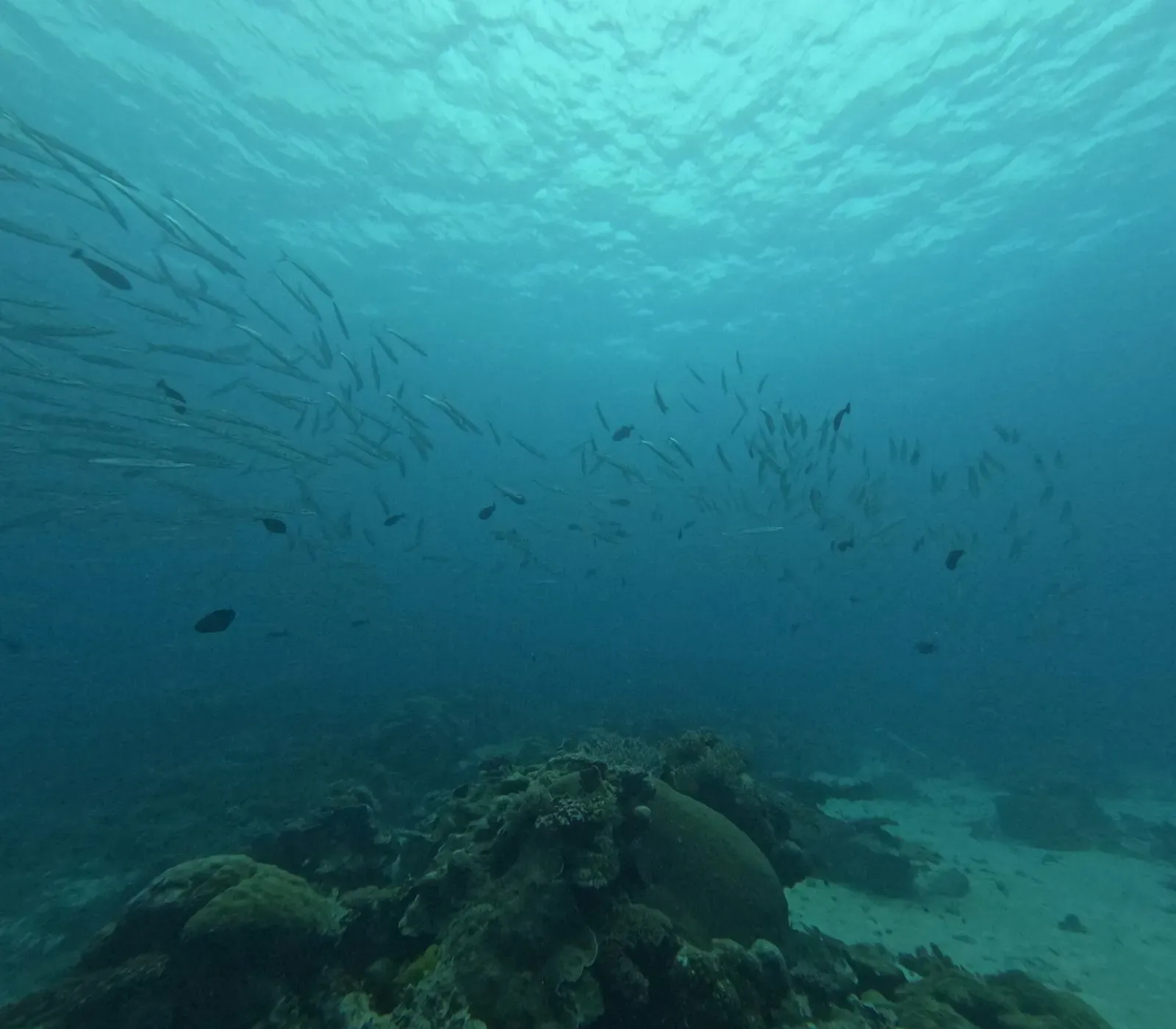
Dolphins are usually met from the boat rather than underwater: the bay where the spinner pod rests is closed to swimmers, and watching happens from the deck or the clifftop lookout above it. On the reef, turtles are habituated enough that they barely shift as you pass, rays cross the open sand, and jacks and barracuda hold in the current lines off the points where the water accelerates.
It suits divers who want an unhurried week with long visibility rather than a technical one, and who accept the cost: beds are limited, boat space is finite, and prices run well above the mainland. The deep and overhead options amount to a handful of dives rather than a programme, so anyone chasing depth or a long wreck list runs out of menu quickly. Travelling with non-divers is easy, though: there are enough trails, beaches and surface boat trips to fill the days nobody spends underwater.
When to dive Fernando de Noronha
| Jan | Feb | Mar | Apr | May | Jun | Jul | Aug | Sep | Oct | Nov | Dec |
|---|---|---|---|---|---|---|---|---|---|---|---|
| Good | Fair | Fair | Fair | Fair | Fair | Fair | Prime | Prime | Prime | Good | Good |
Aug–Oct is peak dry season with the clearest water (up to 50 m); Feb–Jul brings rain and swell that reduce visibility, though diving continues year-round.
Getting there
Flights come from Recife and Natal, and every visitor pays a per-day environmental tax plus a separate national park ticket. Vila dos Remédios and the pousadas around it are the usual base; reaching the harbour and moving around the island means a buggy, a taxi or the single bus route rather than walking.
Wildlife calendar
Turtles, grouper and reef sharks are on the reefs in any month, eagle rays cross the sand flats, and jacks and barracuda school off the exposed points. Spinner dolphins are a year-round fixture rather than a seasonal one, usually seen from the surface. Season shifts how far you can see, not what shows up: Aug–Oct is the clearest stretch, Feb–Jul the murkiest after rain.
Dive types & marine life
- Reef
- Wall
- Wreck
- Cave & cavern
- Drift
- Dolphins
- Sea turtles
- Reef sharks
- Eagle rays
- Barracuda
- Trevally & jacks
- Groupers
Notable dive sites in Fernando de Noronha
Sueste Bay
Sheltered reef with a spiral ascent to 23 m and resident sea turtles.
Corveta Ipiranga
Brazilian Navy corvette wreck at 64 m, for advanced/technical divers only.
Ilha do Meio
Shallow reef with three caves, popular for cavern instruction at 16 m.
Cabeço da Sapata
Dramatic underwater cliffs favored by experienced divers.
Buraco do Inferno
Small cave dive with an air pocket trapped at the ceiling.
Photos from Fernando de Noronha
Aerea100 · CC BY-SA 3.0
João D'Andretta · CC BY 4.0
Augusto Fagner Gomes de Lima · CC BY-SA 3.0
Augusto Fagner Gomes de Lima · CC BY-SA 3.0
Dive videos
Fernando de Noronha Scuba Diving Brazil Nov 2025 · Gary Duguay Scuba Diving on YouTube
Mergulhando em Fernando de Noronha | Scuba diving in Fernando de Noronha, Brazil · Oceano VideoSub on YouTube
Photo credits
- Scuba diver hovering above a loggerhead sea turtle resting on the sandy seabed at Fernando de Noronha by João D'Andretta, CC BY-SA 4.0, via Wikimedia Commons
- View from the water of Morro do Pico, the volcanic peak overlooking Conceição Beach in Fernando de Noronha by Aerea100, CC BY-SA 3.0, via Wikimedia Commons
- A reef parrotfish (Sparisoma amplum) grazing on a coral reef near Fernando de Noronha by João D'Andretta, CC BY 4.0, via Wikimedia Commons
- Turquoise water and white sand at Baía do Sancho, one of Fernando de Noronha's sheltered coves by Augusto Fagner Gomes de Lima, CC BY-SA 3.0, via Wikimedia Commons
- Dive and fishing boats moored in the harbor at Vila dos Remédios, with Morro do Pico rising behind by Augusto Fagner Gomes de Lima, CC BY-SA 3.0, via Wikimedia Commons
Similar destinations
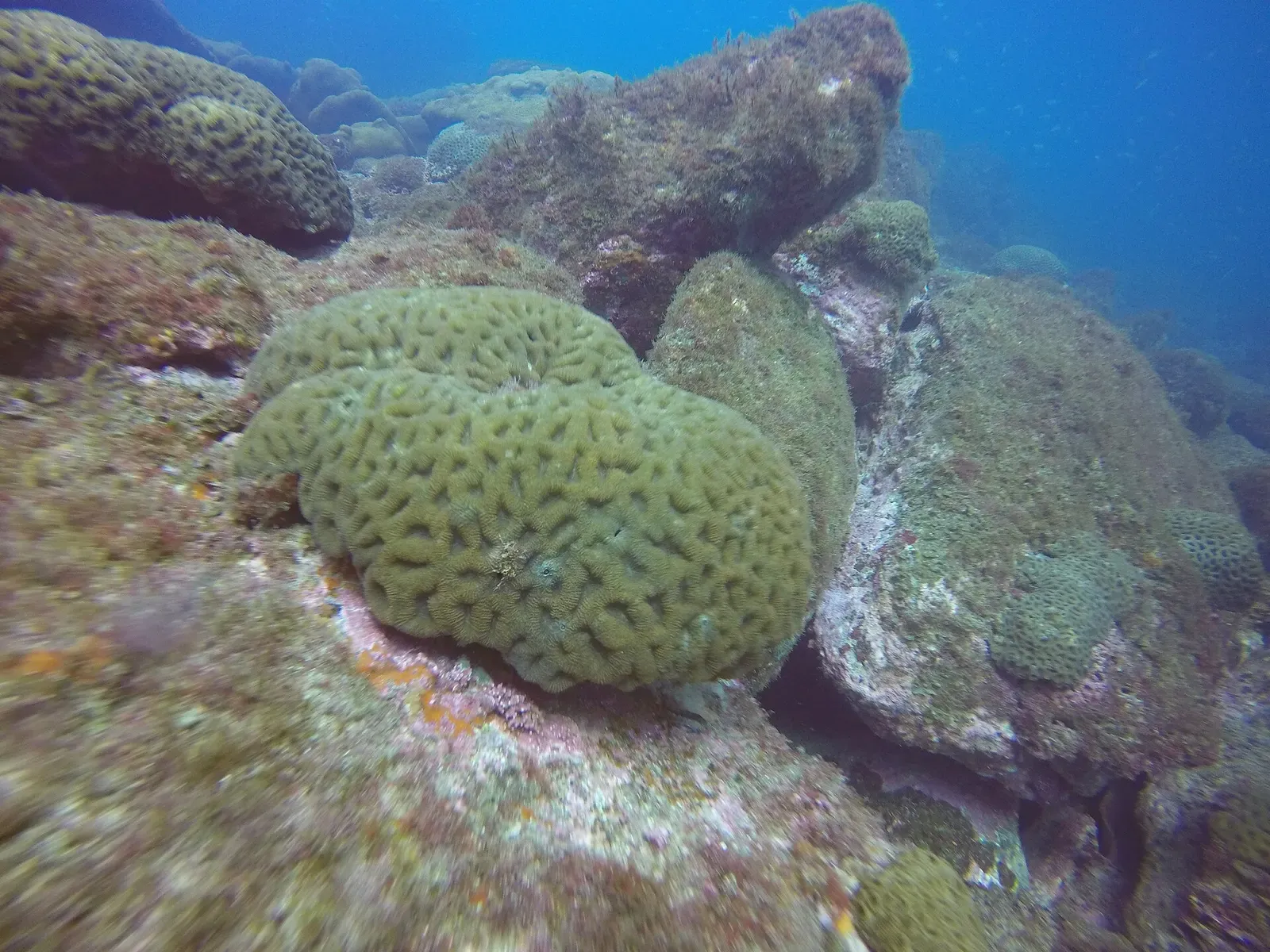
Giant manta rays glide over an offshore granite reef from March through September.
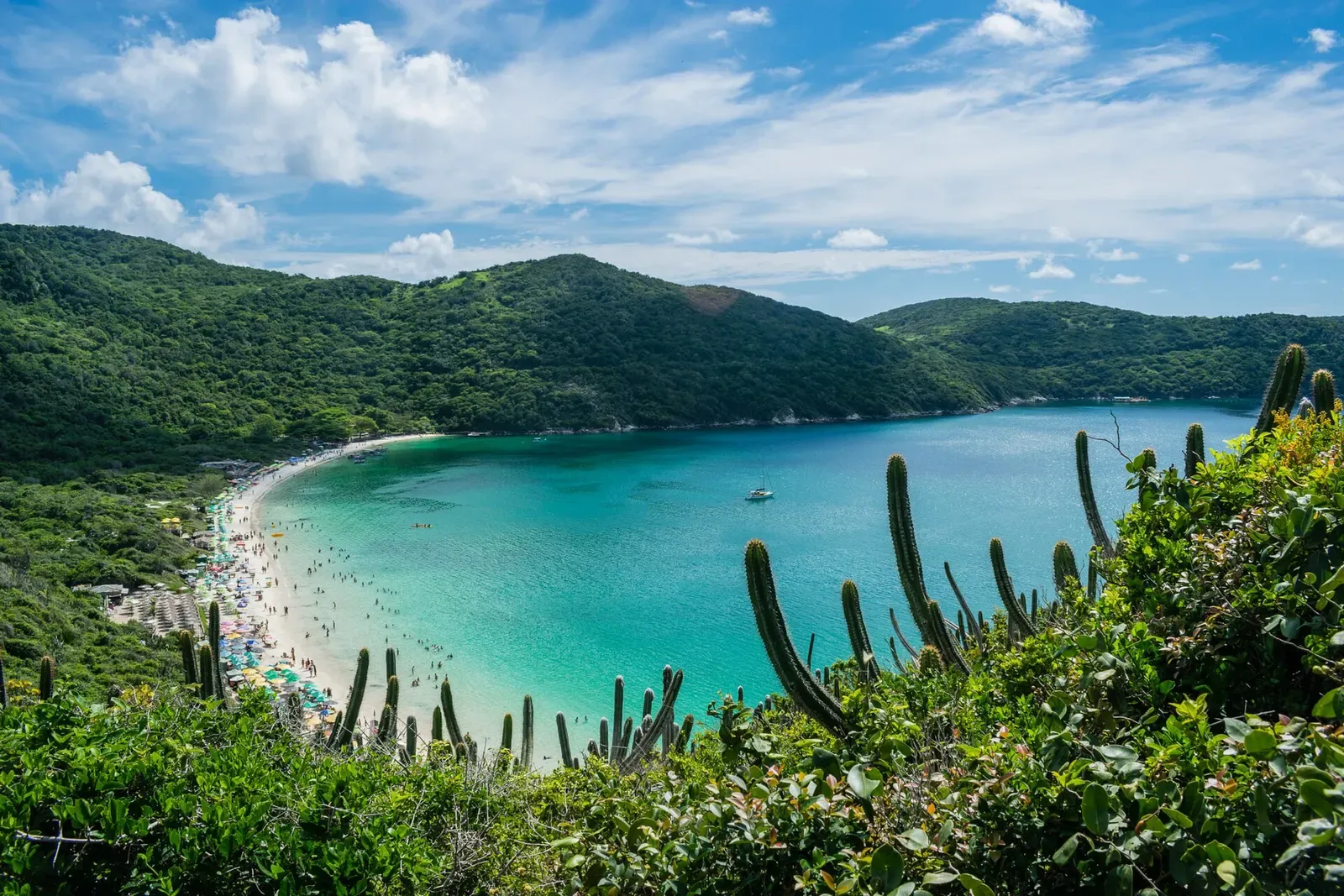
Cold upwelling packs granite walls with fish an hour from Rio
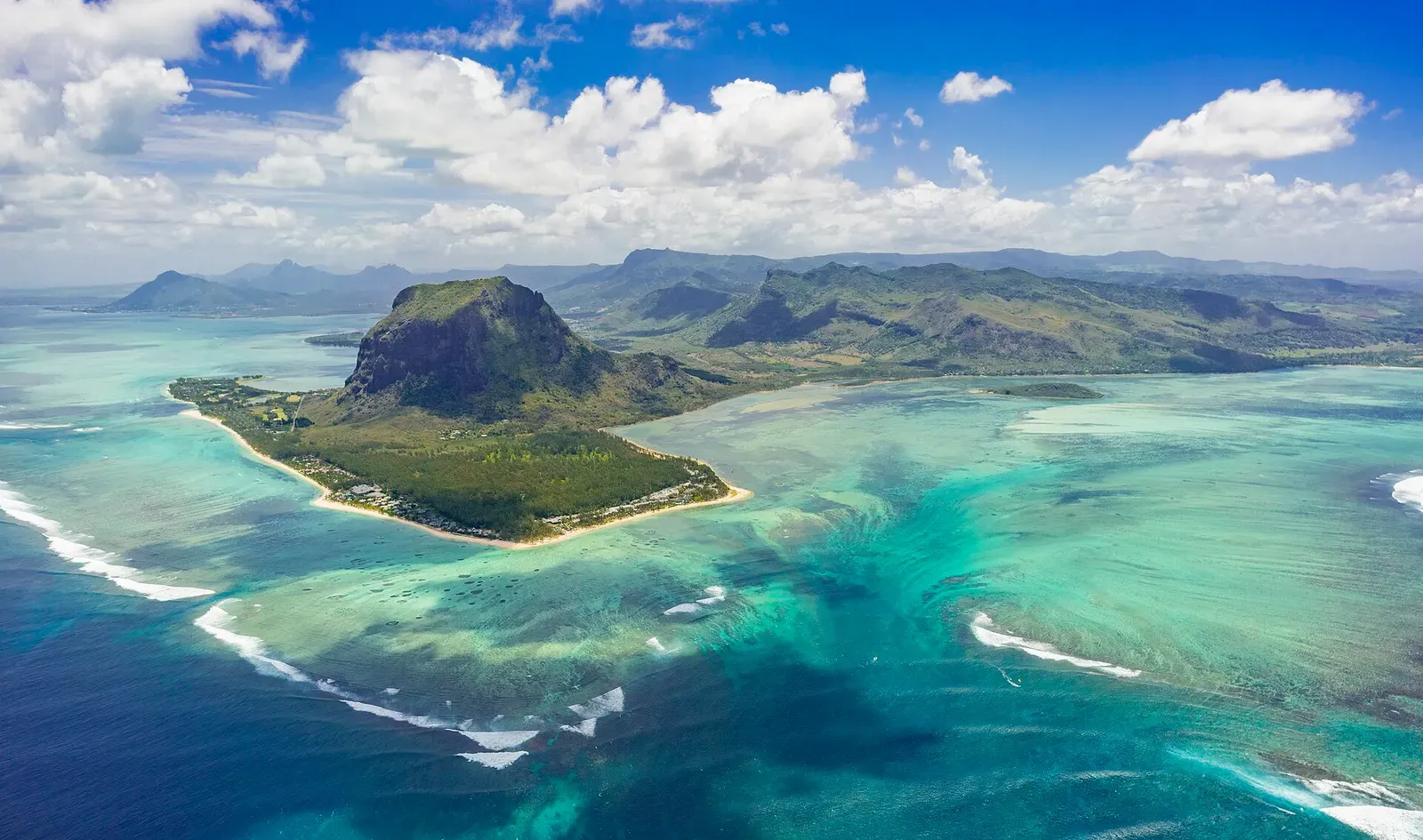
Sunken wrecks and a cavern swim-through sit minutes from the Flic en Flac shore


Hooked into the reef at Blue Corner while grey reef sharks patrol the current