Caribbean · Grenada
Grenada
An underwater sculpture garden of coral-encrusted human figures in shallow water
Grenada pairs the Caribbean's largest shipwreck, the Bianca C, with Molinere Bay's underwater sculpture park, a collection of cast concrete figures submerged as an artificial reef that has become encrusted with coral over two decades. The Bianca C sank in 1961 and lies mostly beyond recreational limits, but its upper structure is reachable by advanced divers, while the shallower reefs around the park suit every level.
About diving in Grenada
Almost all of the diving runs from day boats on the sheltered leeward coast, with operators clustered around St George's, the lagoon and the hotel strip at Grand Anse. Runs out to the sites are short, so the working pattern is a two-tank morning, lunch ashore and an optional afternoon or night dive. A few entries can be made from the beach, but the boat is what reaches the wrecks, and the day's site list comes down to which stretch of coast is out of the swell.
Grenada is a volcanic island, and the ground underwater follows suit: sloping shelves and low coral ridges rather than the sheer walls found further north in the Caribbean. Reefs run in long bands parallel to the shore, cut by sand chutes where the slope steepens, and a mild current usually sets along them, so many dives are worked as easy one-way drifts. The sheltered bays are the calm end of the scale, shallow and slow, where the dive narrows to whatever is living on a single coral head, while exposed points carry more water movement and bigger fish.
The island trades on its wrecks, and there are more of them than the famous one: cargo ships and smaller hulls, some lost and some put down deliberately along the leeward coast, several shallow enough for a relaxed dive and thoroughly grown over. The deep wreck off the southwest tip is a conditions dive rather than a scheduled one, sitting exposed offshore and often swept by current, so crews want settled water, a short planned bottom time and the freedom to swap it out when swell builds. The sculpture site is the other extreme, shallow and bright, shared with snorkel boats and best taken on the first slot of the day before fins stir the sand.
That range is the point. A week here usually mixes shallow reef and the smaller hulls with a couple of deeper days, and the sites sit close enough together to fit wreck or nitrox training around normal diving rather than instead of it. It suits people who like structure, variety and a bit of history more than pure wall diving, and it works as a half-day habit: the boats are back by lunch, and the interior, with its rainforest, crater lake and spice estates, takes the rest.
When to dive Grenada
| Jan | Feb | Mar | Apr | May | Jun | Jul | Aug | Sep | Oct | Nov | Dec |
|---|---|---|---|---|---|---|---|---|---|---|---|
| Prime | Prime | Prime | Prime | Good | Good | Fair | Fair | Fair | Fair | Fair | Good |
December–May is driest with the calmest seas; June–November is rainier, though Grenada sits at the southern edge of the hurricane belt with comparatively lower risk.
Getting there
Nearly everyone flies into Maurice Bishop International at Point Salines and bases in the southwest, around Grand Anse, True Blue or St George's. Diving is day-boat work along the leeward coast with limited shore entry, and the sculpture park lies inside a marine protected area that charges its own fee. Carriacou to the north has separate operators, reached by ferry or short flight.
Wildlife calendar
Hawksbill and green turtles, eagle rays over the sand chutes and barracuda holding off the wrecks are year-round, with grouper on the reef ledges and small critters on the coral heads. Reef sharks turn up rather than being guaranteed. January to April is the settled core, December and May a shade behind; from July the water greens up and the swell builds, though the coral-head life holds steady.
Dive types & marine life
- Wreck
- Reef
- Drift
- Sea turtles
- Eagle rays
- Reef sharks
- Barracuda
- Groupers
- Macro critters
Notable dive sites in Grenada
Underwater Sculpture Park
Coral-encrusted concrete figures in shallow Molinere Bay
Bianca C
Caribbean's largest wreck, its upper deck reachable by advanced divers
Flamingo Bay
Shallow reef with swim-throughs suited to beginners
Boss Reef
Long reef structure with varied coral heads and gullies
Dragon Bay
Sheltered bay reef used for easy drift and macro dives
Photos from Grenada
audi_insperation · CC BY 2.0
Photo credits
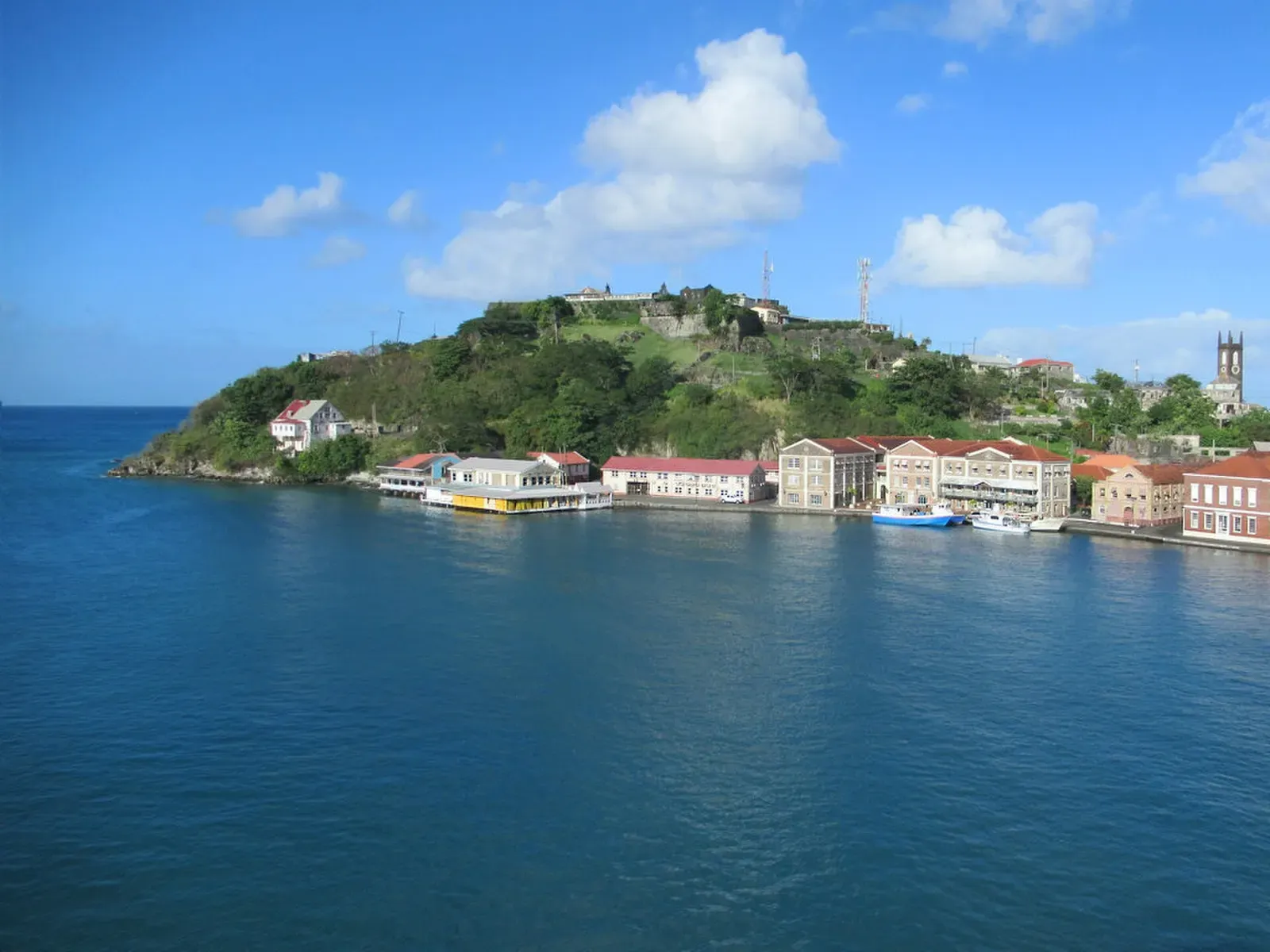
- Fort George headland at St. George's, Grenada, seen across the blue harbour water by David Stanley from Nanaimo, Canada, CC BY 2.0, via Wikimedia Commons
- Flamingo tongue snail on a sea fan while diving in Grenada by audi_insperation, CC BY 2.0, via Openverse
Similar destinations
Swim over the ballast blocks of a drowned eighteenth-century port
Hand-feed wild stingrays in chest-deep water, then drop over a sheer wall the same day
Two dozen reef sharks circle a baited arena in 12 m of water
.jpg)
Walk in from a beach resort and be on a coral wall within a five-minute swim