Southeast Asia · Thailand
Similan Islands
Granite boulder swim-throughs with seasonal manta and whale shark passes
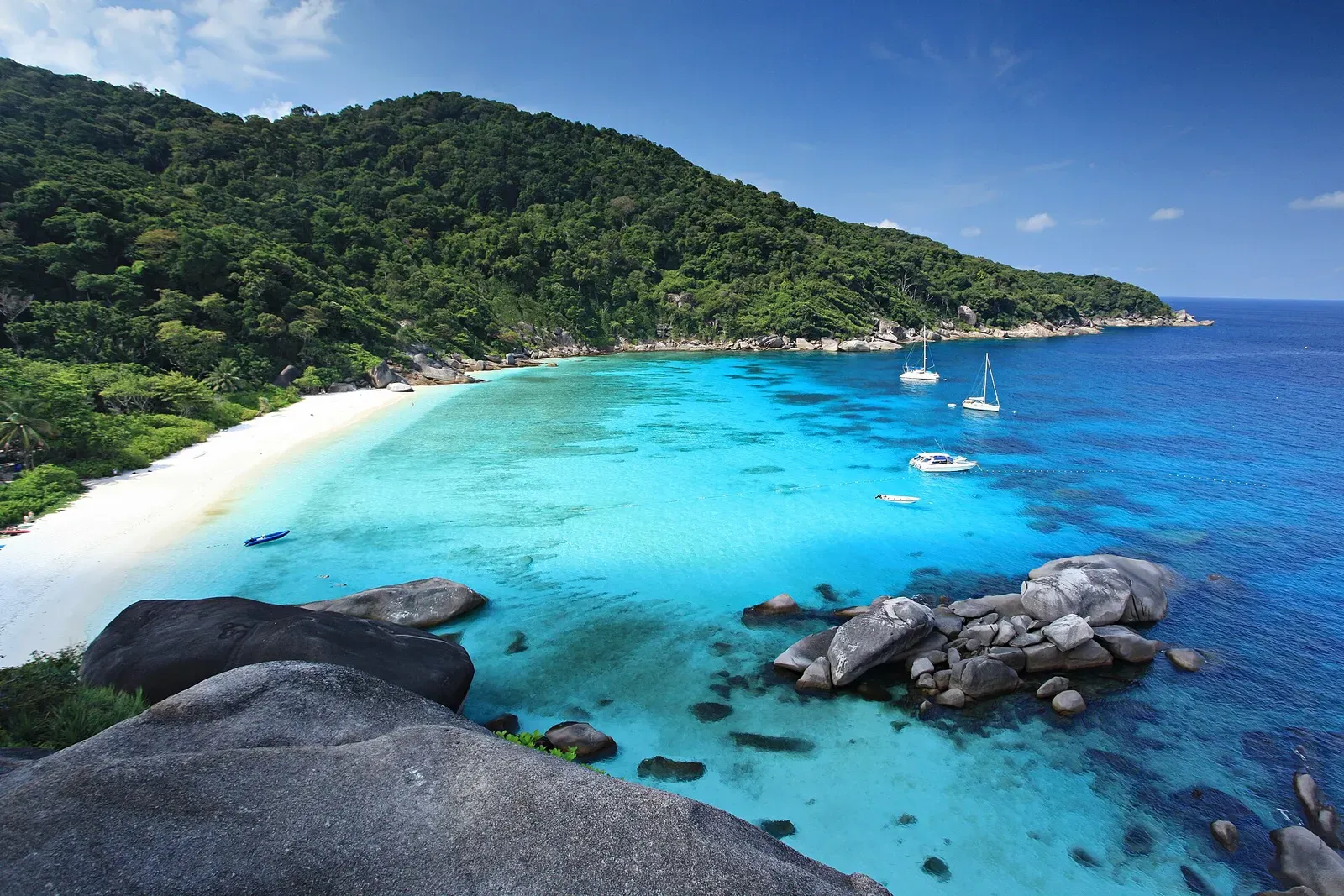
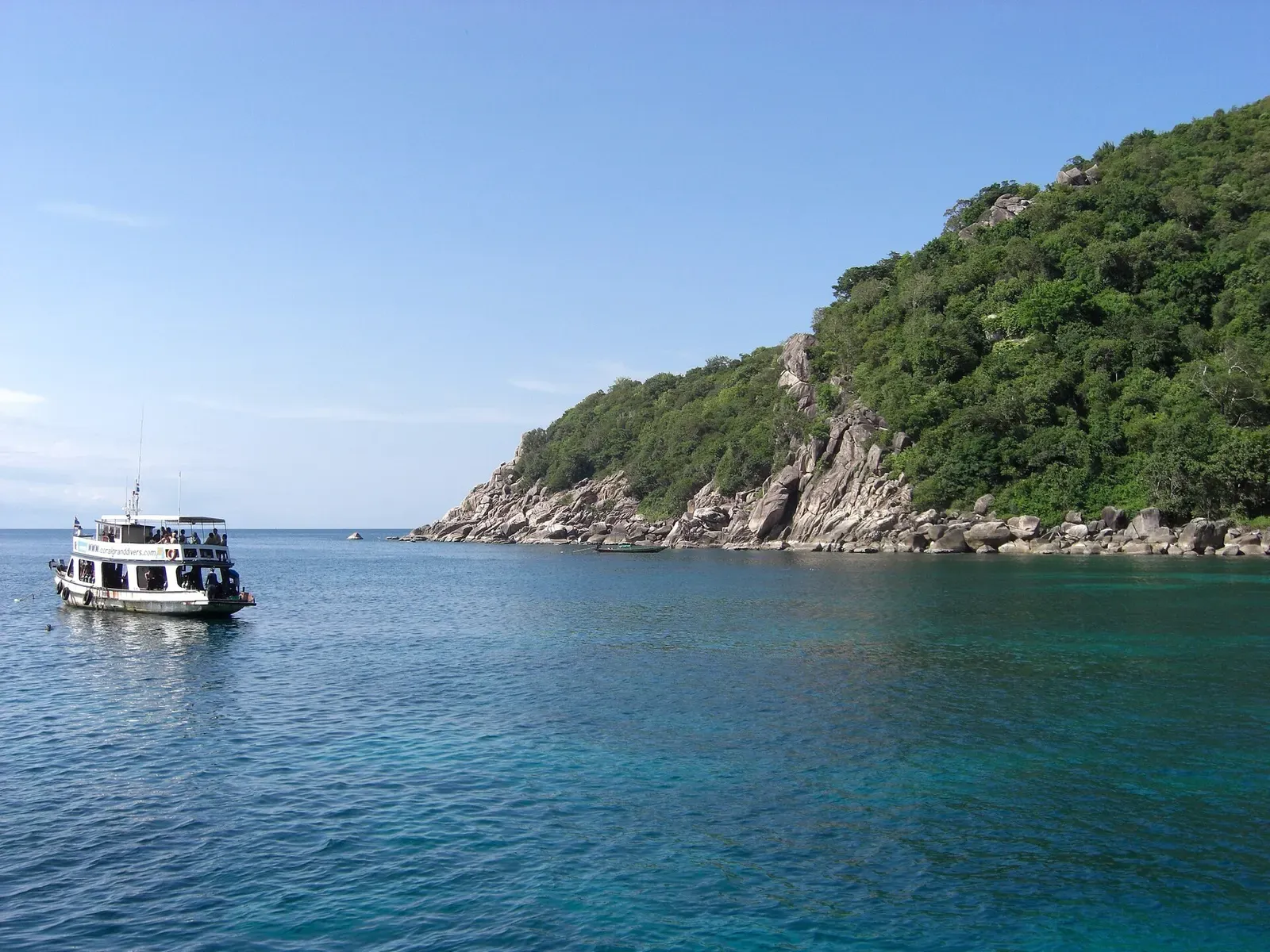
Photo: KOSIN SUKHUM · CC BY-SA 4.0
Nine granite islands in the Andaman Sea form Thailand's best-known liveaboard destination, with huge submerged boulders creating swim-throughs, gullies and sheer drop-offs on the west side and gently sloping coral gardens to the east. Manta rays and whale sharks pass through seasonally and reef sharks patrol the boulder fields, while the national park's protected status has kept the reefs in noticeably better shape than most of the mainland coast.
About diving in Similan Islands
Nearly everyone dives the Similans from a boat that also sleeps them. Liveaboards leave the Khao Lak coast for two to four nights and settle into a rhythm of four dives a day, one before breakfast, two through the middle and one after dark, with the crossings made while divers eat or sleep. Speedboat day trips reach the same islands but lose an hour or more each way on top of the road transfer, so they fit two or three dives into a very long day. The park closes from mid-May to mid-October, so the season runs in one stretch from the autumn reopening to the following spring, and the calm December-to-March months fill up well in advance.
Which side of the chain you dive is decided on the morning by wind and current rather than by a fixed schedule. On the boulder sites the interest sits low down, where granite meets sand and the gaps between blocks form corridors you swim through rather than over; navigation is done off rock shapes because there is no continuous reef edge to follow. Water moves back and forth through those gaps even when the surface is flat, which is what makes the tighter passages awkward rather than the depth. The eastern slopes are shallower and easier, and take most of the check dives, night dives and camera work.
Few trips dive only the nine islands. Standard itineraries continue north to Koh Bon and Koh Tachai and, on longer trips, to Richelieu Rock, and that northern leg is where the current gets serious and the odds on big animals improve. Two boats both selling Similan trips can differ by several sites, so it is worth reading the route before booking. National park entry fees are collected on arrival and are usually charged on top of the boat price.
Boat life does most of the filtering. Entries are back-rolls from the dive deck or a tender, ascents often finish in blue water without a reference, and once aboard you dive whatever the schedule offers. A little drift experience goes a long way, and this works well as a first liveaboard because crossings are short and in-season seas are usually flat. Photographers get an unusual amount of structure to work with, and the east-side coral gives the macro-minded somewhere to go. Divers set on wrecks, dedicated muck sites or dependable big-animal encounters should treat those as things the trip may not deliver.
When to dive Similan Islands
| Jan | Feb | Mar | Apr | May | Jun | Jul | Aug | Sep | Oct | Nov | Dec |
|---|---|---|---|---|---|---|---|---|---|---|---|
| Prime | Prime | Prime | Good | Off-season | Off-season | Off-season | Off-season | Off-season | Off-season | Good | Prime |
Similan National Park closes mid-May to mid-October for monsoon recovery; calm seas and peak manta/whale shark sightings run December-March.
Getting there
Phuket is the usual arrival airport, followed by the road transfer north to Khao Lak, where most liveaboards sail from Tap Lamu pier and speedboat day trips also leave. Divers stay on the mainland or aboard: there are no dive centres on the islands, so everything is boat-based and the mainland town is the base.
Wildlife calendar
Reef sharks, turtles, napoleon wrasse and schooling barracuda and trevally are steady company through the whole open season, with nudibranchs, octopus and cuttlefish on the shallower coral. Manta ray and whale shark chances are best in the calm December-to-March stretch and remain luck rather than schedule.
Dive types & marine life
- Reef
- Coral garden
- Wall
- Drift
- Pelagic & blue water
- Manta rays
- Whale sharks
- Reef sharks
- Sea turtles
- Napoleon wrasse
- Barracuda
- Trevally & jacks
- Nudibranchs
- Octopus & cuttlefish
Notable dive sites in Similan Islands
Elephant Head Rock
Maze of granite boulders and swim-throughs with strong surge
Christmas Point
Sloping boulder reef known for turtles and resident reef sharks
Anita's Reef
Long boulder ridge with soft corals and schooling fusiliers
East of Eden
Coral slope with barrel sponges and frequent turtle sightings
Breakfast Bend
Shallow coral garden ideal for check dives and photography
Photos from Similan Islands
Reinhard Link · CC BY-SA 2.0
KOSIN SUKHUM · CC BY-SA 4.0
KOSIN SUKHUM · CC BY-SA 4.0
Hanumanix · Public domain
Dive videos
Similan Islands Scuba Diving - 2025 (4K) · Zach Johnson on YouTube
Scuba Diving the Similan Islands on a Liveaboard || Whale Sharks & Manta Rays · Stephen Browne Travel on YouTube
Photo credits
- Granite boulders frame a turquoise anchorage bay in the Similan Islands by KOSIN SUKHUM, CC BY-SA 4.0, via Wikimedia Commons
- A sea turtle swims near the surface over a reef at the Similan Islands by Reinhard Link, CC BY-SA 2.0, via Wikimedia Commons
- Smooth granite boulders rise from a shallow reef along a Similan Islands shoreline by KOSIN SUKHUM, CC BY-SA 4.0, via Wikimedia Commons
- Aerial view of a Similan Islands beach with a fringing coral reef visible through clear water by KOSIN SUKHUM, CC BY-SA 4.0, via Wikimedia Commons
- A liveaboard dive boat anchored in calm water near the Similan Islands by Hanumanix, Public domain, via Wikimedia Commons
Similar destinations
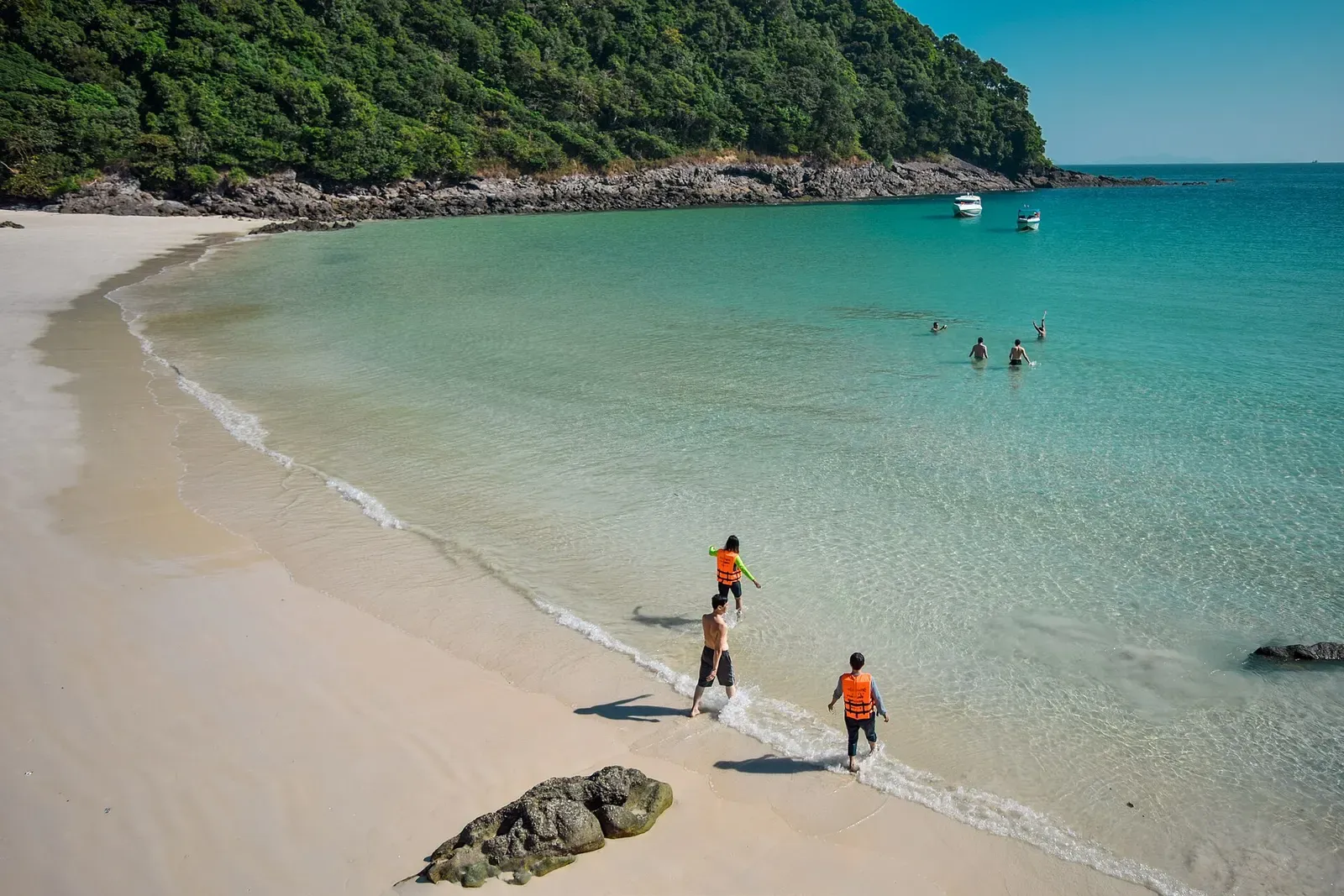
Remote liveaboard-only archipelago with the shark-rich Burma Banks seamount
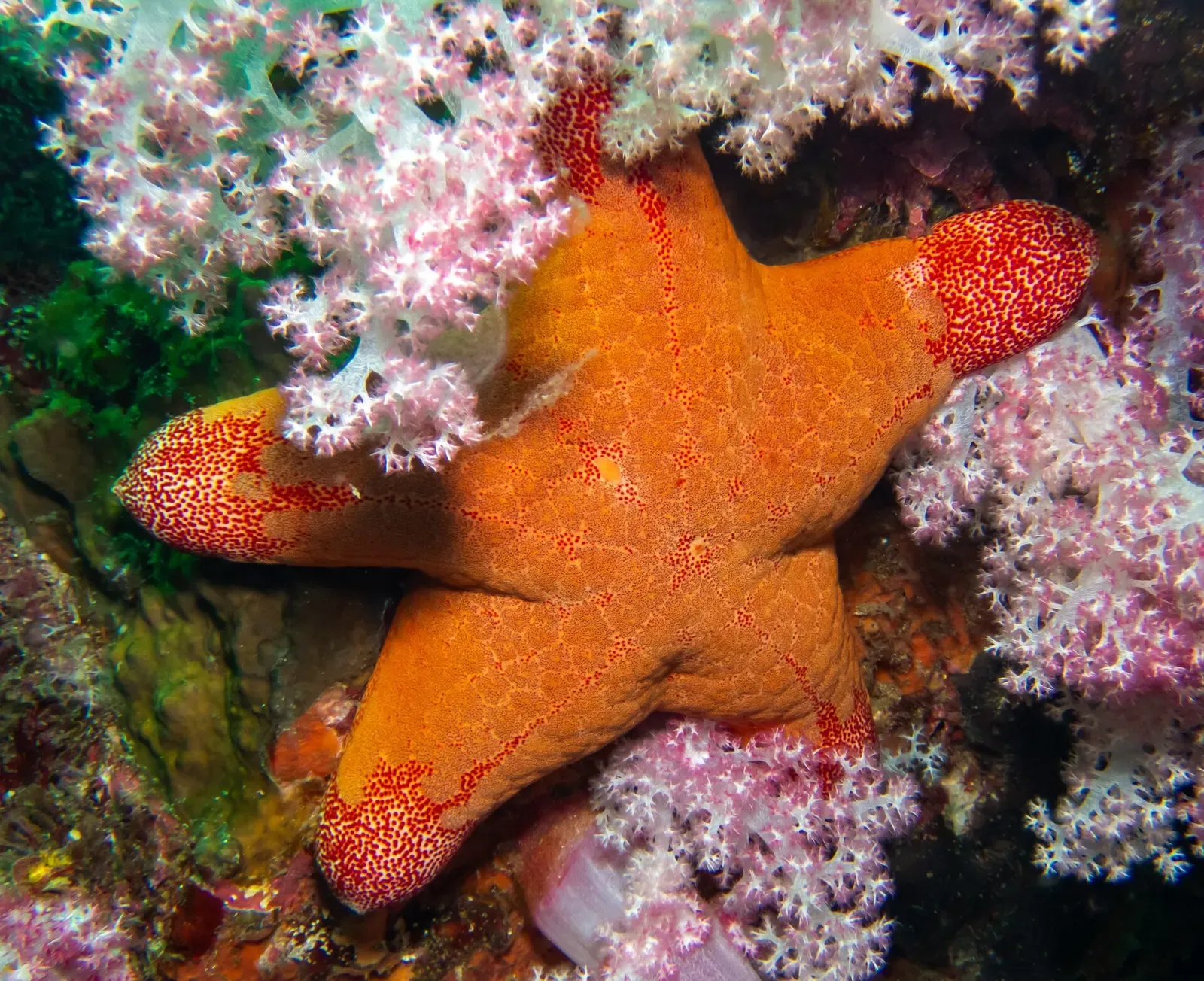
Sheer purple-coral wall with manta rays and occasional whale sharks
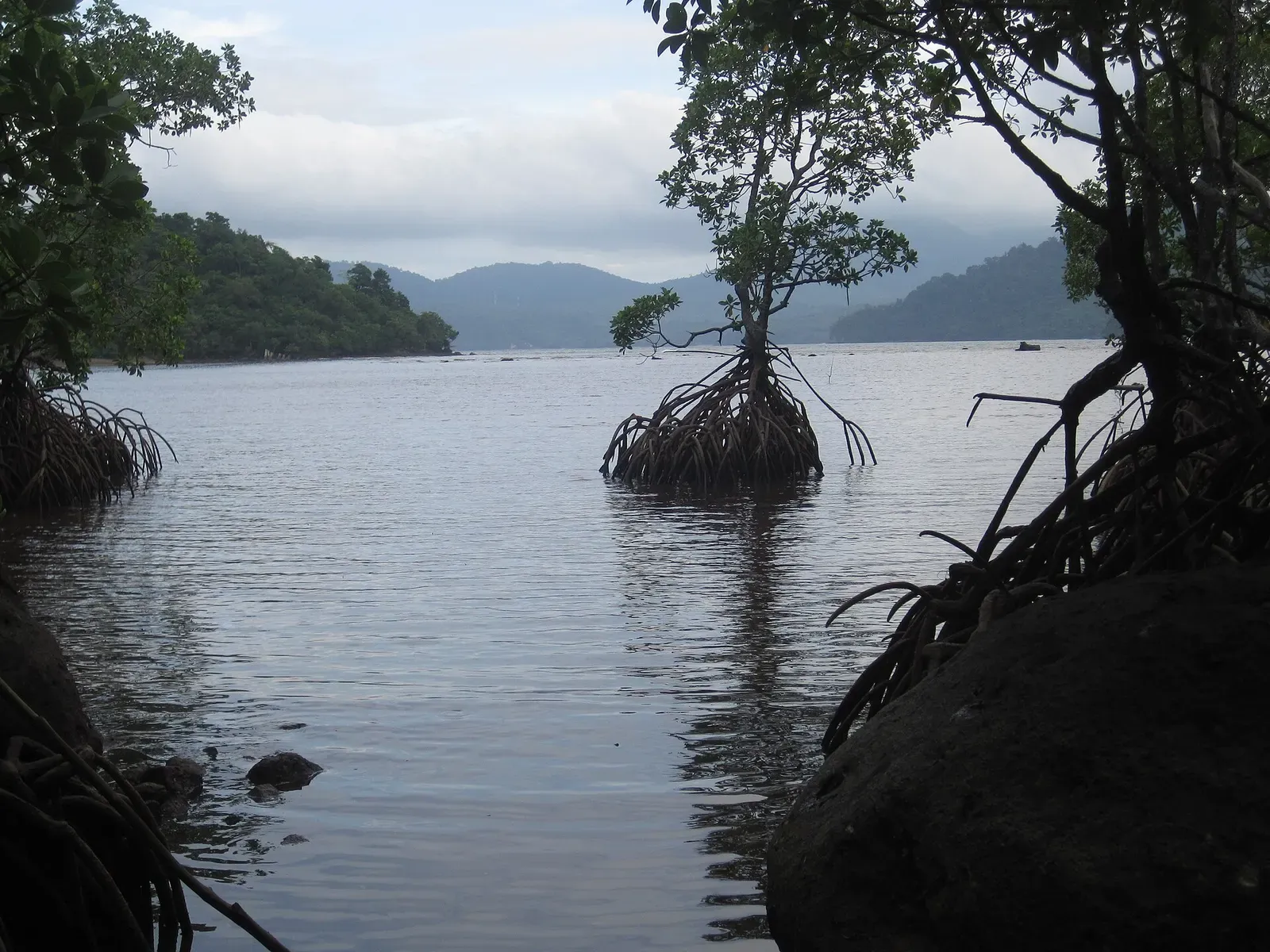
Volcanic gas bubbles through the sand off a current-swept island

.jpg)


Gulf of Thailand training hub with deeper pinnacles for whale sharks