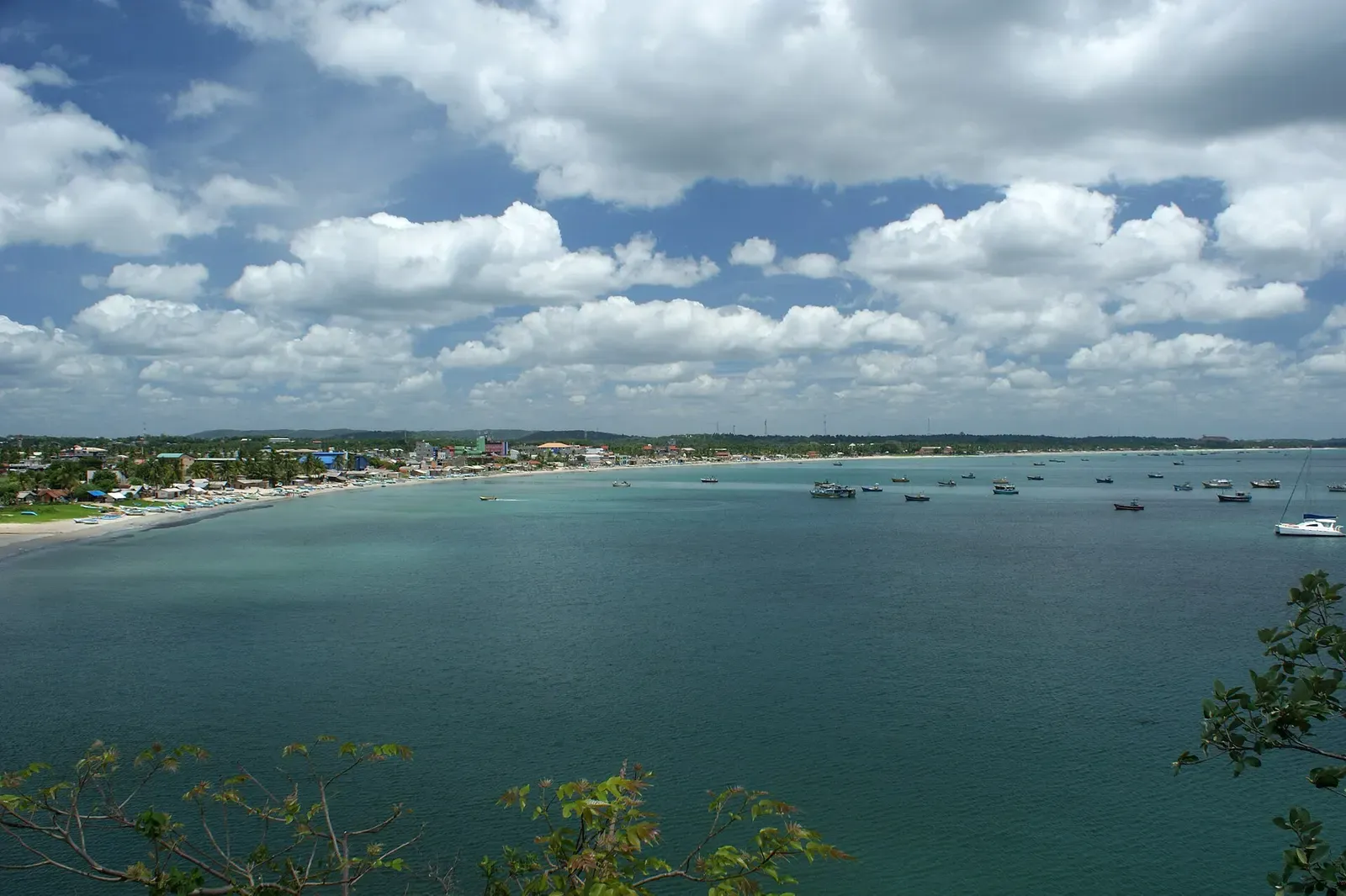
Indian Ocean · Sri Lanka
Trincomalee & Kalpitiya
Coral gardens, a sunken aircraft carrier, and sperm whale superpods
Photo: Kondephy · CC BY-SA 4.0
Sri Lanka's two dive coasts run on opposite monsoons. Trincomalee, on the east, has Pigeon Island's coral gardens, the granite drop of Swami Rock and a set of wartime wrecks culminating in HMS Hermes, the first purpose-built aircraft carrier ever sunk by air attack, lying at 53 m. Kalpitiya, on the west, is the surface counterpart: a continental shelf edge where blue whales pass and sperm whales gather in pods that have run into the hundreds.
About diving in Trincomalee & Kalpitiya
The first decision is which coast the trip is actually for, since the two seasons sit almost exactly out of phase and neither can be had at full strength at once. Trincomalee's window is roughly Apr–Sep, when the east coast goes flat and centres on the beaches north of town run short boat trips out to the reefs and wrecks, with a few entries walkable from the sand. Kalpitiya works the other half of the year. Combining them means catching an edge of each season and accepting that one coast will be marginal.
East-coast diving is granite and coral in roughly equal measure. The run out to the national park island takes minutes, and because the lagoon side is given over to snorkellers the diving is done on the outer edges. Along the mainland shore, headlands carry on underwater as bare granite boulders tipping into sand, with overhangs and gullies that hold fish and carry no coral at all. Depth builds gradually, current is usually light, and the great majority of the diving stays inside recreational limits.
The wrecks are what bring experienced divers, and they are not casual dives. Most of the April 1942 losses lie down the coast toward Batticaloa rather than off Trincomalee itself, so reaching them means a dedicated trip staged from that end, though the shallower hulls fit inside a normal boat day. The carrier is another matter — deep, exposed to current, treated as a war grave, and dived by arrangement on chartered trips that need permissions and a settled sea, so plans fall through more often than they run. Identifications are not settled on every hull, and local operators are the better source on what is currently reachable.
Kalpitiya is a different sort of day: an early boat, hours on flat water out at the shelf edge, spinner dolphins in numbers and whales blowing at a distance. That is deck work rather than diving, and it fills the time either side of a reef dive rather than replacing one. The south-west monsoon wind that shuts the west coast to boats also makes the town a kitesurfing base from roughly May to October, so what you find ashore depends heavily on when you turn up. It suits divers who want a country to travel as much as a reef to dive.
When to dive Trincomalee & Kalpitiya
| Jan | Feb | Mar | Apr | May | Jun | Jul | Aug | Sep | Oct | Nov | Dec |
|---|---|---|---|---|---|---|---|---|---|---|---|
| Good | Good | Good | Prime | Prime | Prime | Prime | Prime | Good | Fair | Good | Good |
Trincomalee dives Apr–Sep; Kalpitiya's whale season runs Nov–Apr on the opposite monsoon, so one coast is always workable.
Getting there
Colombo is the arrival airport for both coasts. Trincomalee is a long road or rail journey across the island, with dive centres on the beaches north of town; Kalpitiya is a shorter drive up the west coast. Trinco mixes shore entries with day boats, while the deeper wrecks mean a chartered trip, often staged from further down the east coast.
Wildlife calendar
Reef fish carry the everyday diving — snapper, fusiliers and groupers on the granite, with small reef sharks over the shallow coral — through the Apr–Sep east-coast window, and turtles and nudibranchs are there year-round. Whales and dolphins belong to the opposite half of the year, Nov–Apr off Kalpitiya. Whale sharks are an occasional extra rather than something to plan around.
Dive types & marine life
- Reef
- Wreck
- Coral garden
- Pelagic & blue water
- Drift
- Whales
- Dolphins
- Reef sharks
- Sea turtles
- Reef fish swarms
- Groupers
- Nudibranchs
- Macro critters
- Whale sharks
Notable dive sites in Trincomalee & Kalpitiya
Pigeon Island
National park island with shallow coral gardens and blacktip sharks.
Swami Rock
Granite headland below the Koneswaram temple, dropping to 25 m.
HMS Hermes
British aircraft carrier sunk in 1942, lying on her side at 53 m.
British Sergeant
Fleet tanker sunk the same day as the Hermes, at a divable 25 m.
Bar Reef
Sri Lanka's largest reef, off Kalpitiya, with big schooling fish.
Photos from Trincomalee & Kalpitiya
David Stanley · CC BY 2.0
Dive videos
Dive Adventures Diving HMS Hermes - Sri Lanka · Dive Adventures on YouTube
Scuba Diving with the Pearl Protectors in Trincomalee Sri Lanka · Sheneller on YouTube
Photo credits
- Wide view over the natural harbour of Trincomalee bay with boats moored offshore, Sri Lanka by Kondephy, CC BY-SA 4.0, via Wikimedia Commons
- Waves rolling onto a quiet sandy beach on Dutch Bay near Trincomalee, Sri Lanka by David Stanley, CC BY 2.0, via Wikimedia Commons
Similar destinations
Indian Ocean
Réunion
France
A recovering fringing reef and two easy wrecks on the sheltered west coast
Indian Ocean
Nosy Be
Madagascar
Whale sharks feed in the channel toward Nosy Iranja each October through December
Equatorial channels with stacked grey reef sharks and a wartime tanker

.jpg)
Up to two hundred reef mantas barrel-roll inside a 200 m bay