Caribbean · Bahamas
Cat Island
One of the few reliable places on earth to dive with oceanic whitetips
For a few weeks each spring, oceanic whitetips gather in the deep water off Cat Island's southern end — one of very few places on earth where the species can be dived reliably. These are open-ocean animals, thickset and unhurried, and encounters happen in blue water over a kilometre-deep bottom with divers hanging at 10 m under a boat. Tartar Bank, a seamount south-east of the island, adds hammerheads and big pelagics when conditions allow.
About diving in Cat Island
A shark day here is single-purpose. Small boats run out past the drop-off at the island's southern end, stop where there is nothing below but open water, and then simply stay put. Bait is kept in a crate at the boat so the animals have a reason to circle it, there is no cage and no bottom to sit on, and the group works as one unit under the hull. Profiles are shallow, so bottom time is generous and several entries fit into a day; the gaps are spent sitting in open ocean, which is restful or tedious depending on your stomach.
There is no reef diving in the usual sense on those days. The only references are the boat, the line and the other divers, and the briefing is strict about exactly that: tight group, gear tucked in, look behind you, hands to yourself. Oceanic whitetips are unhurried and will come in close, which is what makes them photogenic and what makes the discipline matter — divers are generally shown how to redirect one with a camera housing rather than a hand. Tartar Bank is the other dive on offer, a seamount at the end of a longer crossing, run only on flat days and carrying current.
Around that core the south coast supplies conventional diving — walls falling away from shallow reef, patch coral and easy drifts — which is what fills the days the offshore boat cannot run. The island itself is quiet and thinly populated, short on the infrastructure divers take for granted elsewhere, so trips are usually sold as a package of diving, rooms and transfers on a fixed schedule. It suits confident divers with sound buoyancy and photographers chasing one specific animal, rather than anyone wanting a varied reef holiday.
When to dive Cat Island
| Jan | Feb | Mar | Apr | May | Jun | Jul | Aug | Sep | Oct | Nov | Dec |
|---|---|---|---|---|---|---|---|---|---|---|---|
| Fair | Fair | Good | Prime | Prime | Prime | Fair | Fair | Off-season | Off-season | Fair | Fair |
The oceanic whitetip season runs Apr–Jun; outside it the sharks disperse and operators do not run blue-water trips.
Getting there
Getting here means connecting through Nassau to one of the island's small airstrips, or arriving aboard a liveaboard, since some Bahamas boats schedule Cat Island itineraries during the shark season. The operators running blue-water trips work the southern end and generally sell diving, rooms and transfers as one package. Nothing here is shore-based, so a dive day depends on the boat going out.
Wildlife calendar
Oceanic whitetips are the reason to come and they are strictly seasonal: the trips run April to June, often with Caribbean reef sharks, tuna and dolphins in the same water. Hammerheads and the heavier pelagics belong to Tartar Bank rather than the blue-water sessions, and only on the rare flat days. September and October are written off at the peak of hurricane season.
Dive types & marine life
- Pelagic & blue water
- Wall
- Reef
- Drift
- Oceanic whitetips
- Reef sharks
- Sea turtles
- Dolphins
- Barracuda
- Groupers
- Eagle rays
- Tuna
Notable dive sites in Cat Island
Tartar Bank
Seamount south-east of the island with hammerheads and big pelagics.
Columbus Point
Southern tip where the shelf drops away; the whitetip staging ground.
Port Howe Drop-off
Wall off the south coast falling from 15 m into deep water.
Devil's Point
South-western headland with reef and reliable shark traffic.
Dive videos
Shark diving in the Bahamas - Fun with Oceanic Whitetip Sharks · Lukas Walter on YouTube
Oceanic Whitetip Diving - Cat Island, Bahamas · Eli Martinez on YouTube
Similar destinations
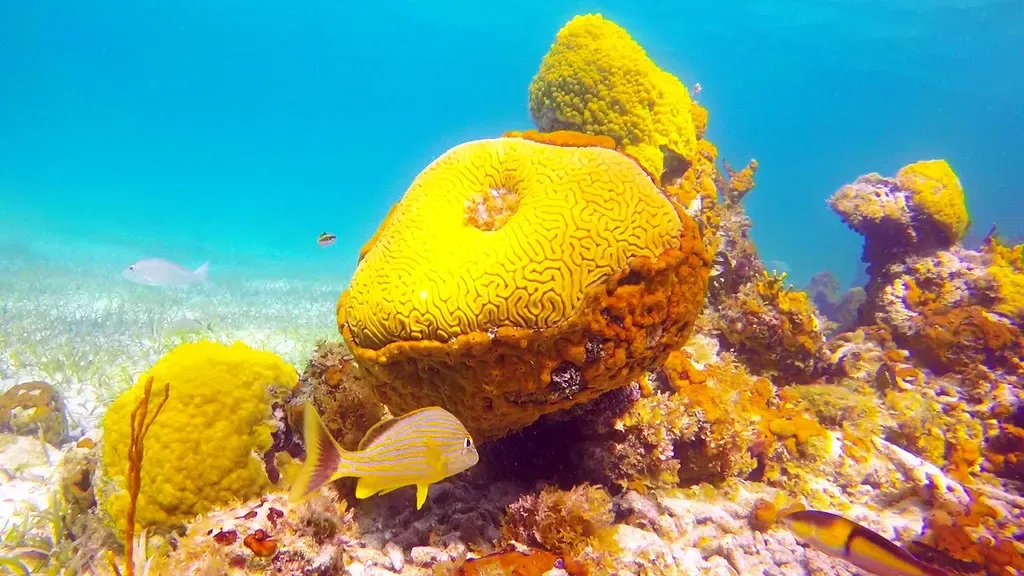
A wall off Grand Turk where migrating humpback whales pass within earshot each winter
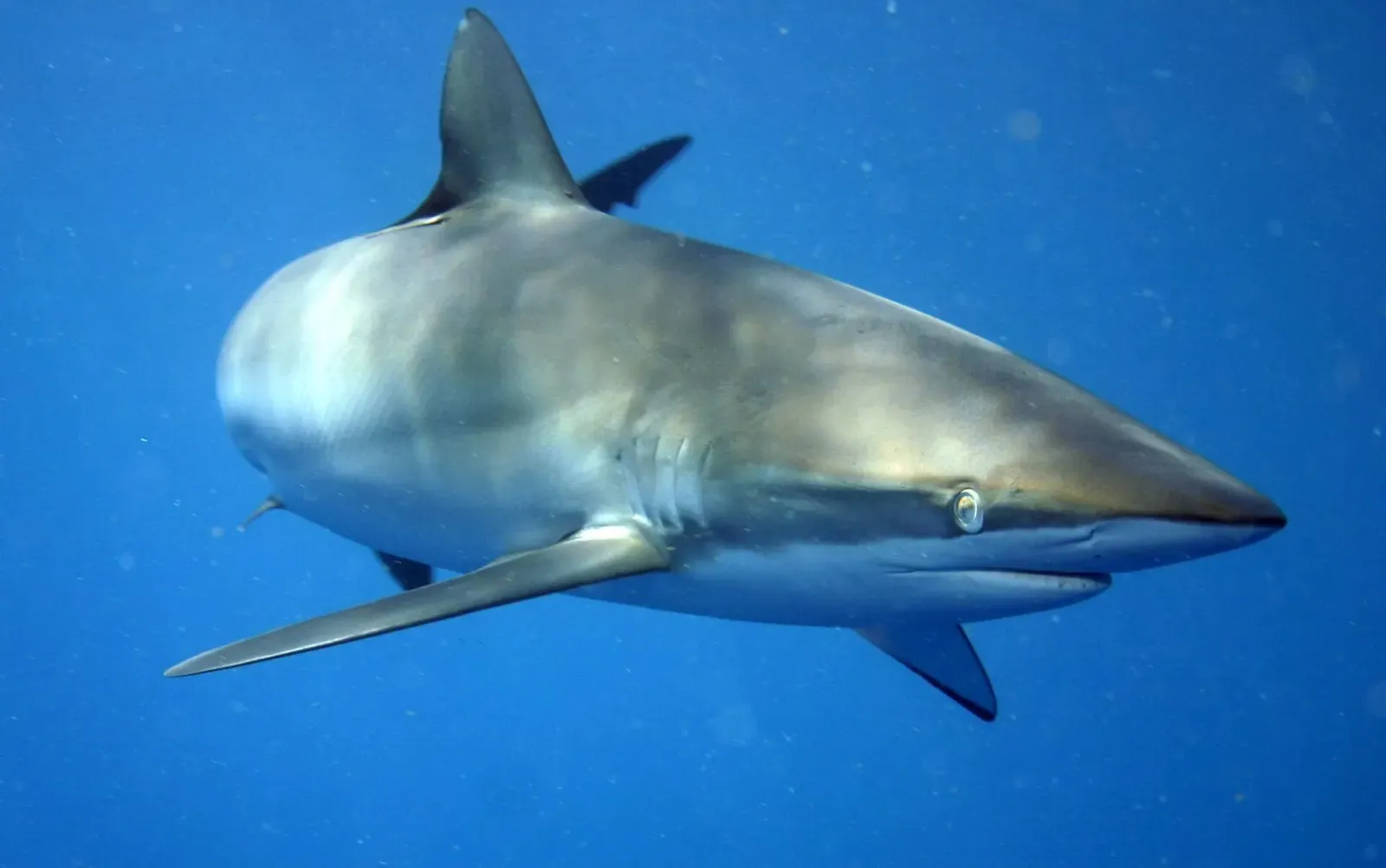
Snorkel with American crocodiles, then dive reefs thick with unwary reef sharks
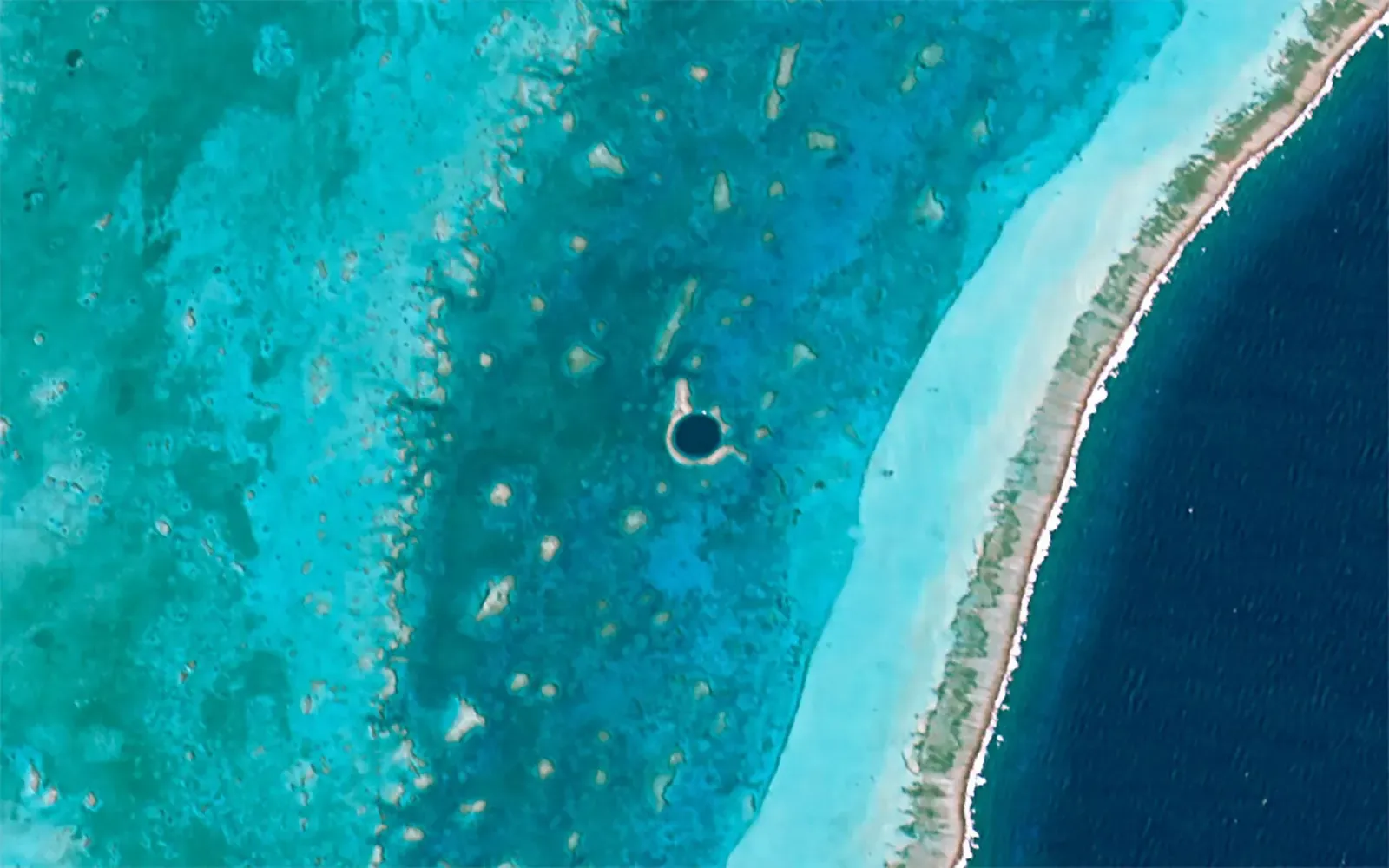
Descend into the Great Blue Hole, then hunt whale sharks at a spring snapper spawn
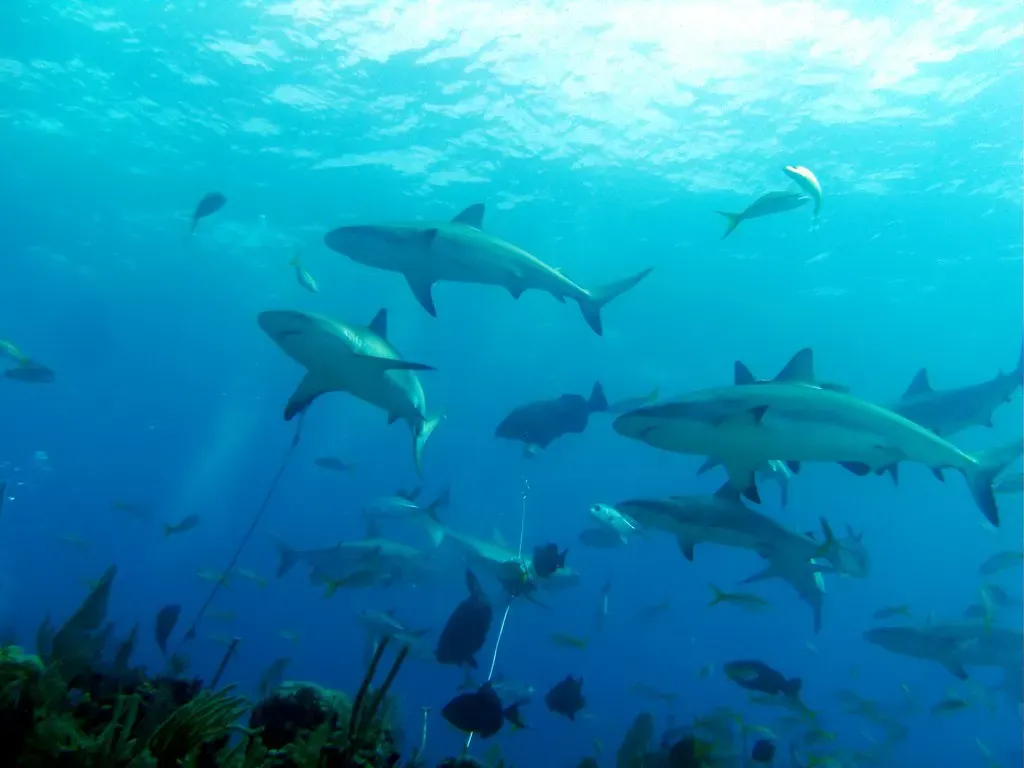
Descend into Angelfish Blue Hole, a vertical shaft opening onto a coral-rimmed cavern