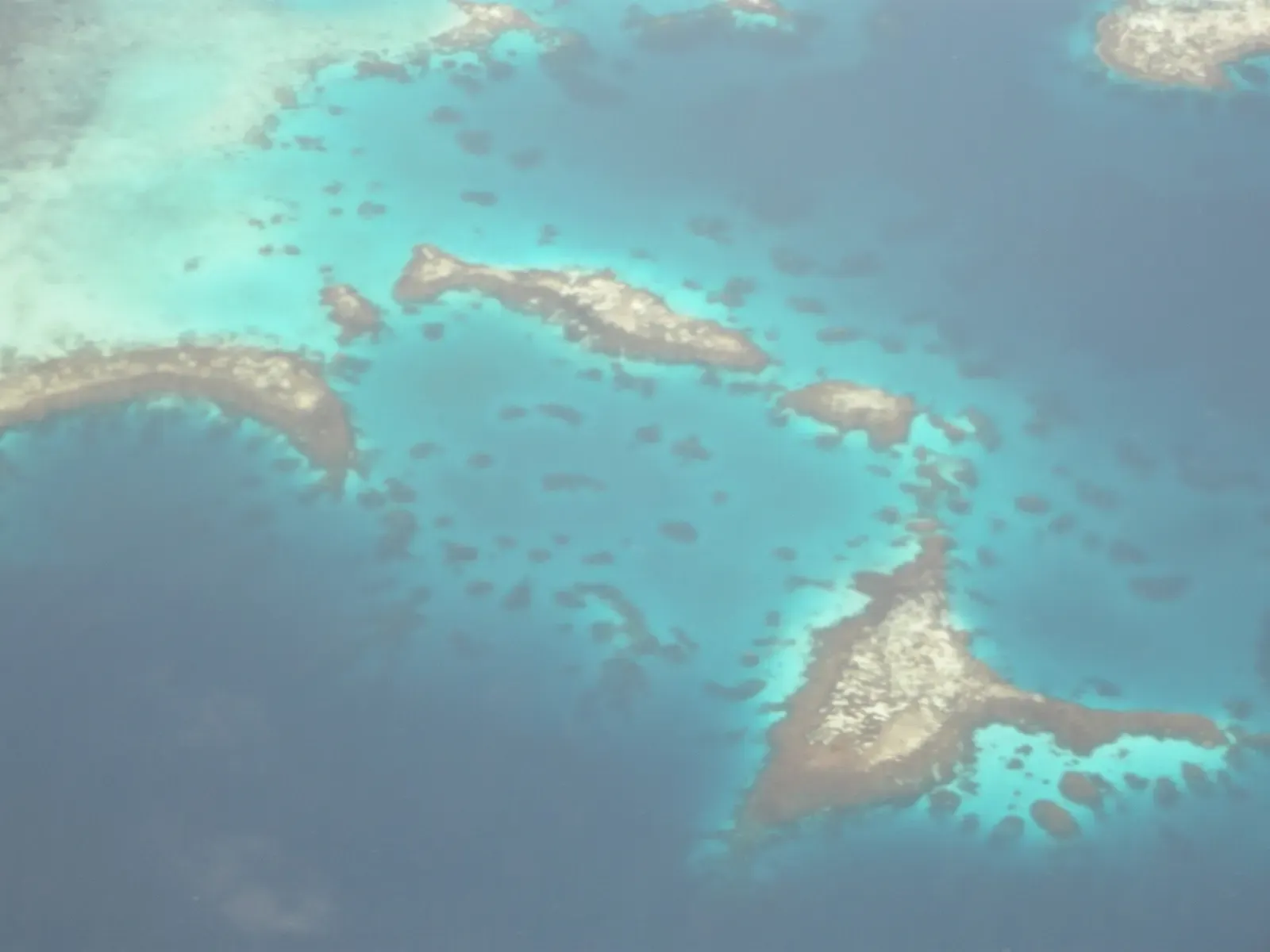
Pacific Islands · Micronesia
Chuuk Lagoon
Dozens of intact WWII wrecks rest in one sheltered lagoon.
Photo: Matt Kieffer · CC BY-SA 2.0
Chuuk Lagoon holds the sunken remains of Japan's Truk fleet, dozens of WWII wrecks sent down in a single 1944 air raid and still loaded with tanks, aircraft, and munitions. Fujikawa Maru, Shinkoku Maru, and San Francisco Maru sit in a calm, protected lagoon under coats of soft coral, ranging from easy 18-meter penetrations to technical dives past 50 meters. It is one of the world's premier wreck-diving destinations, with little current to distract from exploring the holds.
About diving in Chuuk Lagoon
Diving here is a shuttle between mooring buoys. Boats leave Weno, cross flat lagoon water to a buoyed hull, and everyone descends the line onto a mast or kingpost before working a lap of the outside and then some time inside. Surface intervals happen on the boat rather than ashore. A land-based day is two or three dives and a liveaboard week runs to four or five, and the profiles repeat deep enough that nitrox is the sensible default rather than an upsell.
What separates one ship from the next is attitude and depth. Some sit upright with superstructure shallow enough to carry growth and let daylight into the upper spaces; others lie hard over on a side, which turns ordinary corridors into confusing ones. Inside, it is the everyday cargo that lands hardest: bottles, crockery, lanterns, boots, personal kit still stowed where it was loaded. Everything wears fine silt that one careless fin stroke will keep in the water for the rest of the dive.
Not all of it is freighters. Aircraft went into the lagoon too and sit shallow on sand, a short dive that works well as a last tank of the day, and there is reef diving out on the barrier and its passes when you want a horizon. The wrecks are protected and several are regarded as war graves, so nothing is taken and guides set limits on which spaces are appropriate to enter. Identifications made in the decades after the February 1944 strikes have been revised more than once, so accounts of which ship is which still vary.
This suits divers who want to spend a week doing one thing properly. If you like moving slowly through structure and surfacing with a mental map rather than a species count, it holds for days; anyone here for big animals tends to get restless by the third morning. Bring your own primary and backup lights and a reel, and expect to be asked what training you hold before deeper penetration, because the gap between swimming past a hold and going into it is most of what the destination is.
When to dive Chuuk Lagoon
| Jan | Feb | Mar | Apr | May | Jun | Jul | Aug | Sep | Oct | Nov | Dec |
|---|---|---|---|---|---|---|---|---|---|---|---|
| Good | Good | Good | Good | Good | Fair | Fair | Fair | Fair | Fair | Good | Good |
The lagoon is calm and diveable year-round; Aug-Nov typhoon season can disrupt travel and surface conditions even though the wrecks stay sheltered.
Getting there
Chuuk International sits on Weno, reached from Guam or on the island-hopper routing out of Honolulu, and Weno is where both the land-based operators and the liveaboards are based. All diving is from boats on short lagoon crossings, so a hire car earns nothing, and a state dive permit is normally handled by the operator.
Wildlife calendar
Soft coral and anemones have taken the shallow superstructure, grouper sit in doorways, jacks and barracuda circle the masts, turtles pass over the shallower hulls, and there are nudibranchs and small critters enough for a macro lens between wrecks. Reef sharks turn up more out on the barrier than over the ships. Nothing migrates in or out, so the fair Jun-Oct months look like the calmer ones.
Dive types & marine life
- Wreck
- Reef
- Muck & macro
- Night
- Reef sharks
- Trevally & jacks
- Barracuda
- Sea turtles
- Nudibranchs
- Macro critters
- Groupers
Notable dive sites in Chuuk Lagoon
Fujikawa Maru
Aircraft parts and a machine shop still fill this armory ship's holds.
Shinkoku Maru
Coral-encrusted tanker with an intact operating room and bridge.
San Francisco Maru
Deep technical wreck with tanks and mines still in the cargo holds.
Nippo Maru
Tank and field gun cargo wreck slanted on the lagoon floor.
Sankisan Maru
Shallow wreck with munitions and a still-visible deck gun.
Photos from Chuuk Lagoon
Legis · Public domain
Motoki Kurabayashi · CC BY-SA 4.0
Dive videos
Diving the WWII Wrecks of Chuuk (Truk) Lagoon [Part 1] · BlueWorldTV on YouTube
Diving Shipwrecks of Chuuk (Truk) Lagoon with a ROCK STAR! [Part 2] · BlueWorldTV on YouTube
Photo credits
- Aerial view of turquoise reef patches and channels in Chuuk Lagoon, Micronesia by Matt Kieffer, CC BY-SA 2.0, via Wikimedia Commons
- Coral-encrusted superstructure of the Nippo Maru wreck with fish schooling around the hull by Legis, Public domain, via Wikimedia Commons
- Aerial view of Weno island's harbor and coastline along Chuuk Lagoon by Motoki Kurabayashi, CC BY-SA 4.0, via Wikimedia Commons
Similar destinations
Pacific Islands
Espiritu Santo — SS Coolidge
Vanuatu
A 200-meter troopship wreck is entered straight from the beach.
Touch a First and a Second World War wreck at the same time
Resident manta rays cruise cleaning stations on nearly every dive.
_aerial_view.jpg)


Sunken WWII battleships and a US carrier lie deep in a former nuclear test lagoon.