Pacific Islands · Guam
Guam
Touch a First and a Second World War wreck at the same time
Photo: Jonathan Miske · CC BY-SA 2.0
Apra Harbor holds a coincidence that exists nowhere else: the German raider SMS Cormoran, scuttled by her crew in 1917, and the Japanese freighter Tokai Maru, sunk by an American submarine in 1943, lie touching each other on the harbour floor. A diver can put one hand on a First World War wreck and the other on a Second World War wreck. Outside the harbour, the Blue Hole is a vertical shaft entered at 18 m that exits through the reef wall at 40 m.
About diving in Guam
Guam dives like a place with roads. Shops collect divers from the Tumon hotel strip, and a good part of the week can be shore entries, walking in off a beach with the tanks left in the truck. Boat trips run out of Apra Harbor and are short. The harbour sites sit inside an active naval port, so access is arranged in advance through a local shop and can be restricted at short notice when port operations require it, which is worth knowing before building a whole trip around the wrecks.
Northern Guam is an uplifted limestone plateau and the reef follows suit: a shallow shelf punched with sinkholes and cavern mouths, then an abrupt edge where it drops into open water. Off the Orote Peninsula on the west side the wall is the main event, dived as a run along the face. Inside the harbour it is the reverse, flat and silty and darker, with visibility that depends on rain and port traffic. The two feel like different destinations reached from the same pickup point.
War material is scattered well beyond the named wrecks. Landing craft, amphibious tractors and unidentified debris lie in the shallows off the July 1944 invasion beaches at Asan and Agat, much of it within the War in the Pacific national park, where the relics are protected and nothing should be lifted. Identifications on the smaller pieces are often uncertain, so treat confident labels with some caution. The big harbour wrecks are silty and deep enough to make for short dives, and are best planned without penetration unless you carry the training.
Timing decides how much of the island you actually get. December to May is the settled stretch, when the outer wall and the northern reefs are reliably in reach, and June usually still works. From July to October the typhoon season puts the exposed sites on and off, diving retreats into the harbour and the lee, and a trip then needs spare days; November is the turn back. It also works unusually well as a short stop, since a full day underwater is possible without boarding a boat.
When to dive Guam
| Jan | Feb | Mar | Apr | May | Jun | Jul | Aug | Sep | Oct | Nov | Dec |
|---|---|---|---|---|---|---|---|---|---|---|---|
| Prime | Prime | Prime | Prime | Prime | Good | Fair | Fair | Fair | Fair | Good | Prime |
Dec–Jun is the dry season with the calmest water; Jul–Nov is typhoon season and closes the exposed outer sites.
Getting there
Won Pat International is served from Japan, Korea, Manila and Honolulu, and most divers stay on the Tumon Bay strip and get picked up there. Shore entries such as Piti and Gun Beach are drive-and-walk, both inside marine preserves where fishing is restricted; the harbour wrecks and the Blue Hole are boat dives out of Apra.
Wildlife calendar
Growth on the wrecks and harbour structures is the macro draw, with nudibranchs and small critters in numbers. The outer wall carries turtles, barracuda schools, eagle rays, napoleon wrasse and the occasional reef shark. Dec-May gives the best odds outside, with June close behind; from July to October the dependable diving sits in the harbour and the lee.
Dive types & marine life
- Wreck
- Wall
- Cave & cavern
- Reef
- Night
- Drift
- Reef fish swarms
- Sea turtles
- Reef sharks
- Barracuda
- Nudibranchs
- Macro critters
- Eagle rays
- Napoleon wrasse
Notable dive sites in Guam
SMS Cormoran & Tokai Maru
1917 and 1943 wrecks touching each other at 34 m in Apra Harbor.
Blue Hole
Vertical shaft entered at 18 m, exiting through the reef wall at 40 m.
Gab Gab Reef
Sheltered harbour reef in 12 m, the island's main training site.
Piti Bomb Holes
Three sinkholes in the shallows, reached by an easy shore entry.
Double Reef
Northern outer reef with hard coral and the clearest water on Guam.
Photos from Guam
David Burdick, NOAA · Public domain
Jonathan Miske · CC BY-SA 2.0
Dive videos
Guam Dive Sites: Blue Hole · Random Adventure & Interest on YouTube
Tokai and Cormoran Apra Harbor, Guam · Phillippe Brule on YouTube
Photo credits
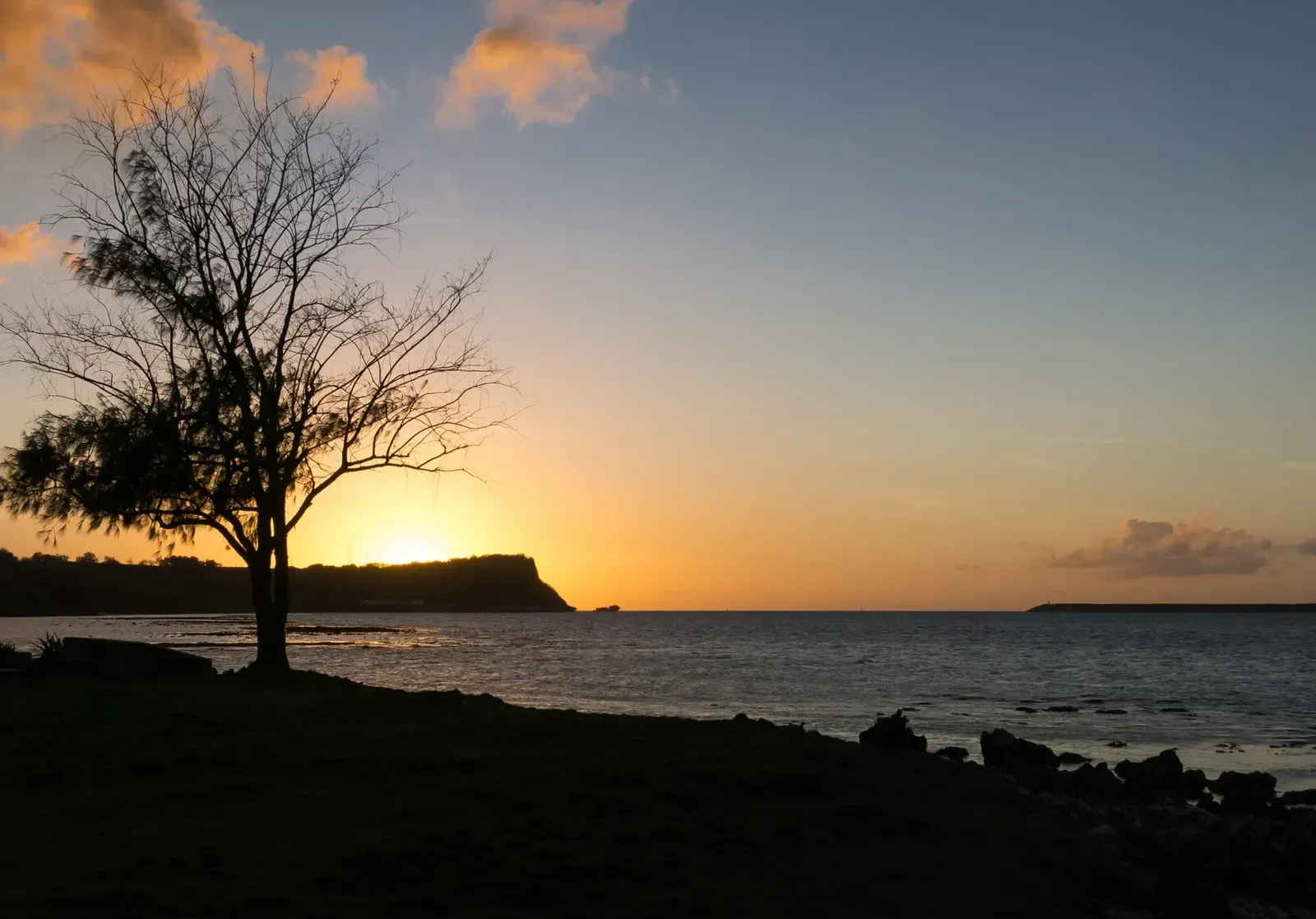
- Silhouetted headland at sunset over Orote Point, the entrance to Apra Harbor, Guam by Jonathan Miske, CC BY-SA 2.0, via Wikimedia Commons
- Two blacktip reef sharks cruising over a coral reef off Guam by David Burdick, NOAA, Public domain, via Wikimedia Commons
- Palm trees silhouetted at dusk on Gab Gab Beach, Guam by Jonathan Miske, CC BY-SA 2.0, via Wikimedia Commons
Similar destinations
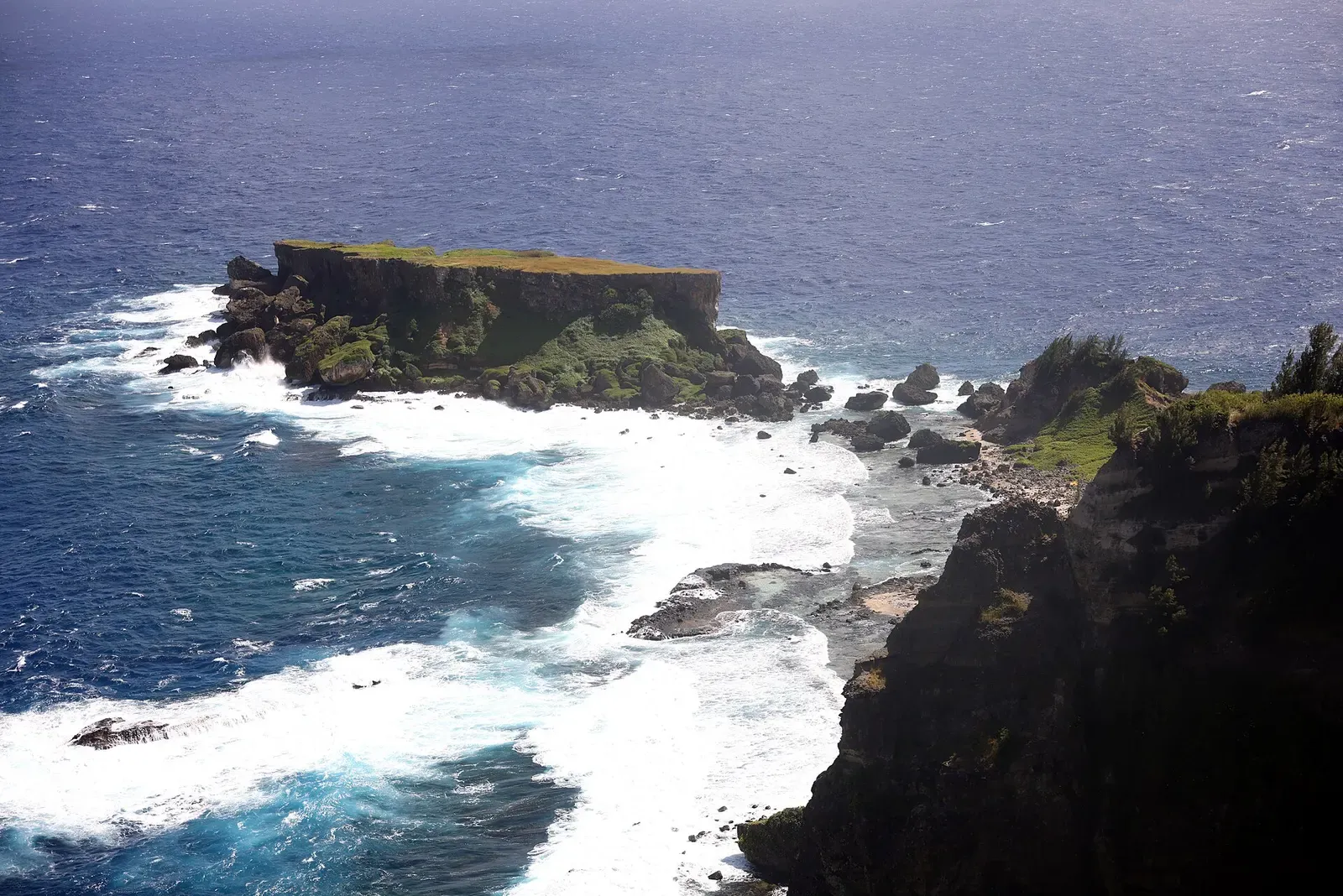
Swim out of a collapsed limestone cavern into the open Pacific
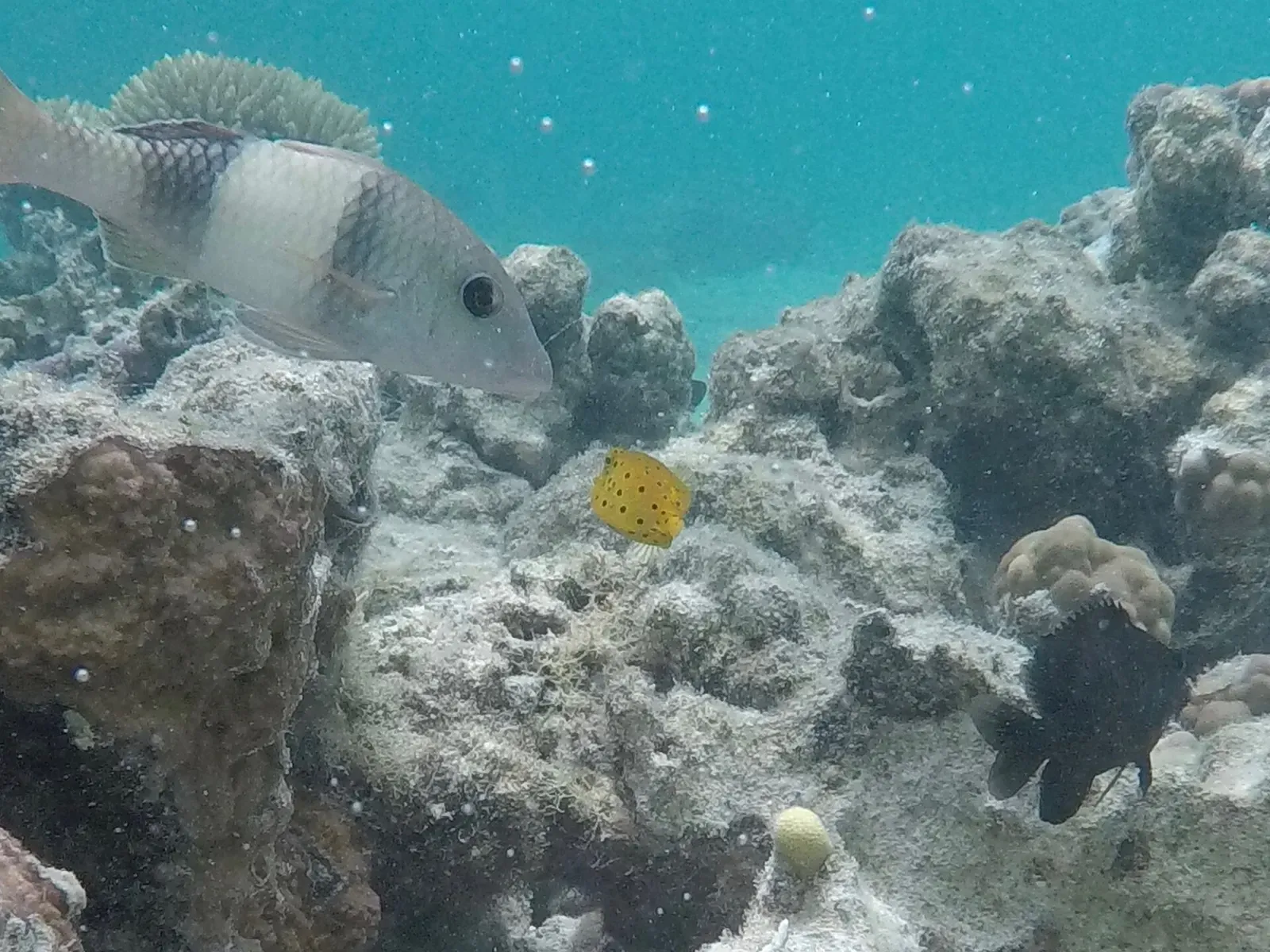
Forty-metre visibility over lava caves and canyons, straight off the reef
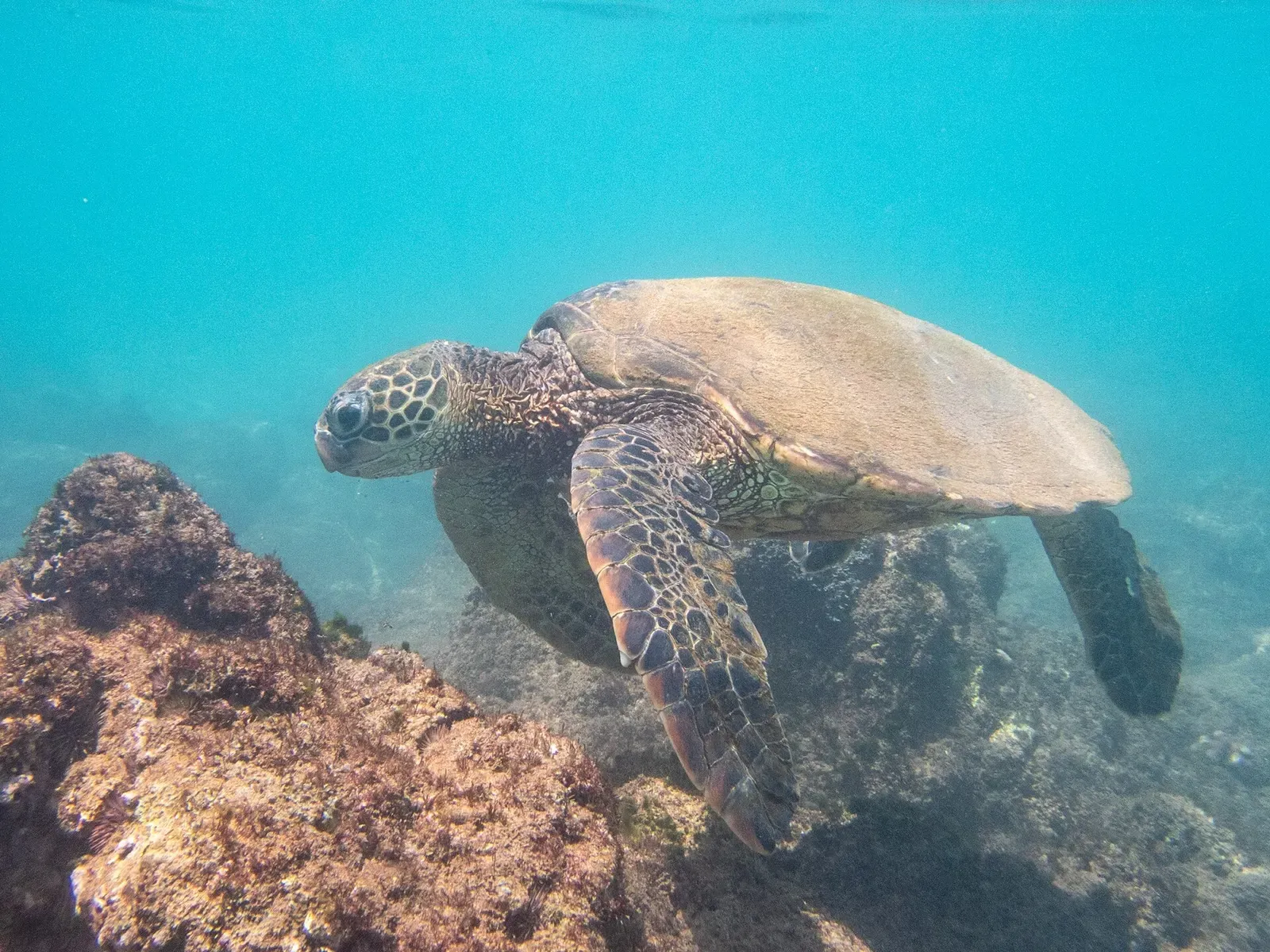
Humpback song carries through every dive from December to April
.jpg)

.jpg)
A 38 m chimney built by freshwater springs venting inside the lagoon