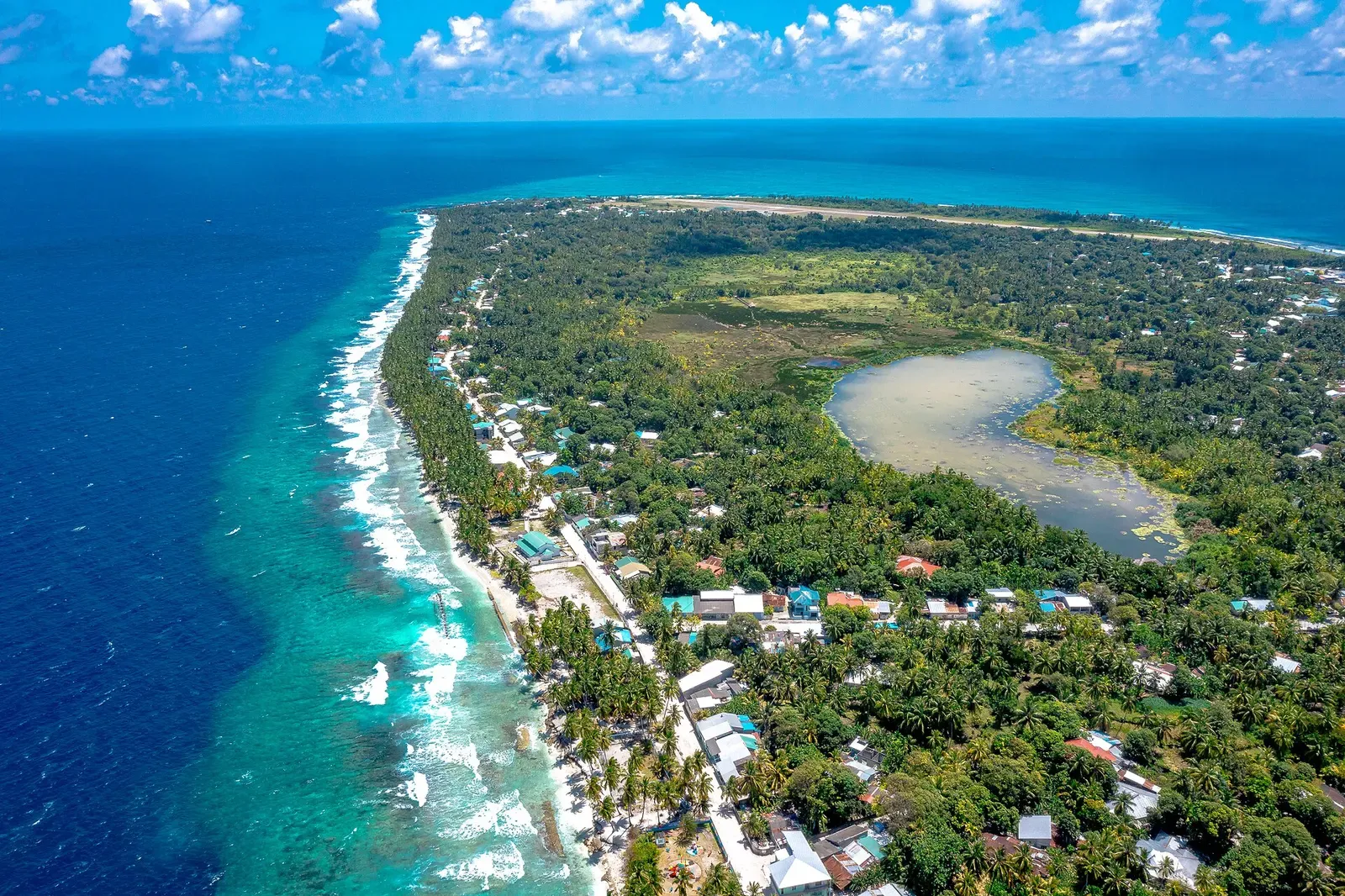
Fuvahmulah sits alone in the equatorial channel with no surrounding reef, so deep water comes right up to the island's edge and pelagics cruise close to shore. Tiger sharks visit a cleaning station just outside the harbor almost daily, thresher sharks show up at a nearby point in the early morning, and scalloped hammerheads school over deeper reef edges. Diving here is drift-style in open water with little reef structure for shelter.
About diving in Fuvahmulah
Everything runs from the island itself. Beds are in local guesthouses, the dive centres work out of the harbour, and boats are small and quick because the drop-offs are minutes away rather than the long transits most Maldives diving involves. Mornings start early, since the dawn dives depend on first light and quieter water. There is no atoll around the island to shelter behind, so a windy forecast reshapes the whole schedule rather than just moving a site or two.
Fuvahmulah is a one-island atoll sitting just south of the equator, and that shape dictates how a dive is run. Sites are sections of the island's edge: a corner, a shelf of sand, a ridge with blue on one side and rock on the other. So you descend fast, stay tight as a group, hold position on the structure instead of wandering, and let the crew pick you up wherever the drift ends. Reef scenery is a side note; the topography mainly gives the sharks somewhere to be.
The tiger dive is run as a set piece: a briefed formation on the sand, everyone low and still, guides working between the group and the animals. The aggregation has long been associated with fish waste discarded at the harbour. It is watched rather than swum, and it rewards anyone who can hold trim without kicking. The rest of a week is open-water waiting: a ridge at first light, blue in every direction, and sometimes nothing. Divers after coral gardens or an easy first trip out of the course are better served elsewhere.
When to dive Fuvahmulah
| Jan | Feb | Mar | Apr | May | Jun | Jul | Aug | Sep | Oct | Nov | Dec |
|---|---|---|---|---|---|---|---|---|---|---|---|
| Prime | Prime | Prime | Prime | Good | Good | Good | Good | Good | Fair | Fair | Prime |
Tiger sharks are resident year-round; the dry NE monsoon (Dec-Apr) gives the calmest seas, while the Oct-Nov transition brings choppier open-water conditions.
Getting there
A domestic flight from Male reaches Fuvahmulah's airport, followed by a short road transfer; the island is a single landmass, so there is no island-hopping once you land. Divers stay in island guesthouses, shops and restaurants are within walking or bike range, and everything is dived by boat out of the harbour.
Wildlife calendar
Tiger sharks are the constant here, seen in every month of the year. Threshers are an early-morning animal and scalloped hammerheads school out in the blue, both easier on the settled seas of December through April, with mantas, grey reef sharks, groupers, big trevally and turtles filling in around them. October and November bring choppier water and more cancelled days.
Dive types & marine life
- Pelagic & blue water
- Drift
- Wall
- Tiger sharks
- Thresher sharks
- Hammerheads
- Manta rays
- Reef sharks
- Sea turtles
- Groupers
- Trevally & jacks
Notable dive sites in Fuvahmulah
Tiger Harbour
Cleaning station just outside the harbor where tiger sharks gather
Farikede
Point where thresher sharks are seen at a cleaning station in early morning
Katradhoo Kandu
Channel drift dive where schooling hammerheads pass in open water
Photos from Fuvahmulah
Vsevolod Rudyi · CC BY 4.0
Ibrahim Asad · CC BY 3.0
Asaymirus · CC BY 4.0
Grampsandstuff · CC0
Dive videos
Above & Below Maldives - FUVAHMULAH // Tigersharks and more · Behind the Mask on YouTube
Fuvahmulah Maldives Tiger Shark Diving (4K) · Mert Dinc on YouTube
Photo credits
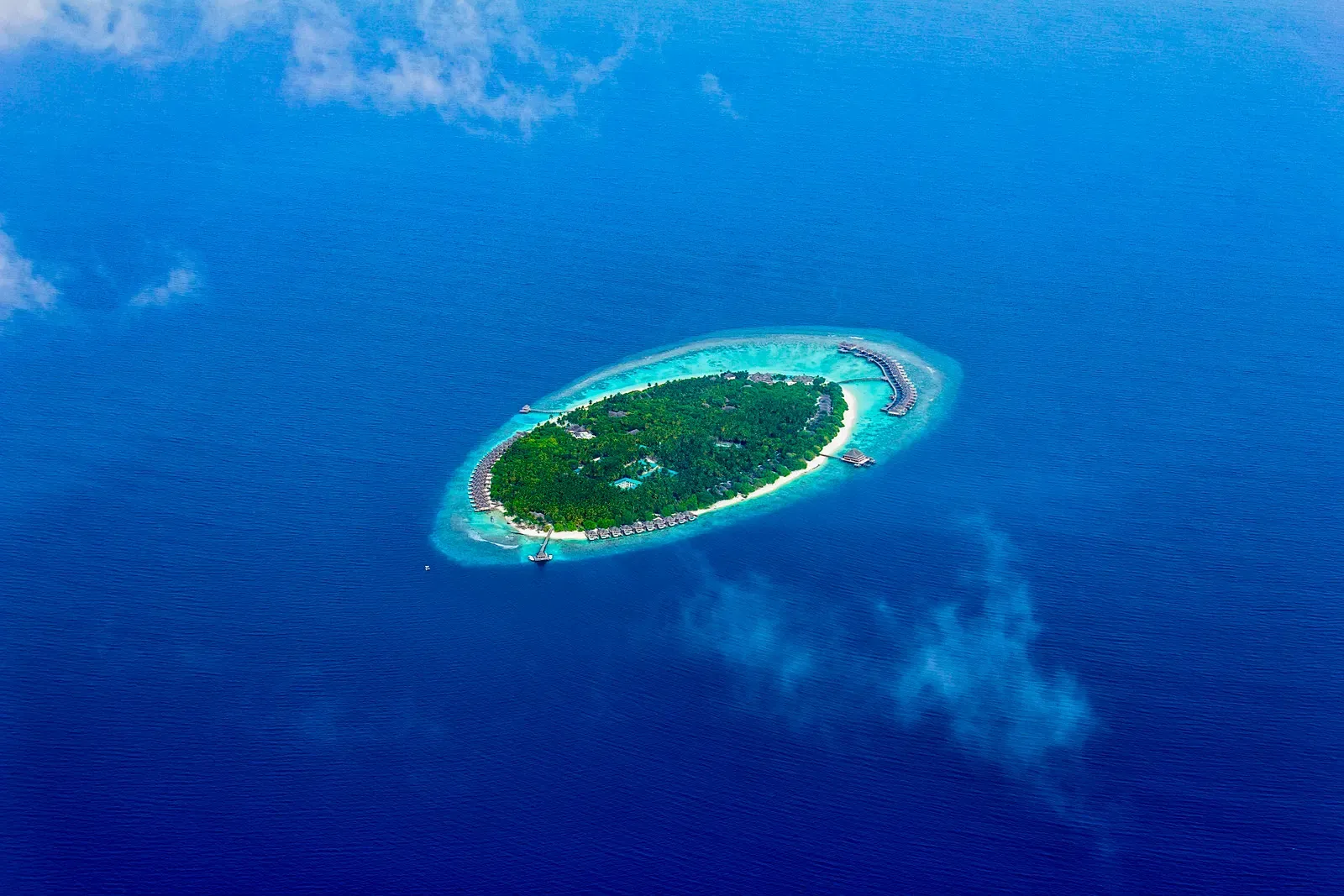
- Aerial view of Fuvahmulah island in the Maldives, its narrow shoreline meeting open ocean by Asaymirus, CC BY 4.0, via Wikimedia Commons
- A longfin batfish swims close to the camera over the reef in the Maldives by Vsevolod Rudyi, CC BY 4.0, via Wikimedia Commons
- Sunset over the rocky point at Fuvahmulah Harbour, Maldives by Ibrahim Asad, CC BY 3.0, via Wikimedia Commons
- Aerial view of Fuvahmulah's palm-lined coastline and turquoise shallows by Asaymirus, CC BY 4.0, via Wikimedia Commons
- Dusk light over the sandy shoreline at Thoondu beach, Fuvahmulah, Maldives by Grampsandstuff, CC0, via Wikimedia Commons
Similar destinations
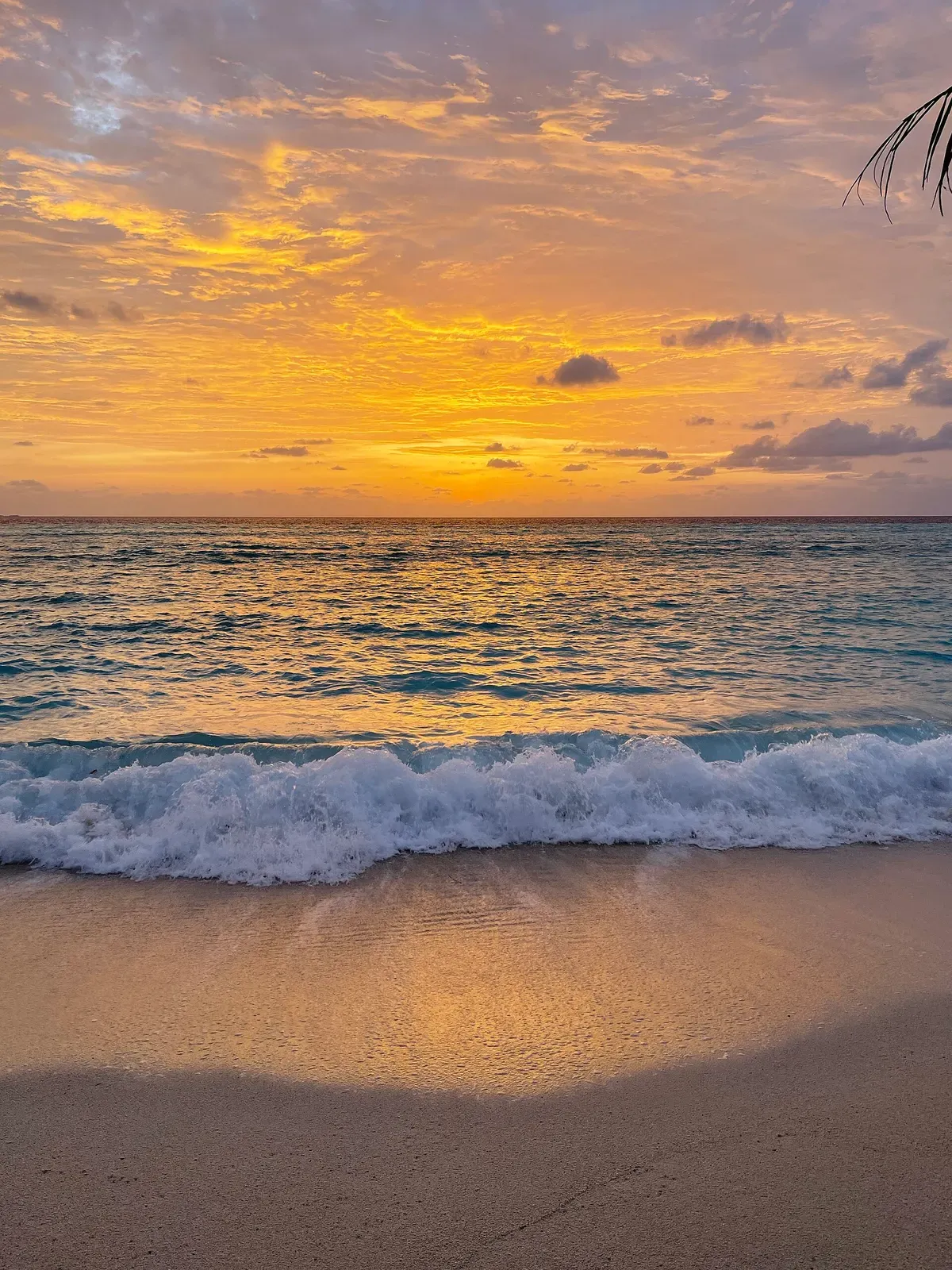
Equatorial channels with stacked grey reef sharks and a wartime tanker
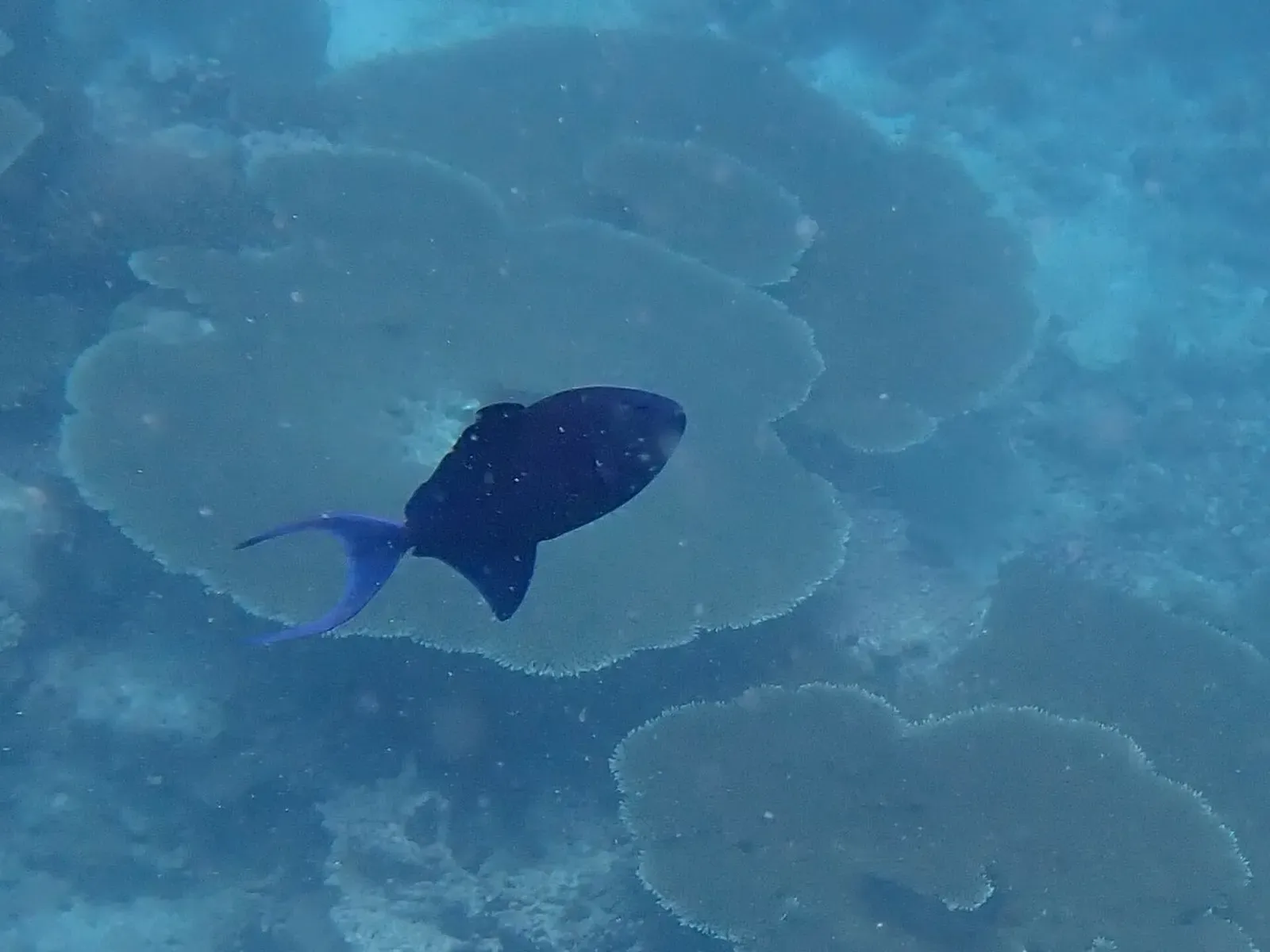
Manta feeding frenzies sweep into Hanifaru Bay when plankton blooms
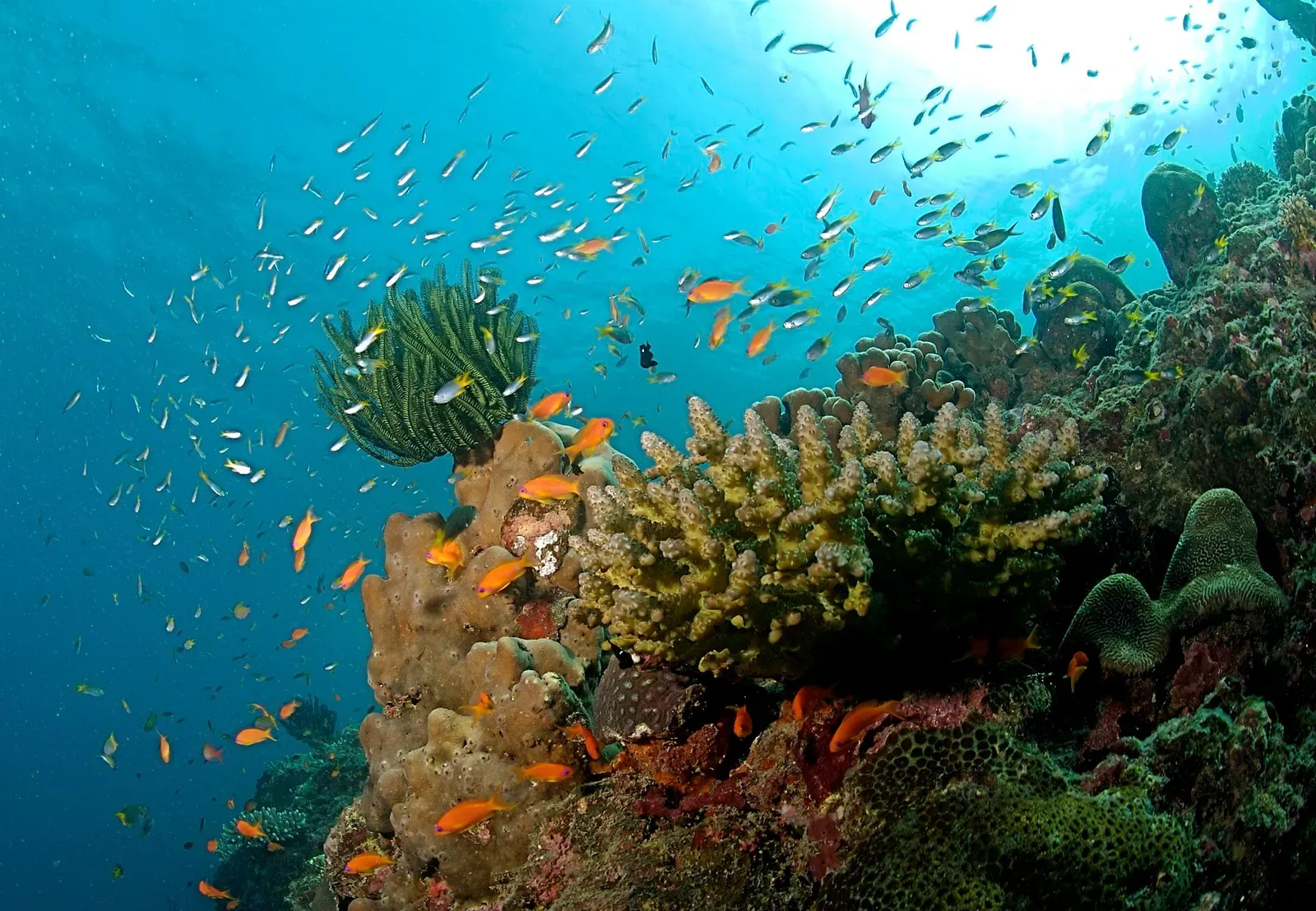
Barracuda schools circle Barren Island, home to India's only active volcano


Up to two hundred reef mantas barrel-roll inside a 200 m bay