Red Sea & Gulf of Aden · Egypt
Marsa Alam & Fury Shoals
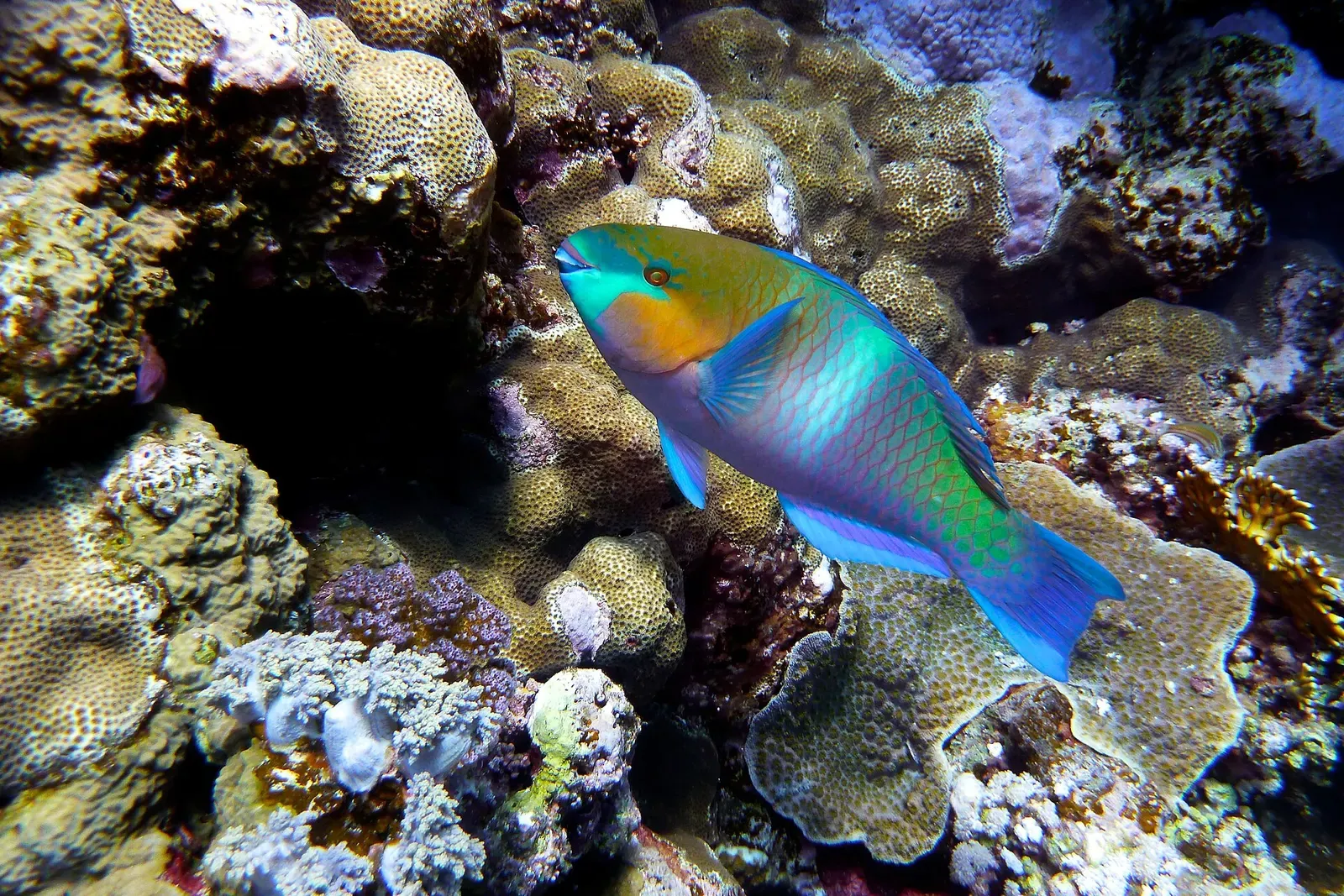
Resident dugongs graze seagrass in shallow Abu Dabbab Bay year-round.
Photo: David Sanford · CC BY-SA 3.0
Marsa Alam anchors Egypt's southern Red Sea coast, where Abu Dabbab Bay hosts resident dugongs grazing seagrass in shallow water and Sha'ab Samadai's horseshoe reef shelters a resident pod of spinner dolphins. Elphinstone Reef, a narrow offshore plateau with sheer walls, draws oceanic whitetips and seasonal hammerheads but is exposed to strong current on both ends. Closer inshore, the coral gardens, swim-throughs, and canyons of Fury Shoals and Wadi Gimal Island give calmer, current-free alternatives for less experienced divers.
About diving in Marsa Alam & Fury Shoals
Diving here spreads along a long coastal strip rather than running out of one harbour, so the shape of a day depends mostly on where you sleep. Many camps and resorts sit on their own stretch of fringing reef, and a large share of dives start as a walk down the beach or the jetty steps and a swim out across a sand channel, which makes unhurried afternoon dives and night dives easy to fit in without booking anything. The offshore reefs are day-boat work instead: an early start, a run out from the nearest harbour, and two dives before the wind gets up.
The coast is fringing reef cut at intervals by marsas, drowned wadi mouths flooded by rising sea level and now sheltered bays of sand and seagrass with simple entries. That inshore world is shallow and forgiving. Further out the reef breaks into detached shoals and the character changes: broad coral labyrinths whose swim-throughs are mostly open, daylit caverns a few metres down rather than true caves, and isolated ridges standing in deep water, dived as a wall with a plateau at either end, where the drop is usually made upcurrent of the reef.
Two of the signature encounters are managed rather than casual. The dolphin lagoon is zoned under marine-park rules, with a core resting area closed to visitors, separate snorkelling and diving zones outside it, a limit on boats and a fee collected before departure, so the meeting is rationed and supervised. At the seagrass bay the rules sit lighter but the briefing is the same: keep your distance, stay out of the animal's path to the surface, and do not follow it for a photograph.
It suits divers who want large animals without giving up easy diving, since the shallow bays stay within reach of a snorkelling partner while the offshore plateaus sit deep enough to cut no-decompression time short and reward a steady air consumption in moving water. Photographers do well because so much of the interest sits in shallow, well-lit water. The Red Sea's best-known wrecks lie well to the north, and anyone whose trip hinges on one exposed offshore reef should keep spare days, because wind closes it for a stretch at a time.
When to dive Marsa Alam & Fury Shoals
| Jan | Feb | Mar | Apr | May | Jun | Jul | Aug | Sep | Oct | Nov | Dec |
|---|---|---|---|---|---|---|---|---|---|---|---|
| Good | Good | Prime | Prime | Prime | Good | Good | Good | Prime | Prime | Prime | Good |
Dugongs and dolphins are resident year-round; spring and autumn bring the calmest seas for Elphinstone.
Getting there
Marsa Alam has its own international airport, a short transfer from Port Ghalib; Hurghada is the fallback, three to four hours away by road to the north. Bases run from El Quseir and Port Ghalib down to Hamata for the southern shoals, and many are dive camps rather than hotels. Marine-park sites carry a per-person fee, usually added to the boat price.
Wildlife calendar
The seagrass bays hold dugongs and green turtles in any month, though a dugong is one roaming animal on a large meadow rather than a fixture, so allow several attempts. Offshore, reef sharks, napoleon wrasse and eagle rays are the regulars; oceanic whitetips are mainly an autumn prospect on the exposed reefs, and hammerheads a warm-season chance no operator can promise.
Dive types & marine life
- Reef
- Wall
- Drift
- Cave & cavern
- Pelagic & blue water
- Dugongs & manatees
- Dolphins
- Oceanic whitetips
- Hammerheads
- Sea turtles
- Napoleon wrasse
- Eagle rays
- Reef sharks
- Groupers
Notable dive sites in Marsa Alam & Fury Shoals
Elphinstone Reef
Narrow offshore plateau with sheer walls, strong current, and oceanic whitetips.
Abu Dabbab Bay
Shallow seagrass bay with resident dugongs and green turtles.
Sha'ab Samadai (Dolphin House)
Horseshoe reef sheltering a resident pod of spinner dolphins.
Fury Shoals
Cluster of coral pinnacles with swim-throughs and calm, current-free diving.
Wadi Gimal Island
Protected marine-park reef with coral gardens and a mangrove-lined shore.
Photos from Marsa Alam & Fury Shoals
Do Hyun Kang · CC0
Nicola Feola · CC BY 3.0
Nicola Feola · CC BY 3.0
Asmaa Khalifa · CC BY-SA 3.0
Dive videos
The Sharks of Elphinstone – Diving Red Sea 2017 · BLUEWAVEFILMS on YouTube
Abu Dabbab reef diving, Marsa Alam, Egypt · Petr Kominek on YouTube
Photo credits
- A rusty parrotfish glides over a coral reef in the Red Sea near Marsa Alam by David Sanford, CC BY-SA 3.0, via Wikimedia Commons
- A wooden pier stretches into calm water under a pink sunrise sky at Marsa Alam by Do Hyun Kang, CC0, via Wikimedia Commons
- A palm tree and pink bougainvillea frame a turquoise beach along the Marsa Alam coast by Nicola Feola, CC BY 3.0, via Wikimedia Commons
- Camels led along a desert beach near Marsa Alam, Egypt by Nicola Feola, CC BY 3.0, via Wikimedia Commons
- A kitesurfer rides the turquoise waters off the Marsa Alam coastline by Asmaa Khalifa, CC BY-SA 3.0, via Wikimedia Commons
Similar destinations
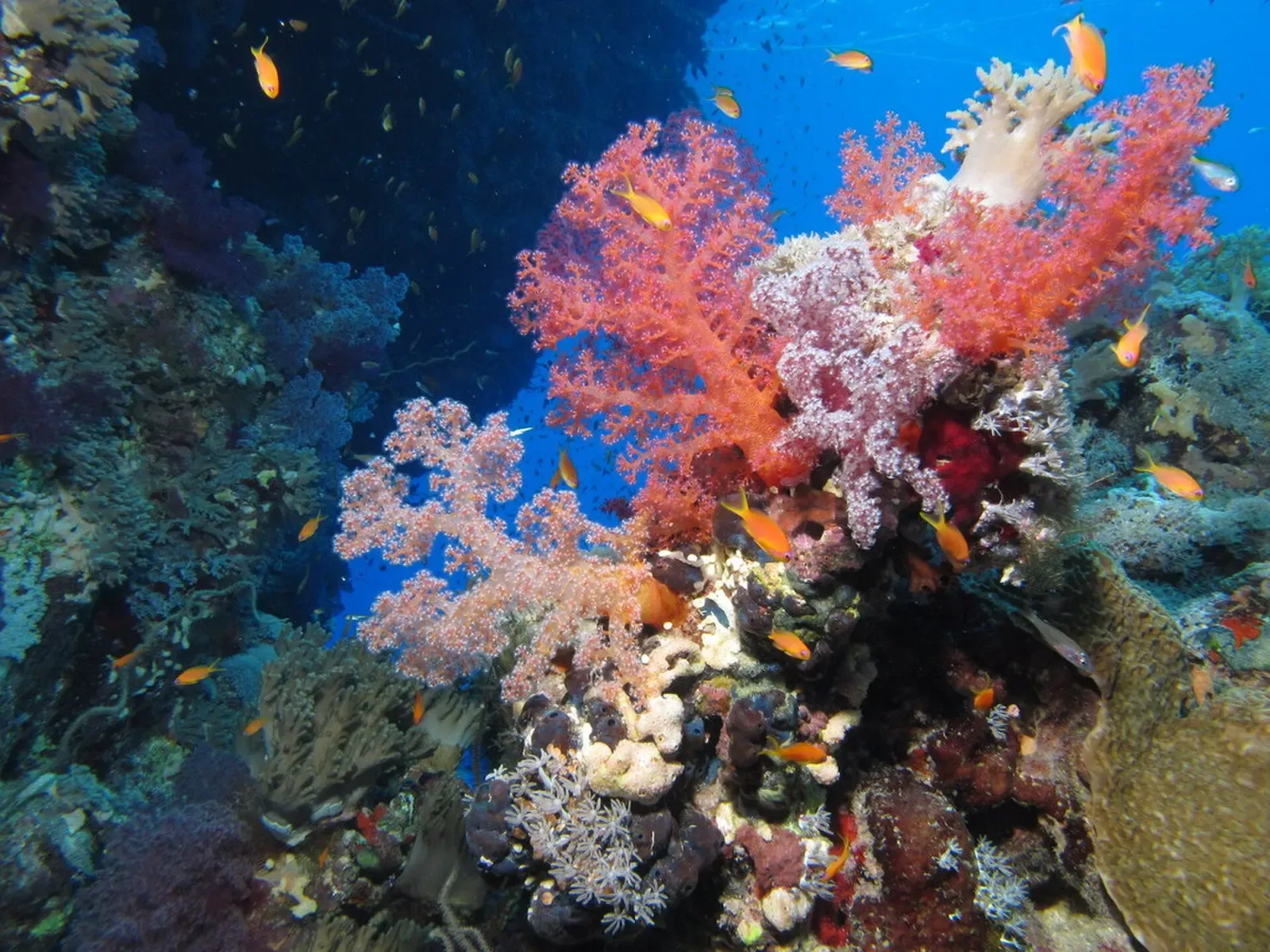
Light shafts cut through shallow coral caves at Umm Kharārīm
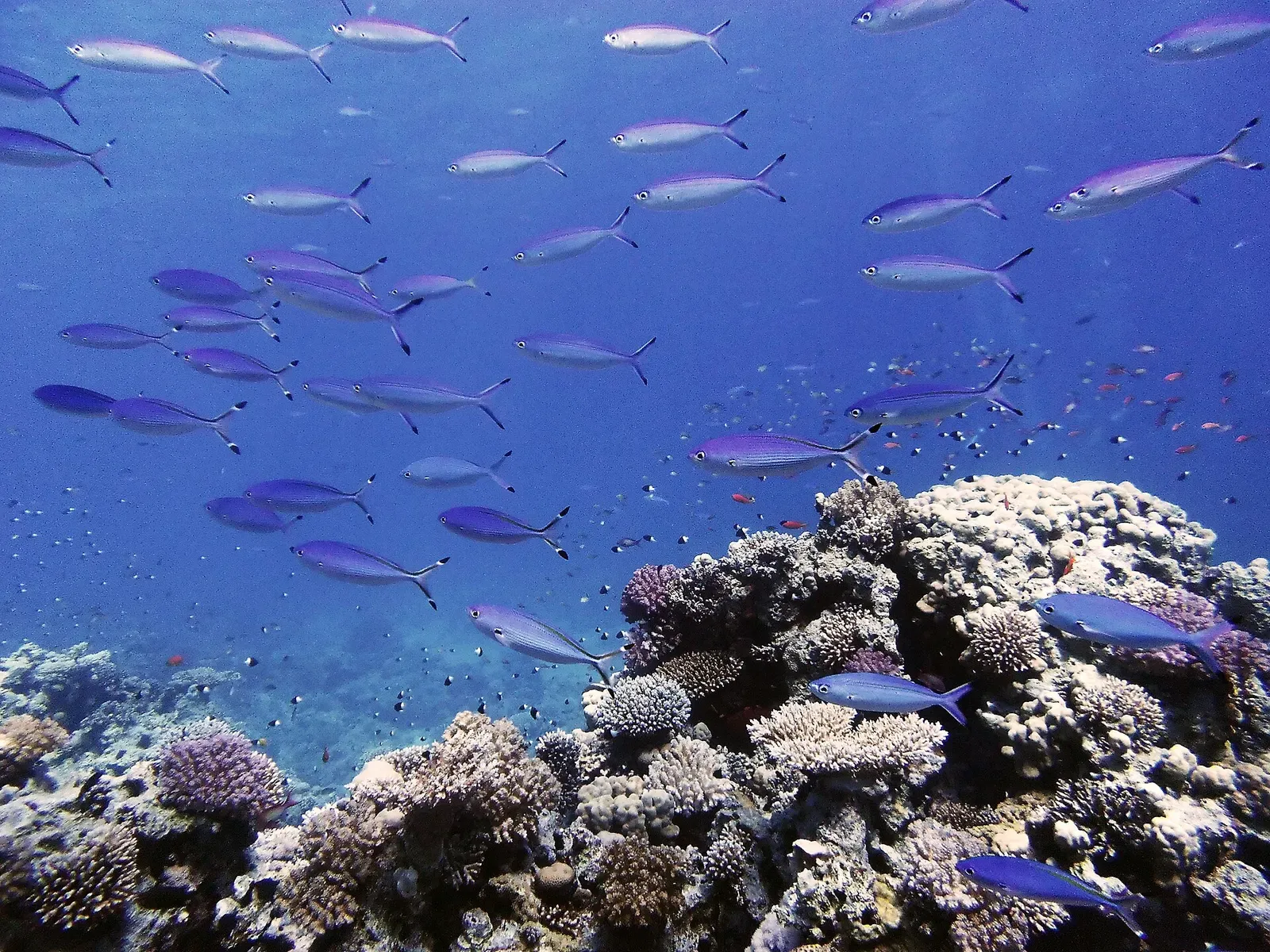
The Thistlegorm's holds still stacked with motorcycles, trucks and rail cars

.jpeg)

.jpg)
.jpeg)
Juvenile whale sharks gather in the Gulf of Tadjoura through the winter plankton bloom.
Red Sea & Gulf of Aden
Farasan Banks & Al Lith
Saudi Arabia
Whale sharks gather each spring on a reef almost nobody dives