Red Sea & Gulf of Aden · Egypt
Sharm El Sheikh — Ras Mohammed
The Thistlegorm's holds still stacked with motorcycles, trucks and rail cars
Photo: patano · CC BY-SA 3.0
Sharm El Sheikh sits at the tip of the Sinai Peninsula and serves as the launch point for Ras Mohammed National Park's coral walls and the Straits of Tiran's four current-swept reef pillars. The SS Thistlegorm, a WWII armed transport sunk in 1941 with motorcycles, trucks, and rail cars still stacked in its holds, lies in the Strait of Gubal near Sha'ab Ali, three to four hours north by day boat, and ranks among the most-dived wrecks anywhere. Day boats also reach Ras Ghozlani's sheltered slopes and the Dunraven wreck, pairing wall diving with wreck exploration in a single trip.
About diving in Sharm El Sheikh — Ras Mohammed
Diving here runs on a day-boat timetable. Boats load early at Sharm el Maya, Travco Marina or the Sharks Bay jetty, cross to the park or the strait, and fit two or three dives around a cooked lunch on deck before turning back in the late afternoon. Ras Mohammed has been a national park since 1983 and charges a per-diver entry fee; anchoring is out, so boats tie to fixed moorings and pick divers up downcurrent rather than waiting at the line. Trips to the northern wrecks leave hours earlier, and several operators sell them as a one-night safari so the hull can be dived before the day fleet arrives.
The three dive areas feel different underwater. Inside Ras Mohammed the headline dives are walls: a shallow reef top ends abruptly, the drop-off runs into open water, hard coral on the shoulder and current along the face, though sheltered corners are gentle coral slopes by comparison. The Straits of Tiran hold four reefs strung across a shipping channel, Jackson, Woodhouse, Thomas and Gordon, each dived as a drift down one flank with the mooring at the sheltered end; the freighter Loullia still stands aground on Gordon, a landmark of the strait since 1981. Closer to town, Ras Umm Sid, the Gardens and Temple are sloping coral and pinnacles, dived when wind shuts the crossings.
Two dives shape a week. One is the wreck day: repeat visits to a single hull, a surface interval spent working out what you swam through, and usually a pass over the two locomotives blown clear onto the sand. The other is the current dive at Tiran or on the Ras Mohammed corner, holding on the blue side of the reef and watching what comes past. The debris scattered on the slope there is cargo from the Yolanda, a freighter lost in 1980 whose bathroom fittings still litter the reef while the hull itself slid into deep water.
Sharm suits divers who want variety without changing base. The town carries a lot of dive centres, from budget operations to technical schools, and the same harbours serve a first Open Water course on sheltered local reef and an early boat out to the exposed corners. It works for mixed groups, since resorts, restaurants and desert trips absorb people who are not diving. The trade-off is company: the best-known moorings fill up around the middle of the day, and anyone who dislikes full boats and fixed schedules will notice.
When to dive Sharm El Sheikh — Ras Mohammed
| Jan | Feb | Mar | Apr | May | Jun | Jul | Aug | Sep | Oct | Nov | Dec |
|---|---|---|---|---|---|---|---|---|---|---|---|
| Fair | Fair | Good | Good | Prime | Prime | Prime | Prime | Prime | Prime | Good | Fair |
Hammerhead sightings at Tiran peak June–September; winter winds can make Tiran crossings choppier.
Getting there
Almost everyone flies into Sharm El Sheikh International and stays in Naama Bay, Hadaba or Nabq, 10 to 30 minutes from the harbours. Diving is boat-based, and Ras Mohammed park fees are normally collected on the day on top of the trip price. Northern-wreck liveaboards also sail from here.
Wildlife calendar
Napoleon wrasse, grouper and turtles are resident on the park reefs; barracuda and jack schools stack on the exposed corners through the May-to-October prime stretch. Hammerheads are a June-to-September possibility in the strait, oceanic whitetips more an autumn one, both luck rather than bookable. Whitetip reef sharks are the resident shark at Tiran; grey reefs and eagle rays are occasional.
Dive types & marine life
- Wall
- Drift
- Wreck
- Reef
- Pelagic & blue water
- Hammerheads
- Oceanic whitetips
- Reef sharks
- Napoleon wrasse
- Eagle rays
- Barracuda
- Trevally & jacks
- Sea turtles
- Groupers
Notable dive sites in Sharm El Sheikh — Ras Mohammed
Thistlegorm Wreck
Lies upright at about 30 m in the Strait of Gubal; holds, deck cargo and two locomotives on the sand
Shark & Yolanda Reef
Sheer wall drop-off inside Ras Mohammed park, scattered cargo debris on the reef slope.
Straits of Tiran — Jackson Reef
Current-swept reef pillar in the straits, known for hammerheads and strong drift.
Ras Ghozlani
Quiet corner of Ras Mohammed park dived as a gentle drift when the exposed sites are blown out
Dunraven Wreck
Victorian steamship wrecked in 1876, now encrusted with coral on a shallow reef slope.
Photos from Sharm El Sheikh — Ras Mohammed
Mmelouk · CC BY-SA 4.0
Mmelouk · CC BY-SA 4.0
Mmelouk · CC BY-SA 4.0
Mmelouk · CC BY-SA 4.0
Dive videos
Diving the Legendary SS Thistlegorm Wreck – Sharm El Sheikh, 4K (2023 Red Sea Dive) · Scuba Notes by Dmitry on YouTube
SS Thistlegorm Wreck Dive | Sharm el-Sheikh, Egypt 🇪🇬 | Shot on Insta360 | 4K · Above the Silence on YouTube
Photo credits
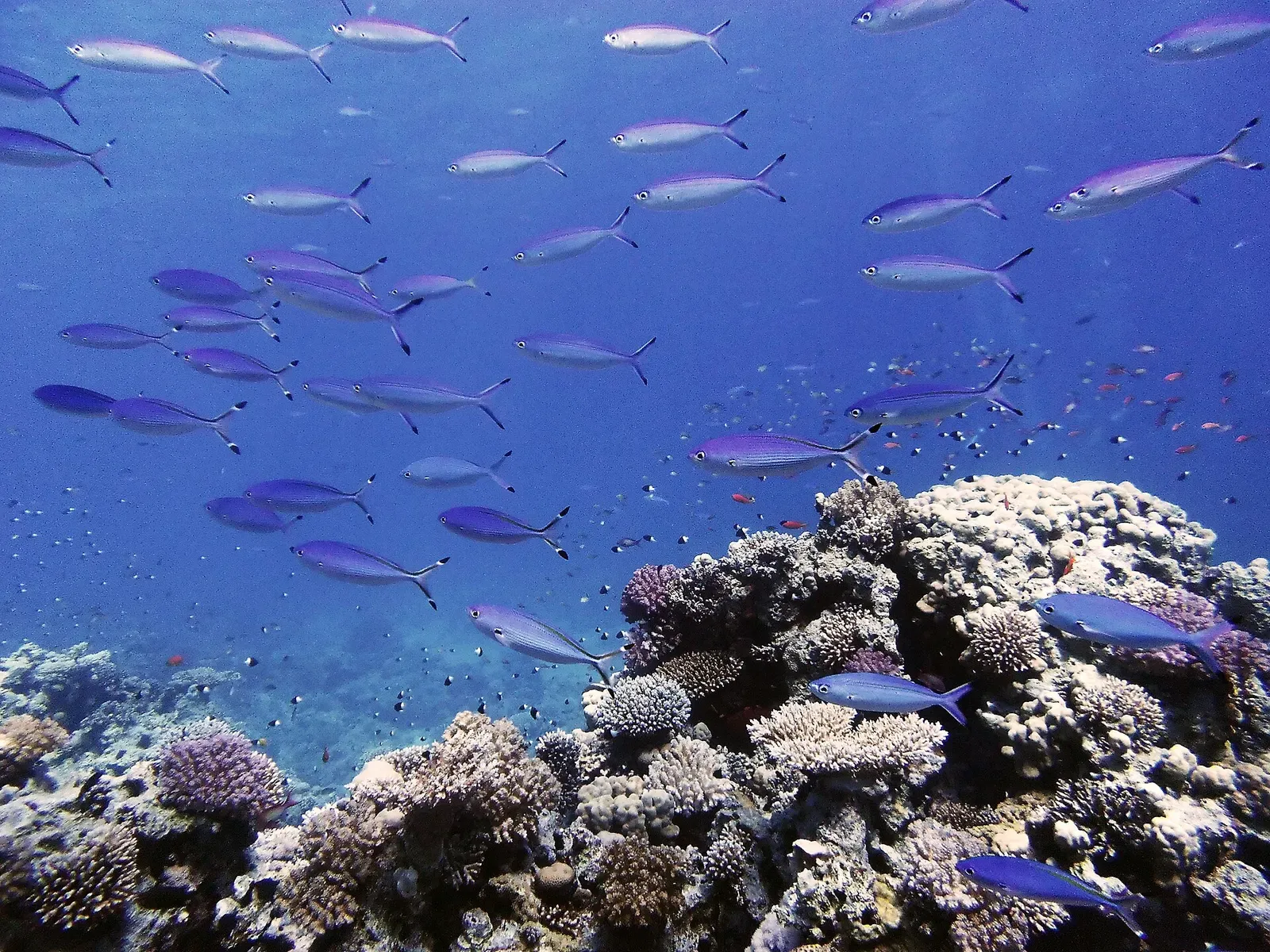
- A school of fish glides over a coral reef in the deep blue water off Ras Mohammed, near Sharm El Sheikh. by patano, CC BY-SA 3.0, via Wikimedia Commons
- Parrotfish and angelfish swim over a seagrass meadow in Ras Mohammed National Park. by Mmelouk, CC BY-SA 4.0, via Wikimedia Commons
- A spotted wrasse swims across the reef in Ras Mohammed National Park, Sharm El Sheikh. by Mmelouk, CC BY-SA 4.0, via Wikimedia Commons
- A striped angelfish glides over the sandy reef bottom in Ras Mohammed National Park. by Mmelouk, CC BY-SA 4.0, via Wikimedia Commons
- An emperor angelfish swims past coral formations in Ras Mohammed National Park. by Mmelouk, CC BY-SA 4.0, via Wikimedia Commons
Similar destinations
Red Sea & Gulf of Aden
Sudanese Red Sea
Sudan
Cousteau's 1963 Conshelf II habitat frames still rest on the sand at Shaab Rumi.
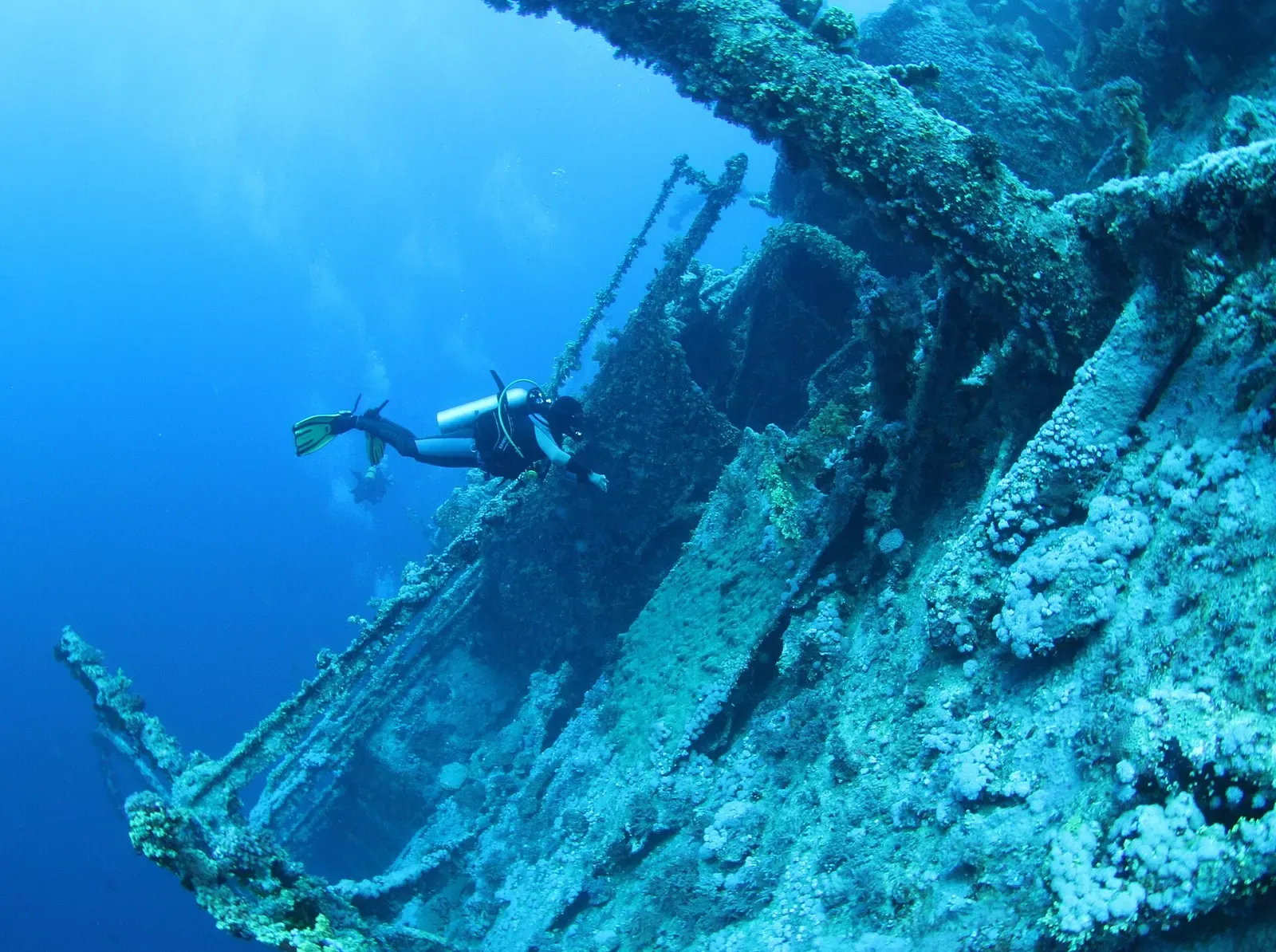
Oceanic whitetips patrol Big Brother's sheer walls year-round beside two historic wrecks.
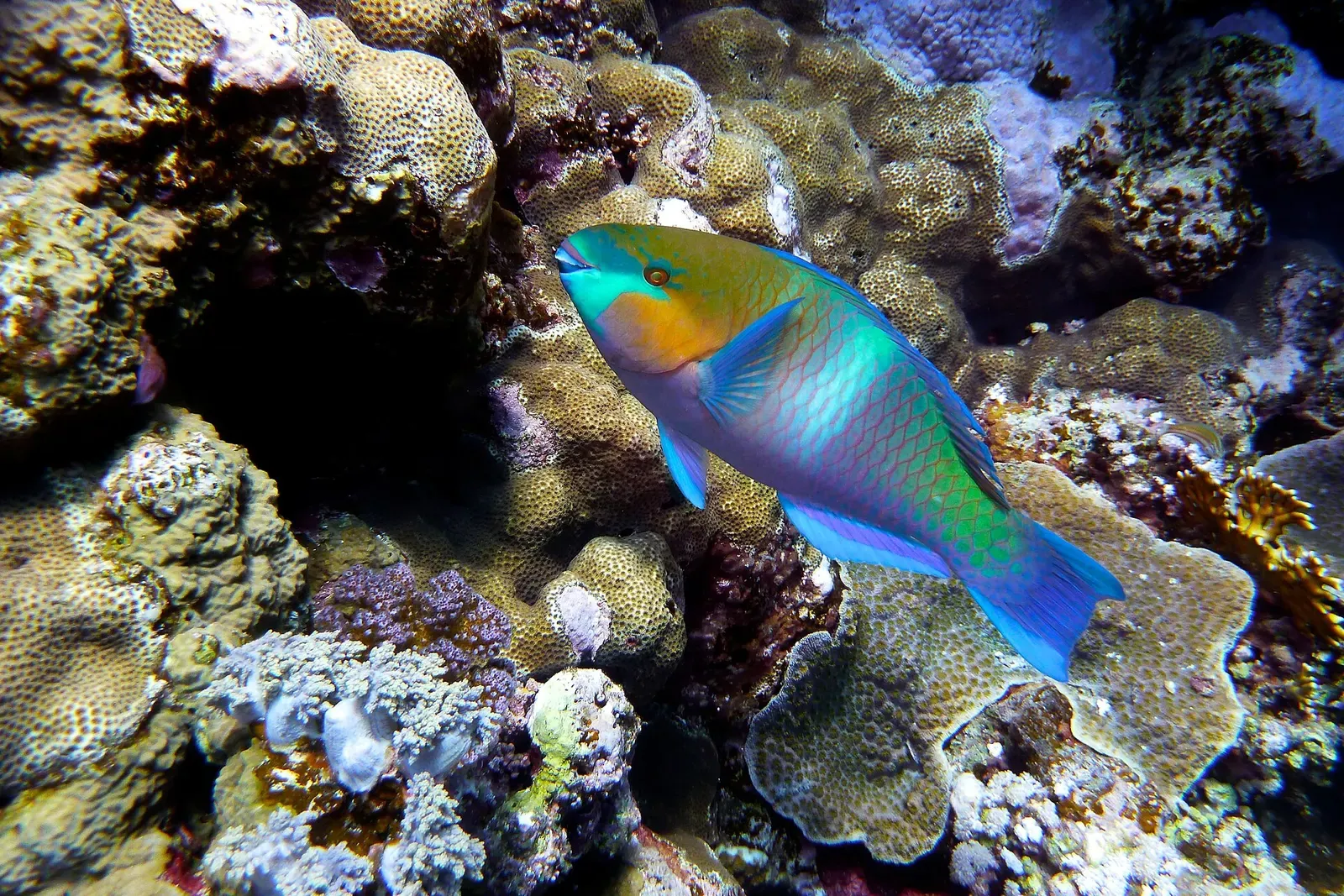
Resident dugongs graze seagrass in shallow Abu Dabbab Bay year-round.
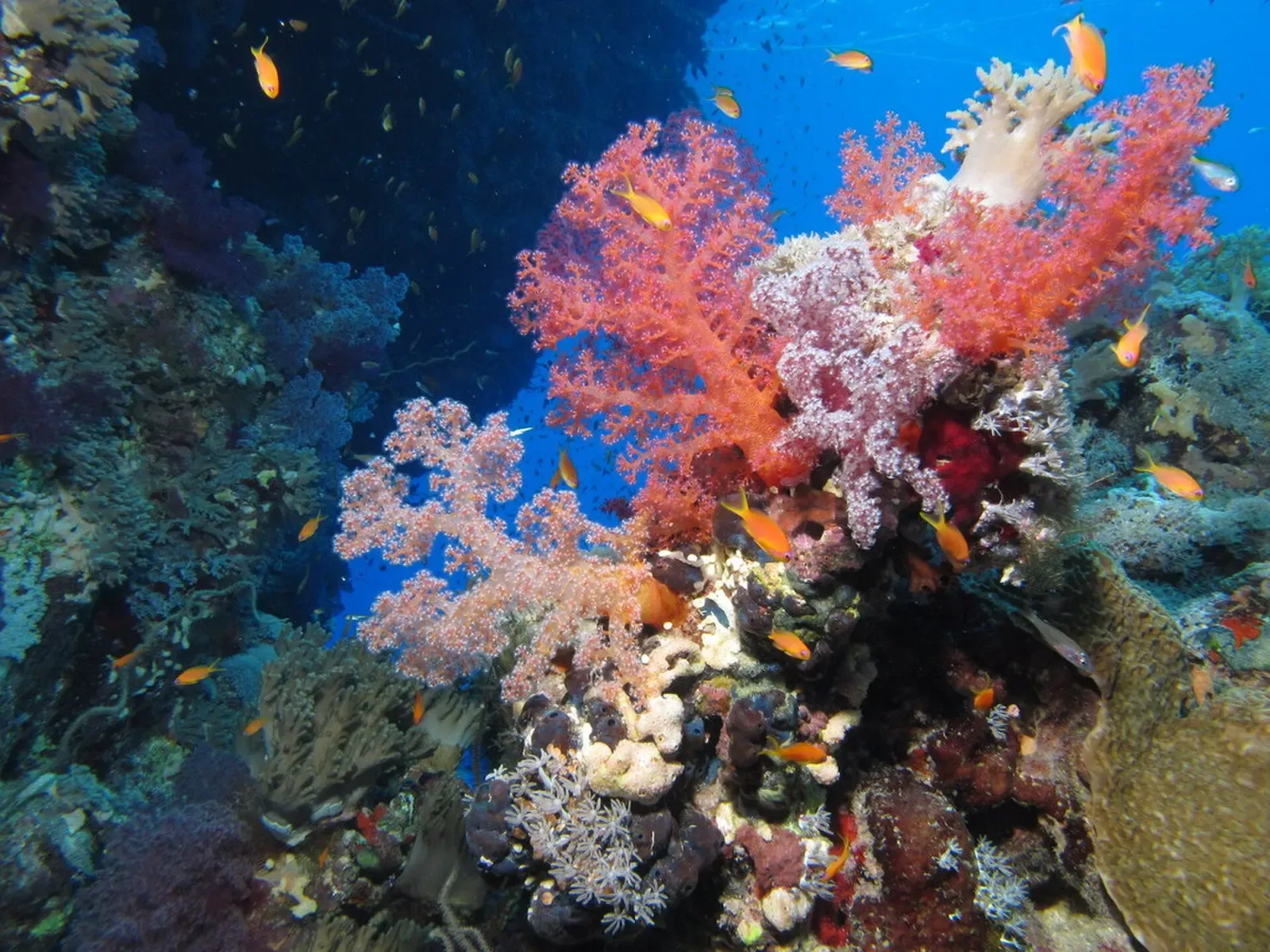


Light shafts cut through shallow coral caves at Umm Kharārīm