Red Sea & Gulf of Aden · Egypt
Brothers & Daedalus
Oceanic whitetips patrol Big Brother's sheer walls year-round beside two historic wrecks.
Photo: W.Strickling · CC BY-SA 4.0
Big and Little Brother are a pair of isolated reef pinnacles reached by long liveaboard crossing from Egypt's mainland, rising as sheer walls from open water with strong currents that draw oceanic whitetip sharks year-round and hammerheads in season. Big Brother carries two wrecks, the Aida troop transport and the Numidia cargo steamer, both draped down its walls in coral. Daedalus Reef, a further offshore pinnacle marked by a lighthouse, adds more wall and blue-water pelagic encounters, but all three sites demand comfort with strong current and open-ocean conditions.
About diving in Brothers & Daedalus
Everything here happens from a liveaboard on a fixed week-long loop. The boat crosses overnight from the mainland, picks up a mooring or lies off the reef, and runs its dives from the back deck or by zodiac, with divers dropped upcurrent and collected in open water at the end. Anchoring is not permitted on these reefs, so surface intervals are spent on a mooring line or under way, and the schedule bends around wind: an itinerary is written as an intention rather than a promise, and a blown-out day can mean a night's steam elsewhere.
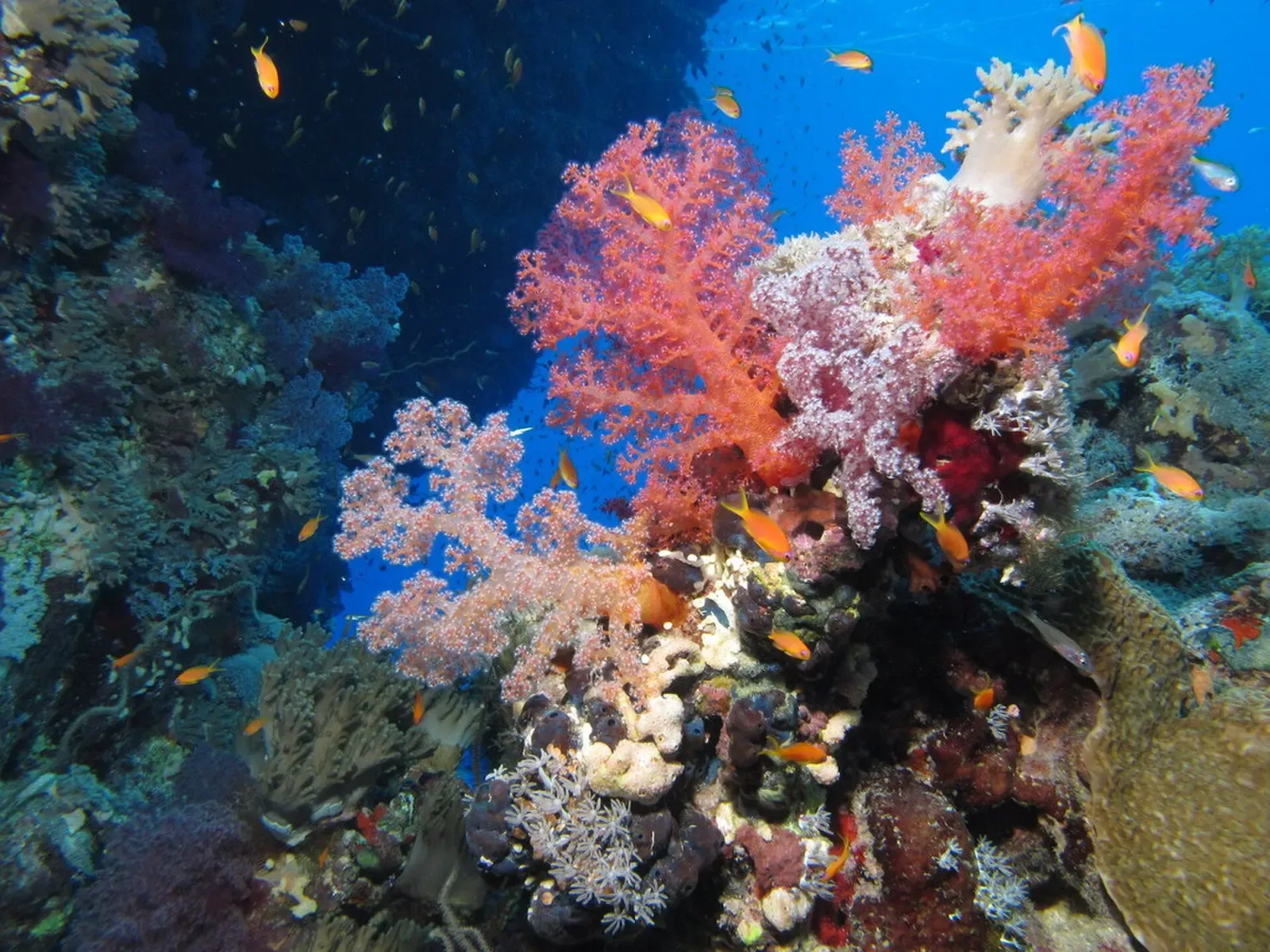
The reefs are simple shapes with complicated water around them. Big Brother is a long rock carrying a manned lighthouse, Little Brother is smaller and lower, and Daedalus stands alone further offshore. Each is a hard top ringed by wall, so a dive is usually a traverse along one face with the current on your shoulder, finishing with a hang in the blue. Big Brother's northern point and the northern plateau at Daedalus are where the water accelerates and the fish stack up, while the leeward sides get used when the exposed corners are unworkable. Little Brother's walls carry dense soft coral and large gorgonians.
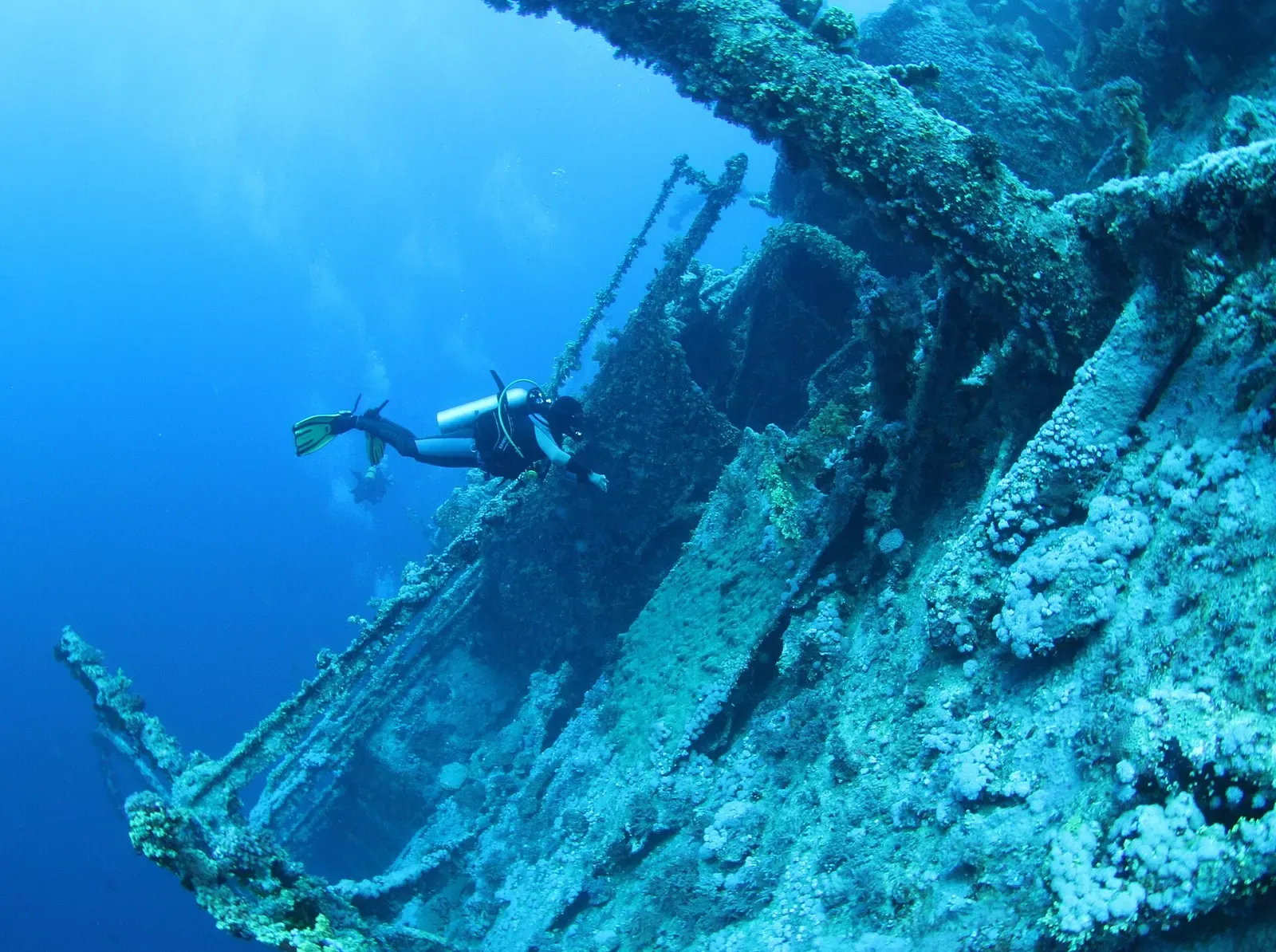
The two wrecks are dived as wall dives. Both lie down a steep slope rather than on flat seabed and both run well past recreational depth, so divers work the plating from the shallow end, the Numidia's bow within easy reach and the Aida deeper again, and turn before depth becomes the problem. How much of either ship you see is decided by the current that morning. Sharks tend to show away from the rock, in mid-water on the crossing or circling the boat during the safety stop, which is why guides insist on tight groups and a controlled ascent on a line.
This is a trip for experienced divers comfortable with being small in open water. Groups are self-reliant, entries and exits happen in moving water, and there is no house reef to sit a dive out on. Operators generally set a minimum logged-dive count, often around fifty, and expect a surface marker buoy and an audible signalling device on every diver; permits for the offshore marine parks are arranged by the boat before departure. Divers who want gentle reef, wide site choice and a bad-weather alternative should stay on the coast.
When to dive Brothers & Daedalus
| Jan | Feb | Mar | Apr | May | Jun | Jul | Aug | Sep | Oct | Nov | Dec |
|---|---|---|---|---|---|---|---|---|---|---|---|
| Off-season | Off-season | Fair | Good | Prime | Prime | Good | Fair | Prime | Prime | Good | Off-season |
Liveaboards mostly pause December–February for rough seas; shark sightings peak in the shoulder months.
Getting there
There is no land base. Boats sail from Port Ghalib near Marsa Alam or from Hurghada, and divers fly into Marsa Alam International or Hurghada International to join them. Itineraries usually string the two offshore reefs together with Elphinstone, and they run from roughly March to November rather than year-round.
Wildlife calendar
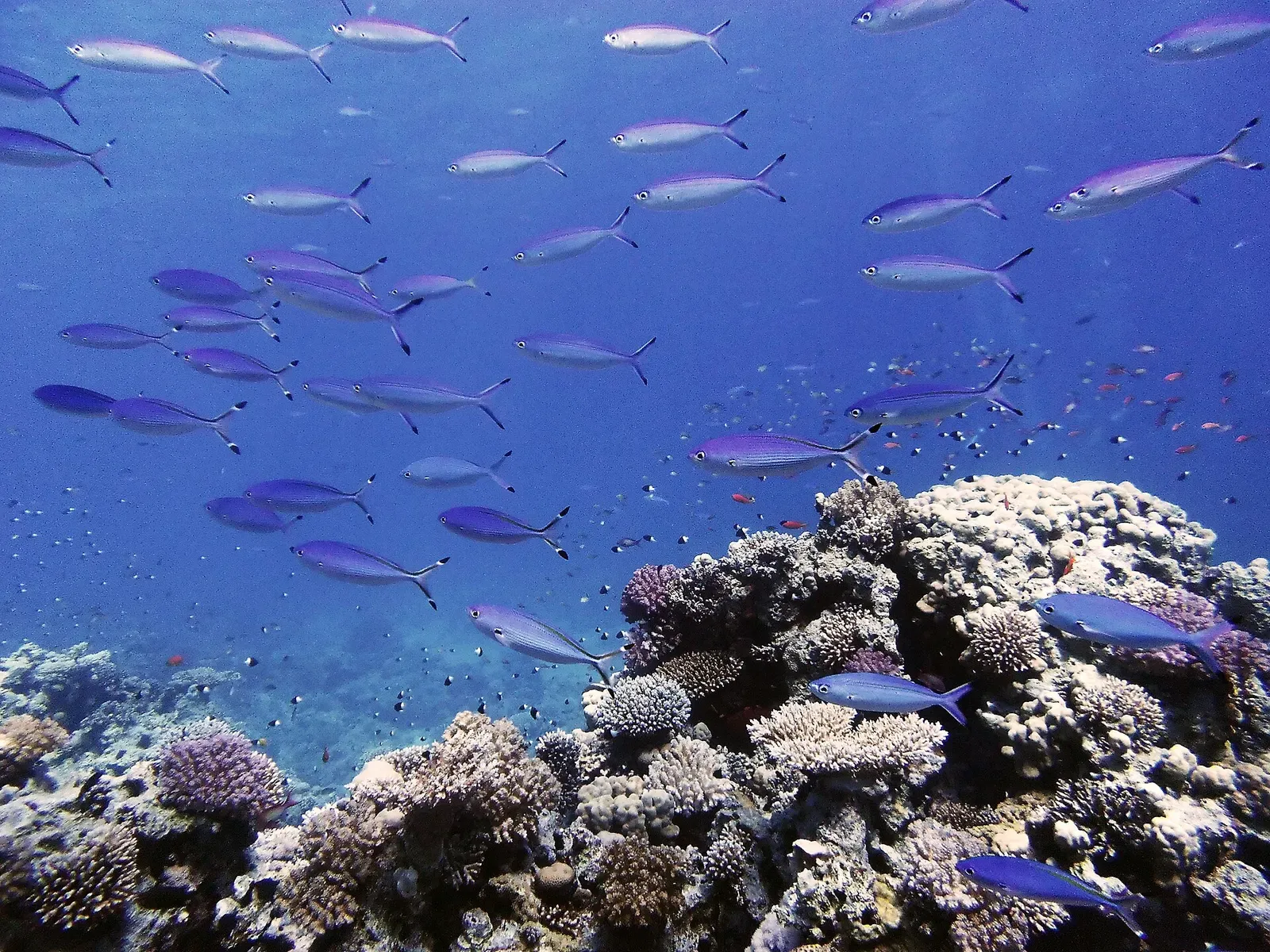
Oceanic whitetips are the animal most trips see, cruising the walls through the March-to-November season and often closest in on autumn boats; grey reef sharks work the same water. Schooling hammerheads are a summer hope at Daedalus's northern plateau, not a certainty. Tuna, barracuda and grouper hold the current-facing corners, with eagle rays and napoleon wrasse over the tops.
Dive types & marine life
- Wall
- Wreck
- Drift
- Pelagic & blue water
- Oceanic whitetips
- Hammerheads
- Reef sharks
- Napoleon wrasse
- Eagle rays
- Barracuda
- Tuna
- Groupers
Notable dive sites in Brothers & Daedalus
Big Brother Island
Sheer-walled pinnacle with strong current and year-round oceanic whitetips.
Numidia Wreck
1901 cargo steamer draped down Big Brother's north wall into deep water.
Little Brother Island
Smaller sister pinnacle with dramatic overhangs and hammerhead sightings.
Daedalus Reef
Isolated lighthouse reef with sheer walls and blue-water pelagic action.
Photos from Brothers & Daedalus
W.Strickling · CC BY-SA 4.0
Thomei08 · CC BY-SA 3.0
W.Strickling · CC BY-SA 4.0
Thomei08 · CC BY-SA 3.0
Dive videos
Diving Brothers, Daedalus & Elphinstone - Liveaboard in Egypt [4K] · Victor_eeo on YouTube
Brother Islands Liveaboard - one of the best dive sites on the planet · Frank Ude on YouTube
Photo credits
- Diver descending along the coral-encrusted deck rail of the Numidia wreck at Big Brother Island by W.Strickling, CC BY-SA 4.0, via Wikimedia Commons
- Divers exploring the lattice superstructure of the Numidia wreck off Big Brother Island by W.Strickling, CC BY-SA 4.0, via Wikimedia Commons
- Reef fish swarm the sunken superstructure of the Numidia wreck at Big Brother Island by Thomei08, CC BY-SA 3.0, via Wikimedia Commons
- The stern of the Aida troop transport wreck rising from the wall at Big Brother Island by W.Strickling, CC BY-SA 4.0, via Wikimedia Commons
- Little Brother Island viewed from the sea, with liveaboard boats anchored offshore by Thomei08, CC BY-SA 3.0, via Wikimedia Commons
Similar destinations
The Thistlegorm's holds still stacked with motorcycles, trucks and rail cars
Red Sea & Gulf of Aden
Sudanese Red Sea
Sudan
Cousteau's 1963 Conshelf II habitat frames still rest on the sand at Shaab Rumi.
Resident dugongs graze seagrass in shallow Abu Dabbab Bay year-round.
2015-05-02_12-44-44_Brothers-5832.jpg)


_Starboard_2015-05-02_12-54-34_Brothers-5845.jpg)

Light shafts cut through shallow coral caves at Umm Kharārīm