East Asia · Japan
Ogasawara Islands
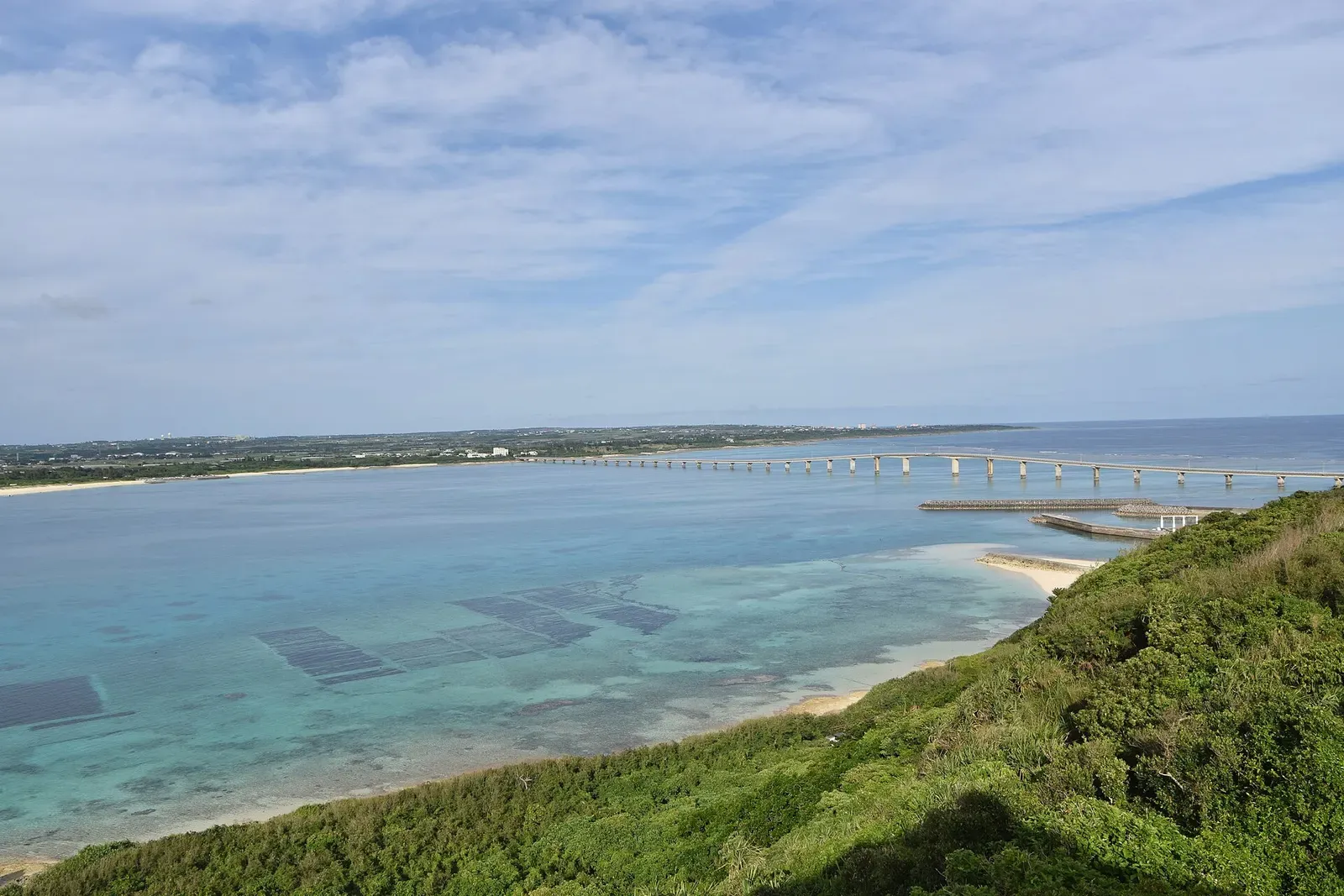
Wild dolphin encounters in Bonin Blue water 1,000 km from the nearest city.
Photo: TANAKA Juuyoh · CC BY 2.0
Roughly 1,000 km south of Tokyo and reachable only by a 24-hour ferry, the Ogasawara Islands are a UNESCO World Heritage archipelago known for exceptionally clear 'Bonin Blue' water. Divers share the channels with wild spinner and bottlenose dolphins, and humpback whales arrive to breed and calve each winter, sometimes audible underwater during a dive. The isolation means small dive operations, open-ocean conditions, and a genuine expedition feel rather than resort-style diving.
About diving in Ogasawara Islands
The ship's rotation, not your calendar, sets the shape of the trip. It sails from Tokyo on a fixed cycle of roughly a week, so stays come in set blocks, and you take whatever weather falls inside yours. Operators are small owner-run outfits, boats carry a handful of divers, and a day out is usually a mixed one: a dive, a run offshore to look for dolphins or whales, then a second dive somewhere out of the swell.
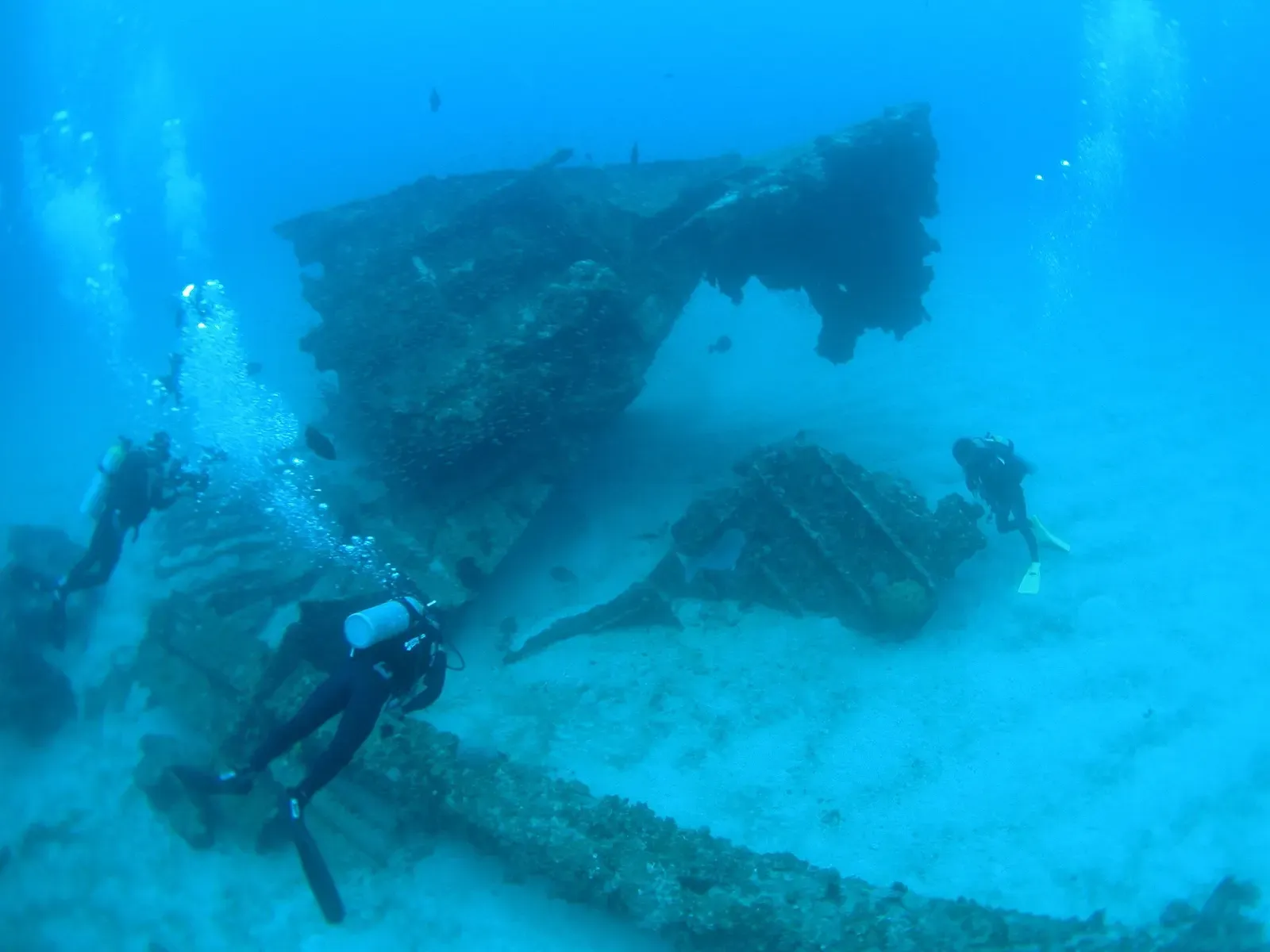
These are oceanic volcanic islands that never joined a continent, and it shows underwater in a fish list that includes species most divers will not have logged elsewhere. Steep-sided rock, boulder fields, arches and cave mouths dominate, with coral growing in patches on the rock rather than forming a continuous reef. The exposed outer coasts hold the cleanest water; the lee-side coves are the fallback in a blow, and one of them holds a shallow wreck, hull breaking the surface, generally described as a wartime loss.
Dolphin encounters are done on snorkel rather than scuba. The boat finds a pod, the crew reads whether it is travelling or resting, and swimmers slip in and free-dive alongside if the animals are willing; spinners tend to keep moving, bottlenose are more likely to come and look, and nothing about it is guaranteed. Whales are watched from the boat under local approach guidelines rather than swum with, and landings on Minami-jima run separately, guided and capped under village rules.
Come if the journey is part of the appeal and you are content with an expedition rhythm: few operators, little spare kit, no quick way home, and plans rewritten by the sea state. An evacuation here means a Self-Defense Force seaplane rather than an air ambulance an hour away, so honest current experience matters more than a long logbook. The calm stretch runs from April into October; the winter whale window is real, but the crossing and the conditions are at their worst then, and that trade-off is the main decision every visitor makes.
When to dive Ogasawara Islands
| Jan | Feb | Mar | Apr | May | Jun | Jul | Aug | Sep | Oct | Nov | Dec |
|---|---|---|---|---|---|---|---|---|---|---|---|
| Fair | Fair | Good | Prime | Prime | Prime | Prime | Prime | Good | Good | Good | Fair |
Calmest seas run April-October; humpback whales pass through December-April but winter crossings are rougher.
Getting there
There is no airport. The only way in is the ferry from Takeshiba Pier in Tokyo, which sails on a set rotation and therefore fixes the length of your stay, so cabins go early in summer and over holidays. Chichijima is the base, with a smaller ferry on to Hahajima. Diving is day-boat work out of the harbour, plus a few straightforward shore entries.
Wildlife calendar
Spinner and bottlenose dolphins are around all year and are the most consistent encounter, though never a certainty. Humpbacks pass through between December and April, overlapping the roughest crossings, while the April-to-October window is better for reef sharks, eagle rays, jack schools and green turtles, which nest on the islands' beaches through the warm months.
Dive types & marine life
- Pelagic & blue water
- Wall
- Drift
- Cave & cavern
- Dolphins
- Whales
- Reef sharks
- Eagle rays
- Trevally & jacks
- Sea turtles
- Barracuda
Notable dive sites in Ogasawara Islands
Minami-jima
Landing site with a turquoise lagoon and steep surrounding coral walls.
Anijima Strait
Channel between Chichijima and Anijima frequented by wild dolphin pods.
John Beach
Chichijima shore site with easy access to coral slopes and reef fish.
Sakaiura Bay
Sheltered Chichijima cove used for calmer dives when ocean swell picks up.
Photos from Ogasawara Islands
takeakisky homma · CC BY-SA 3.0
TANAKA Juuyoh · CC BY 2.0
Kaz Ish · CC BY-SA 3.0
Dive videos
Tokyo Scuba Diving Adventure | OGASAWARA ★ ONLY in JAPAN · WAO RYU!ONLY in JAPAN on YouTube
【4K】Ogasawara Islands Diving Report 【小笠原諸島 ダイビング】 · Blue Walker on YouTube
Photo credits
- A diver hovers over a sunken shipwreck in clear turquoise water off Hahajima, Ogasawara Islands by TANAKA Juuyoh, CC BY 2.0, via Wikimedia Commons
- Yellow tang and an emperor angelfish swim over coral at Anijima in the Ogasawara Islands by takeakisky homma, CC BY-SA 3.0, via Wikimedia Commons
- A diver explores the bow of a sunken wreck in clear blue water off Hahajima, Ogasawara Islands by TANAKA Juuyoh, CC BY 2.0, via Wikimedia Commons
- Turquoise lagoon of Omura Beach rimmed by forested hills on Chichijima, Ogasawara Islands by Kaz Ish, CC BY-SA 3.0, via Wikimedia Commons
Similar destinations
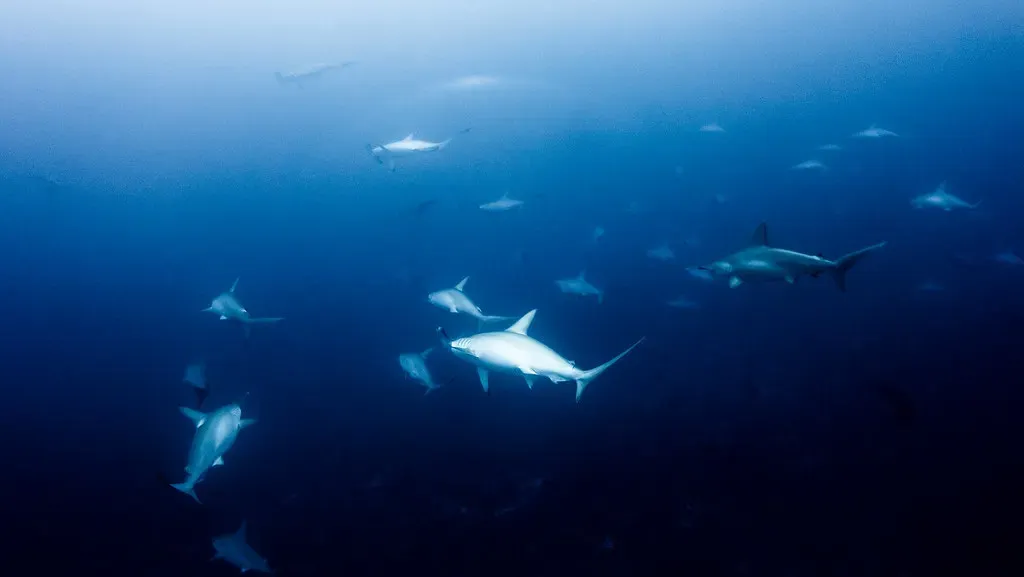
Winter hammerhead schools stack over pinnacles beside the disputed sunken Monument.
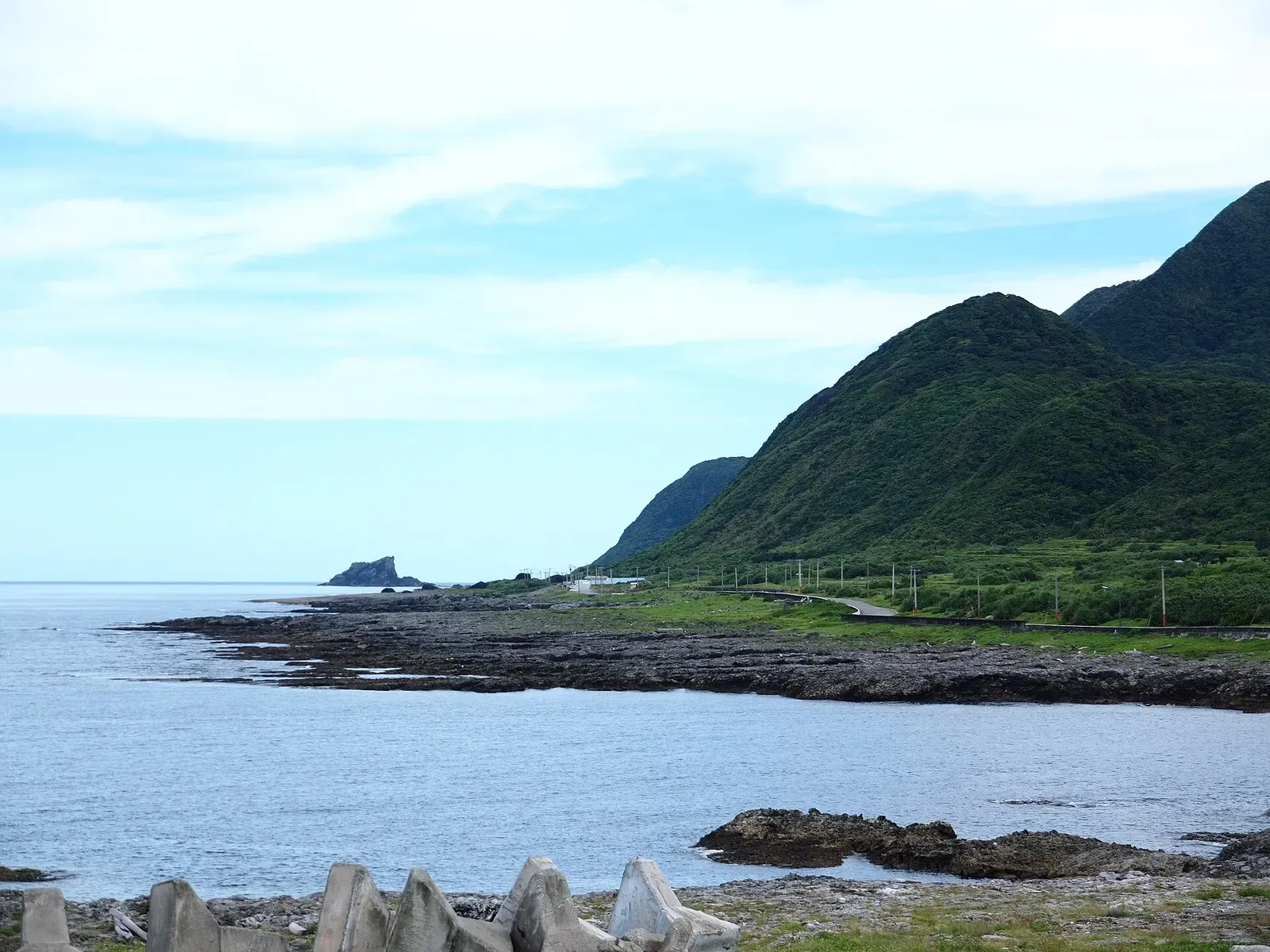
Kuroshio-swept volcanic drop-offs with 30 m visibility and big fish
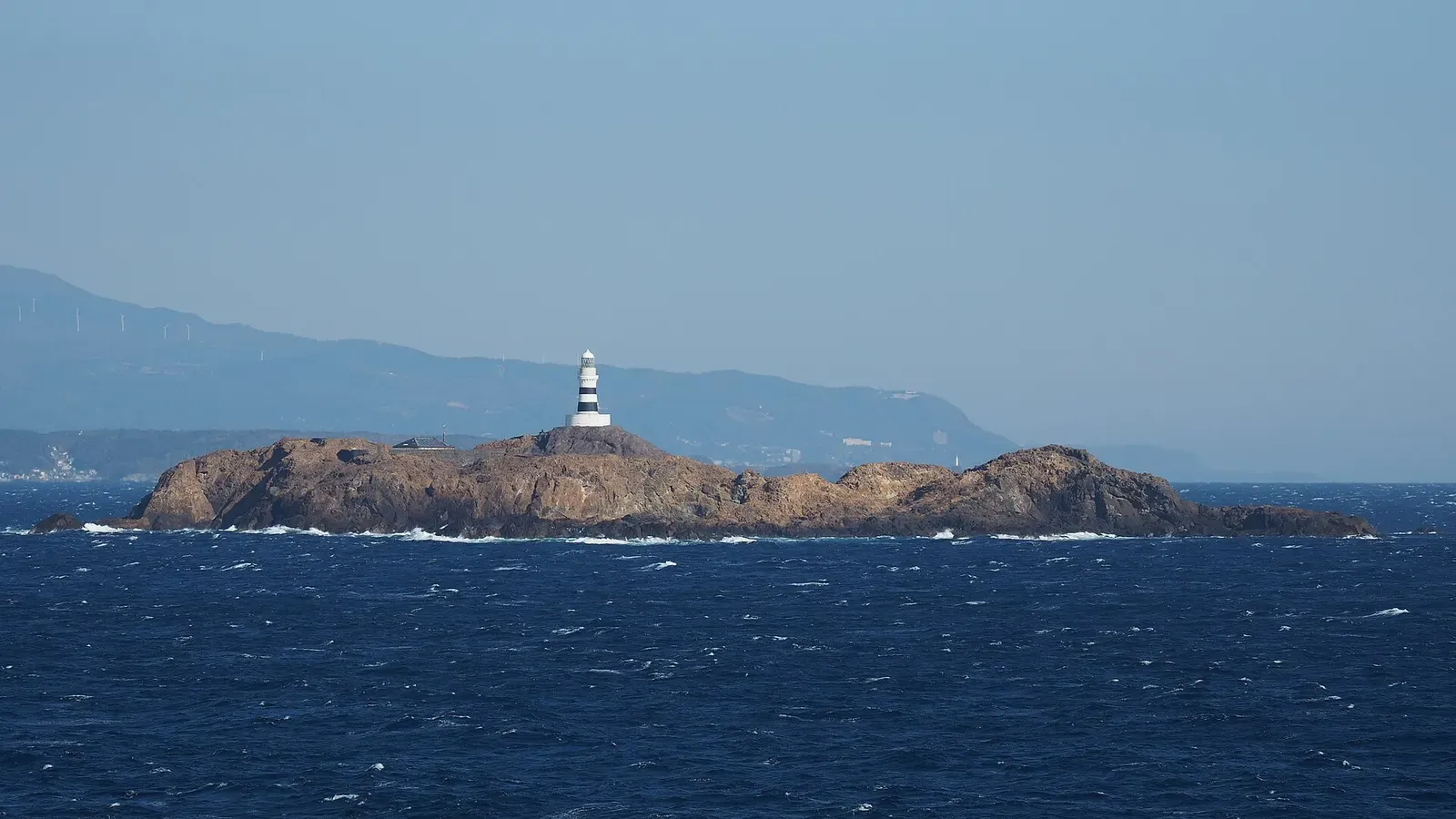
Mainland Japan's only reliable schooling hammerhead dive
.jpg)

.jpg)
.jpg)
Limestone arches and chambers with light shafts through the roof