North America · Canada
Tobermory — Fathom Five
Nineteenth-century schooners preserved intact in cold fresh water
Photo: Laslovarga · CC BY-SA 4.0
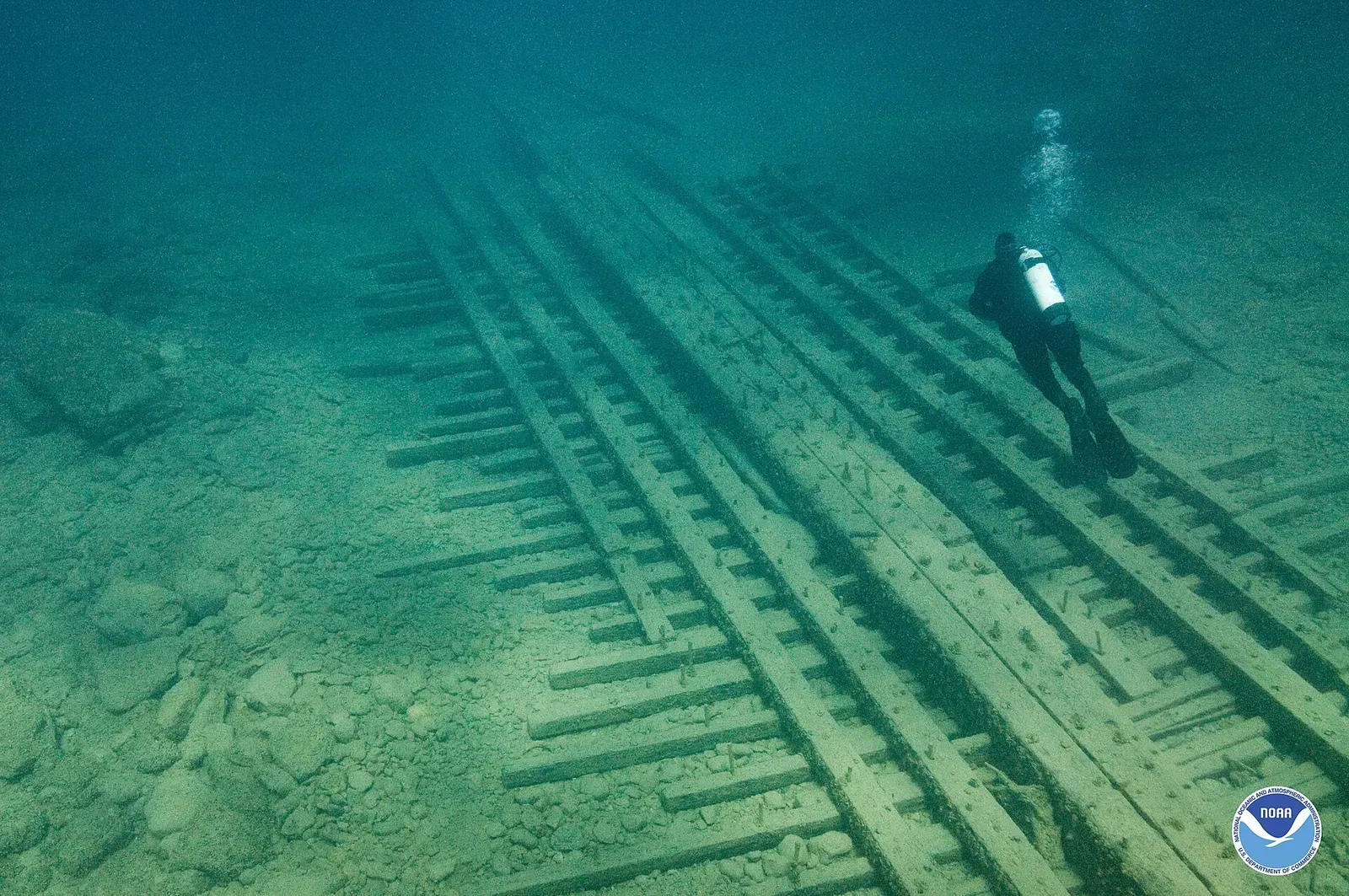
Fathom Five National Marine Park sits where the Niagara Escarpment runs into Georgian Bay, and cold fresh water has preserved more than twenty nineteenth-century schooners and steamers almost perfectly — timbers, deck fittings and rigging intact in a way no salt-water wreck can match. The Sweepstakes lies in 6 m of clear water in Big Tub Harbour; the Arabia sits at 33 m with her bowsprit still rigged. Underwater cliffs and caves along the escarpment fill the rest of the diving.
About diving in Tobermory — Fathom Five
Diving here is charter-driven and short-range. Boats leave the village harbour for two-tank runs out to the islands, morning and afternoon, and the crossings are measured in minutes rather than hours. Parks Canada requires divers to register before their first dive, which comes with a briefing on what is and is not allowed on the wrecks. Big Tub is the exception to the boat schedule, a roadside entry you can dive on your own time, though it shares the water with heavy tour-boat traffic and the access rules there are worth checking before you plan around it.
The escarpment carries on underwater as bare grey dolostone: sheer faces, undercut ledges, cracks wide enough to swim into and boulder fields piled at the base. Almost nothing overgrows it, so the rock reads like quarry stone and the light stays hard until depth takes it. Thermoclines arrive abruptly. The surface layer warms through the middle of the season while anything deep stays close to single figures whatever the date, and that, rather than the air temperature, is what decides your suit.
The detail is what makes the cold worthwhile. Fresh water has no shipworm, so planking, deadeyes and windlasses still read as carpentry rather than as reef, and fittings sit roughly where they were left. Invasive zebra and quagga mussels now coat most exposed surfaces, and their filtering is generally credited with part of the clarity divers come for. The shallow hulls sit in enough light to snorkel over, while deeper down a torch is what makes frames and fittings legible again.
It suits wreck divers, drysuit divers and anyone more interested in wooden shipbuilding than in marine life, and it works for mixed groups because the shallow sites and the deep ones sit close together. Build in spare days: Georgian Bay can shut down the offshore boats, and when it does, the harbour and the shallower wreckage inshore are what is left. The workable window is a few months at most and the village is busy through all of it, so book charters and beds well ahead.
When to dive Tobermory — Fathom Five
| Jan | Feb | Mar | Apr | May | Jun | Jul | Aug | Sep | Oct | Nov | Dec |
|---|---|---|---|---|---|---|---|---|---|---|---|
| Off-season | Off-season | Off-season | Off-season | Fair | Good | Prime | Prime | Prime | Fair | Off-season | Off-season |
The season runs roughly late May to early October; the bay is iced or unworkably cold the rest of the year and charters do not operate.
Getting there
Tobermory sits at the tip of the Bruce Peninsula and is reached by road, usually a drive of four hours or more north from Toronto; the seasonal Chi-Cheemaun ferry links it to Manitoulin Island. Charters run from the village harbour and Big Tub is a shore entry off the road. Parks Canada requires divers to register, for a fee, before getting in the water.
Wildlife calendar
Life is sparse and entirely freshwater. Smallmouth and rock bass patrol the wreck timbers, minnows shoal in the harbour shallows and crayfish sit in the rubble, with invasive round gobies and mussels over most hard surfaces. Fish are easiest to see in the warm, bright middle of the season, roughly July to September; the deep sites stay cold and largely empty whenever you dive them.
Dive types & marine life
- Wreck
- Freshwater
- Wall
- Cave & cavern
- Freshwater fish
Notable dive sites in Tobermory — Fathom Five
Sweepstakes
1867 schooner intact in 6 m of Big Tub Harbour, viewable from shore.
Arabia
Barque at 33 m with bowsprit and anchors in place; the park's deep prize.
Niagara II
Sand dredge sunk as a dive wreck in 1999, upright at 30 m.
Forest City
Steamer lying down a slope from 18 m to 45 m on Bears Rump Island.
Caroline Rose
Wooden schooner broken across 5–15 m, good in poor weather.
W.L. Wetmore
Steamer wreckage scattered in 6–8 m off Russel Island.
Photos from Tobermory — Fathom Five
Laslovarga · CC BY-SA 4.0
A J Butler · CC BY 3.0
A J Butler · CC BY 3.0
Dive videos
Revealing Tobermory's Hidden Gems... Shipwreck SCUBA Diving in Canada · Canadian Aquanauts on YouTube
🇨🇦 #Wreck Diving: Arabia (Tobermory, Canada) - Series Final Episode · International Scuba Divers Club on YouTube
Photo credits
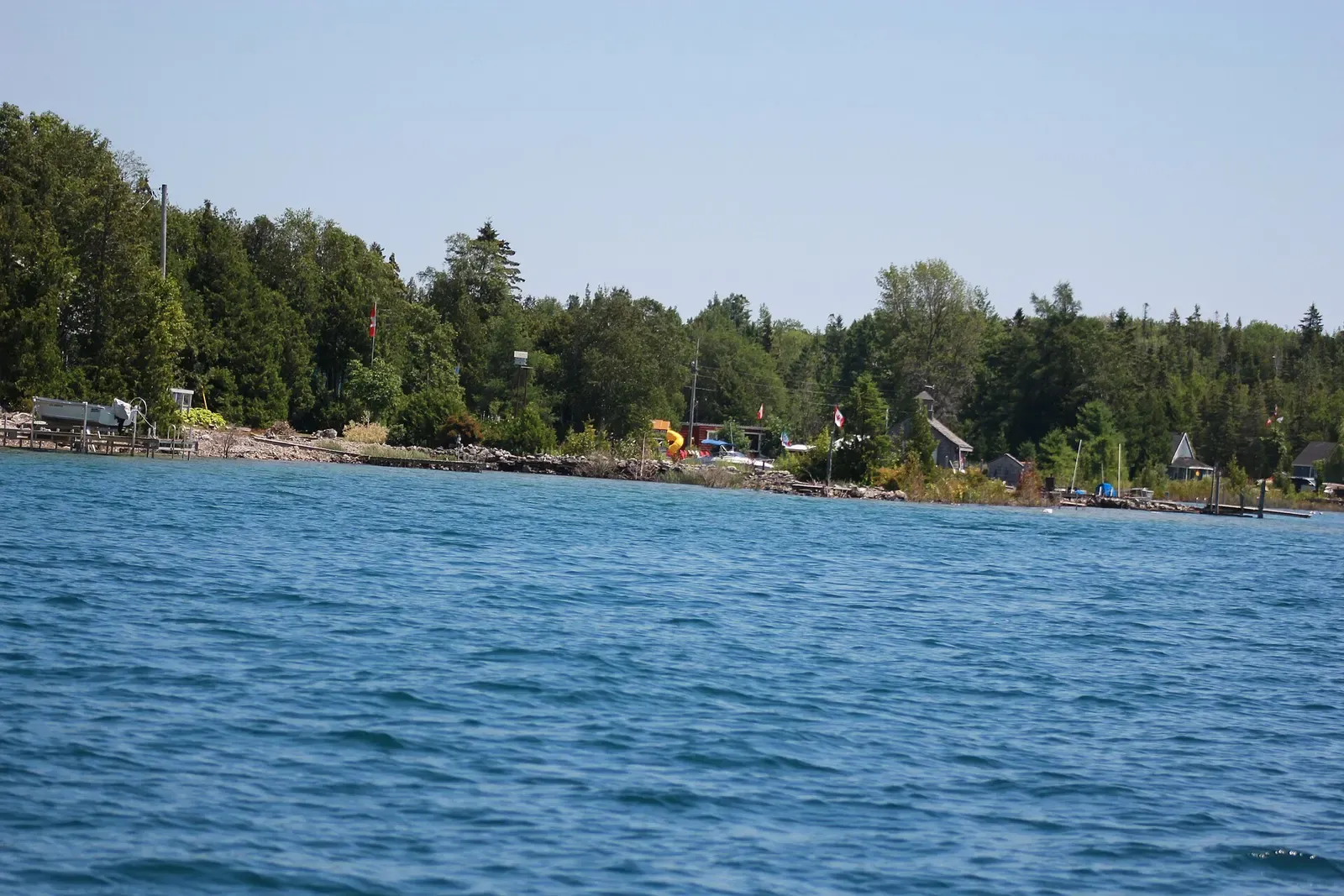
- Clear turquoise water along the rocky Bruce Peninsula shoreline near Tobermory by Laslovarga, CC BY-SA 4.0, via Wikimedia Commons
- Kayakers and a small boat crossing calm blue water off Tobermory, Ontario by Laslovarga, CC BY-SA 4.0, via Wikimedia Commons
- Sun setting over the water at Fathom Five National Marine Park by A J Butler, CC BY 3.0, via Wikimedia Commons
- Forested shoreline and distant islands at sunset near Fathom Five National Marine Park by A J Butler, CC BY 3.0, via Wikimedia Commons
Similar destinations
Playful sea lions and towering kelp forests around rocky island pinnacles.
Nineteenth-century wrecks dived as drifts in a hard freshwater current
The only place in the US where you may legally swim with manatees
.jpg)
.jpg)
.jpg)
.jpg)
A hundred wrecks in Shipwreck Alley, some shallow enough to snorkel