Eastern Pacific · Colombia
Bahía Solano
Humpback song fills every dive from July through October
Photo: BlancaNDiaz · CC BY-SA 4.0
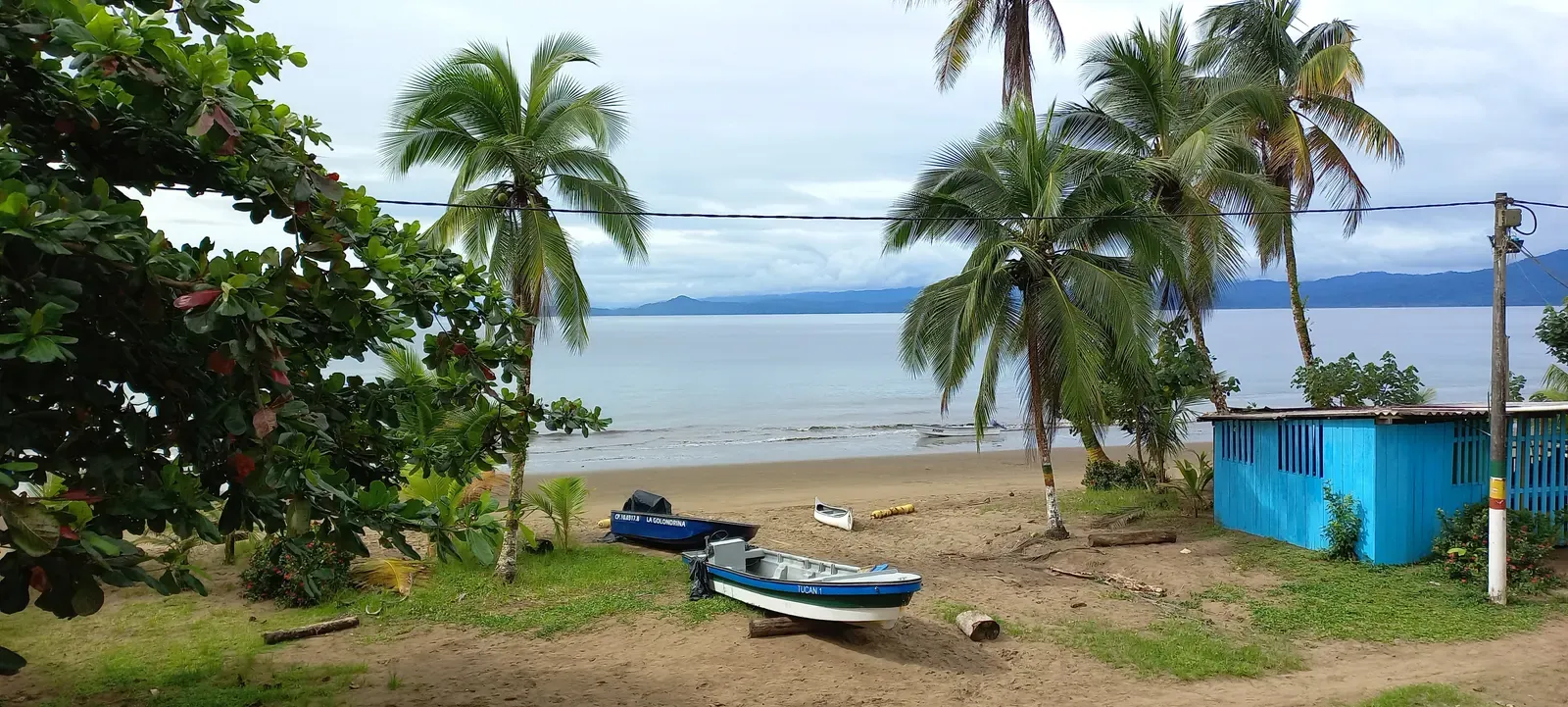
Bahía Solano sits on Colombia's Chocó coast, where rainforest runs to the beach and there are no roads in — only a light aircraft or a boat. Humpback whales come from Antarctica to calve here between July and October, and their song is constant underwater. The diving itself is low-visibility and rocky, built around the Colombian navy frigate Sebastián de Belalcázar, scuttled in 2001 and sitting upright at 25 m, plus a scatter of pinnacles.
About diving in Bahía Solano
Diving works out of small open boats, often launched straight off the beach through the shorebreak, with cylinders and gear passed aboard by hand and no dive deck to sort yourself out on. The runs to the sites are short. Mornings are the working window, usually two tanks before the cloud builds, and afternoons often close in with rain. The rain governs the water as much as the sky: after a heavy night the rivers push sediment into the bay and the inshore sites turn flat grey for a day or two.
Underwater this is a rock coast rather than a coral one. Boulder slopes and rock ridges run down into sand, encrusted rather than gardened, with fish stacked in the lee of anything solid. Pinnacles further out break the swell and hold schools on their upcurrent sides. The frigate is the only wreck on the list, and in water this colour you meet it in sections rather than taking in the whole hull at once.
Plan it as a trip where diving is one part of the day rather than the entire point. Surface whale watching, river mouths, waterfalls and forest walks fill the rest, and the schedule moves with the weather instead of a timetable. It rewards divers who can stay oriented in green water and swell, who are content with two dives a day, and who are travelling for the encounter rather than the photograph. Operators are few and small, so bring whatever kit you are particular about.
When to dive Bahía Solano
| Jan | Feb | Mar | Apr | May | Jun | Jul | Aug | Sep | Oct | Nov | Dec |
|---|---|---|---|---|---|---|---|---|---|---|---|
| Good | Good | Good | Fair | Fair | Good | Prime | Prime | Prime | Prime | Fair | Fair |
Jul–Oct is humpback season and the main reason to come; this is one of the wettest coasts on earth, so visibility is never reliable.
Getting there
Almost everyone arrives by air from Medellín, with Quibdó the other regional link; light-aircraft baggage limits mean packing lean and using rented tanks and weights. Divers base in the town itself or in El Valle to the south, and moving between the two is a rough local track or a short boat hop.
Wildlife calendar
Whales are a July-to-October event and largely a surface one, watched from the boat and the beach rather than met in the water. Dolphins and passing mobulas turn up in the same months. Groupers, jacks and barracuda tend to hold around the wreck and the pinnacles through the year, while turtles and reef sharks work the rock slopes, easiest to pick out early in the year when the rivers run lower.
Dive types & marine life
- Reef
- Wreck
- Wall
- Pelagic & blue water
- Whales
- Reef sharks
- Sea turtles
- Trevally & jacks
- Dolphins
- Groupers
- Barracuda
- Mobula rays
Notable dive sites in Bahía Solano
Sebastián de Belalcázar
Colombian navy frigate scuttled in 2001, upright at 25 m.
Punta Huina
Rock headland with boulder slopes and schooling jacks at 18 m.
Ensenada de Utría
National park inlet to the south, a humpback calving sanctuary.
El Almejal
Shallow rocky reef off the beach, used for check dives and macro.
Photos from Bahía Solano
Sylvain Eichhorn · CC BY 4.0
Dive videos
Pacific Ocean | Bahia Solano | Ankla Azul · Ankla Azul Diving Center & Travel on YouTube
La Mina Del Diablo | Part 1 | Bahía Solano | Ankla Azul · Ankla Azul Diving Center & Travel on YouTube
Photo credits
- Fishing boats rest on the sand beside palm trees and a blue wooden building in Bahía Solano. by BlancaNDiaz, CC BY-SA 4.0, via Wikimedia Commons
- A yellow-and-white spotted guineafowl puffer hovers close to a sandy, rocky seabed. by Sylvain Eichhorn, CC BY 4.0, via Openverse
Similar destinations
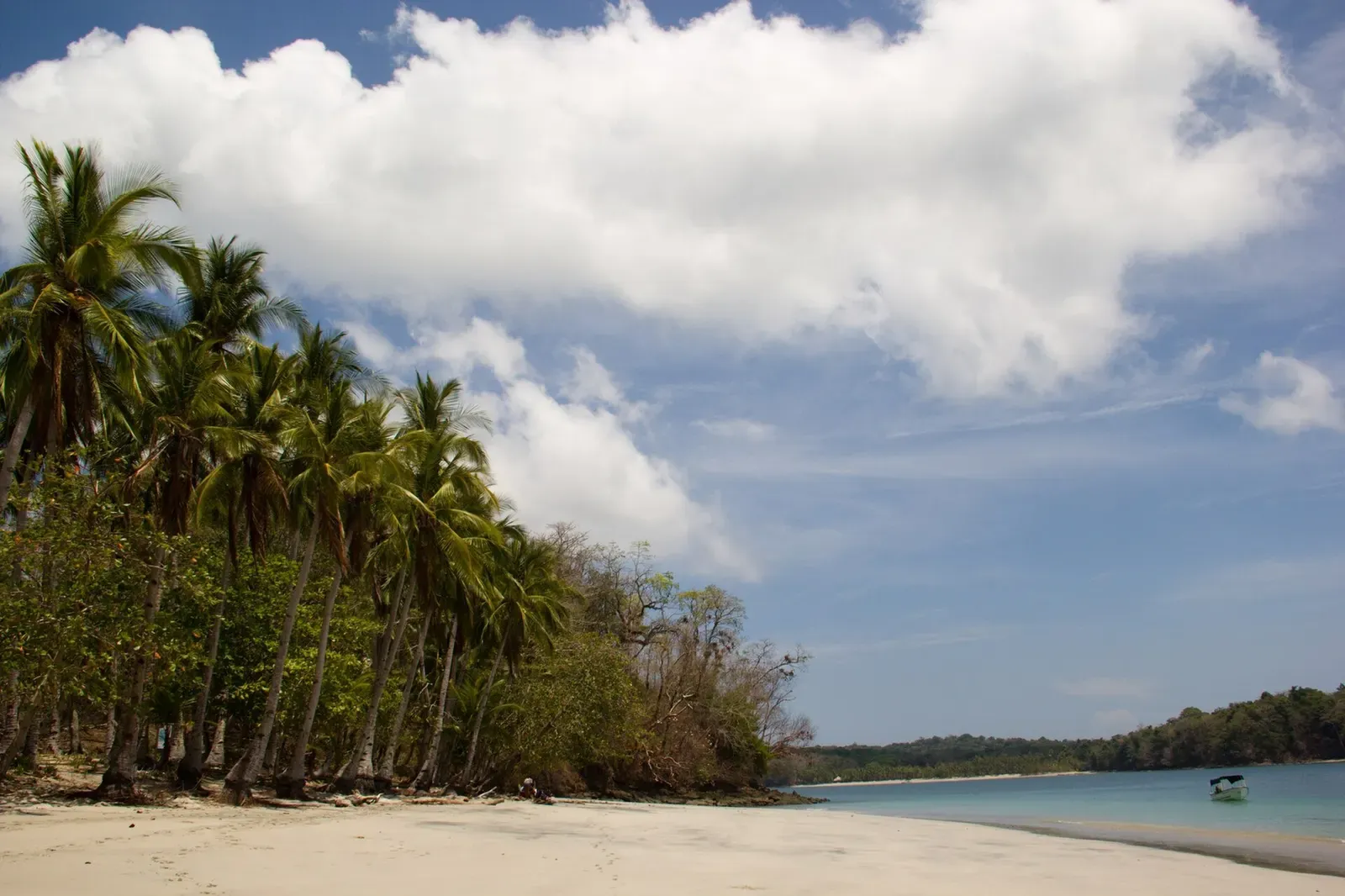
Hannibal Bank rises from 400 m and pulls in billfish and tuna
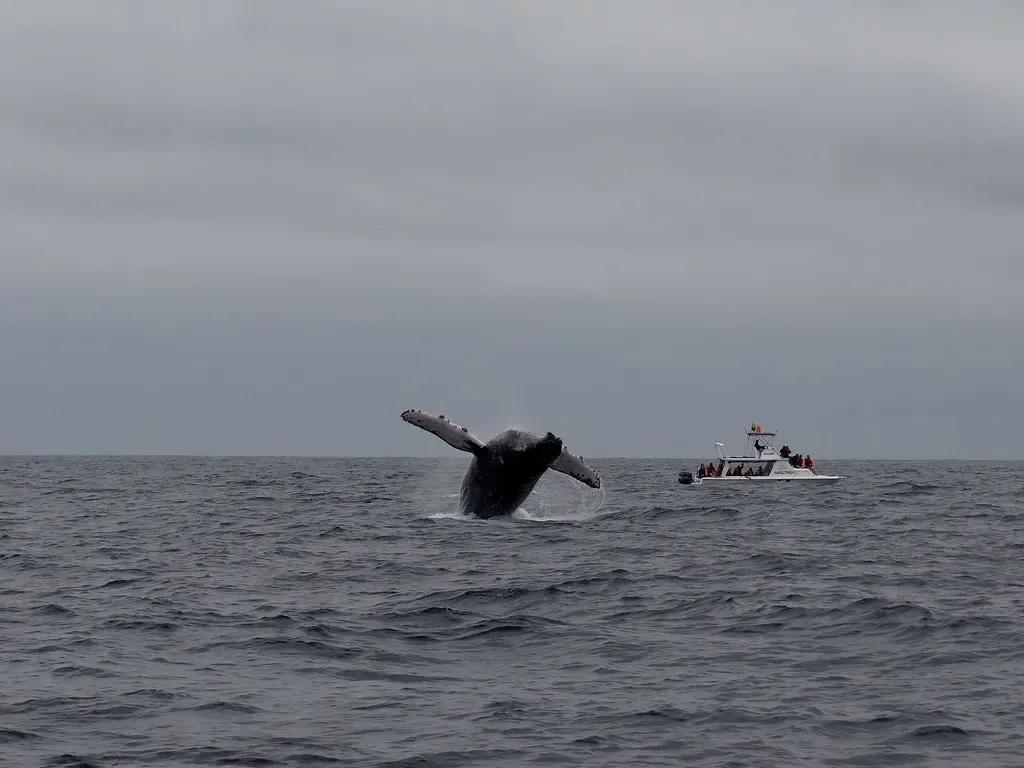
The world's largest known aggregation of oceanic manta rays
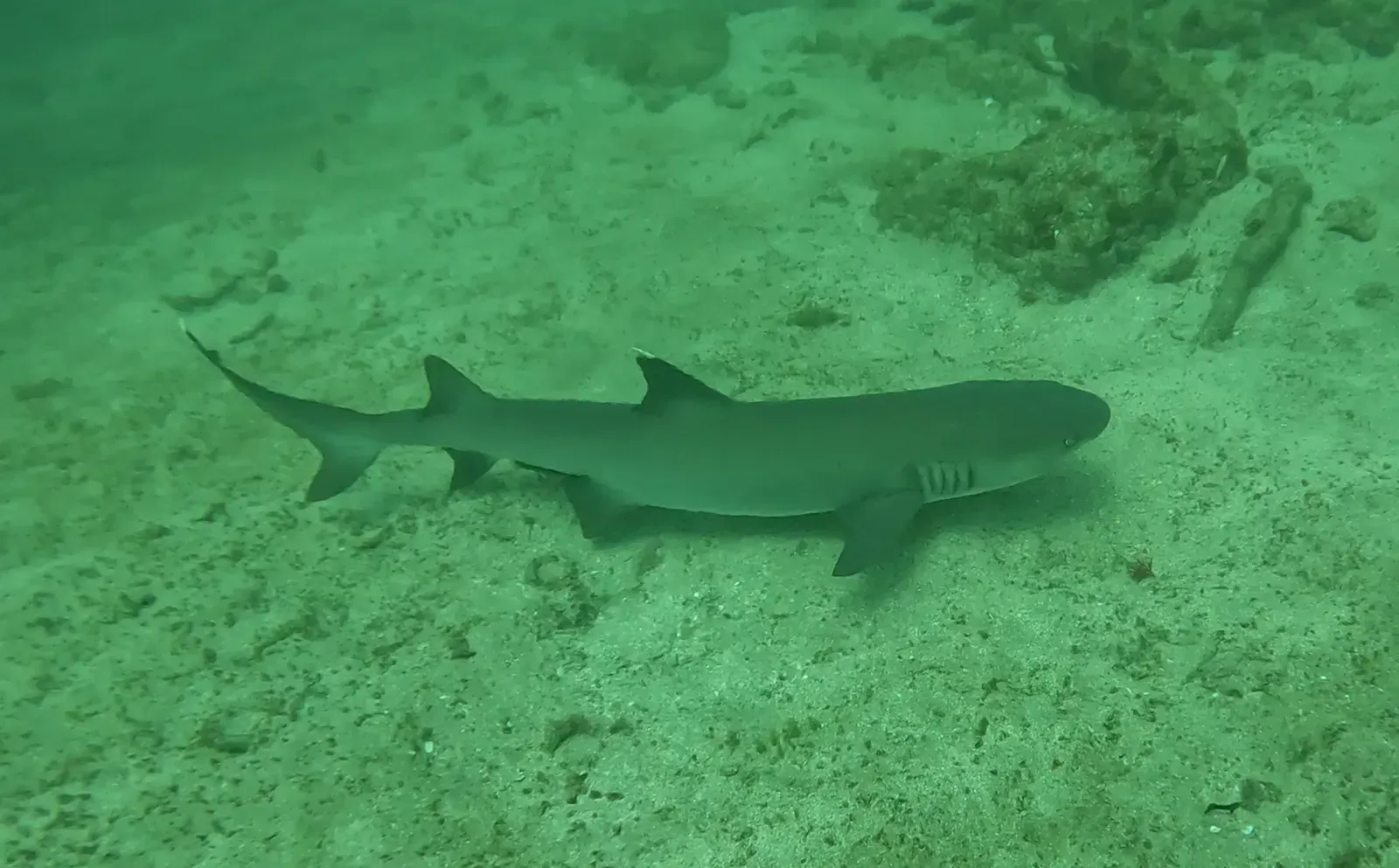
Whitetip reef sharks stack up by the dozen on volcanic pinnacles

Hundreds of whitetip reef sharks pile up in the shallows at El Remolino