Eastern Pacific · Panama
Gulf of Chiriquí
Hannibal Bank rises from 400 m and pulls in billfish and tuna
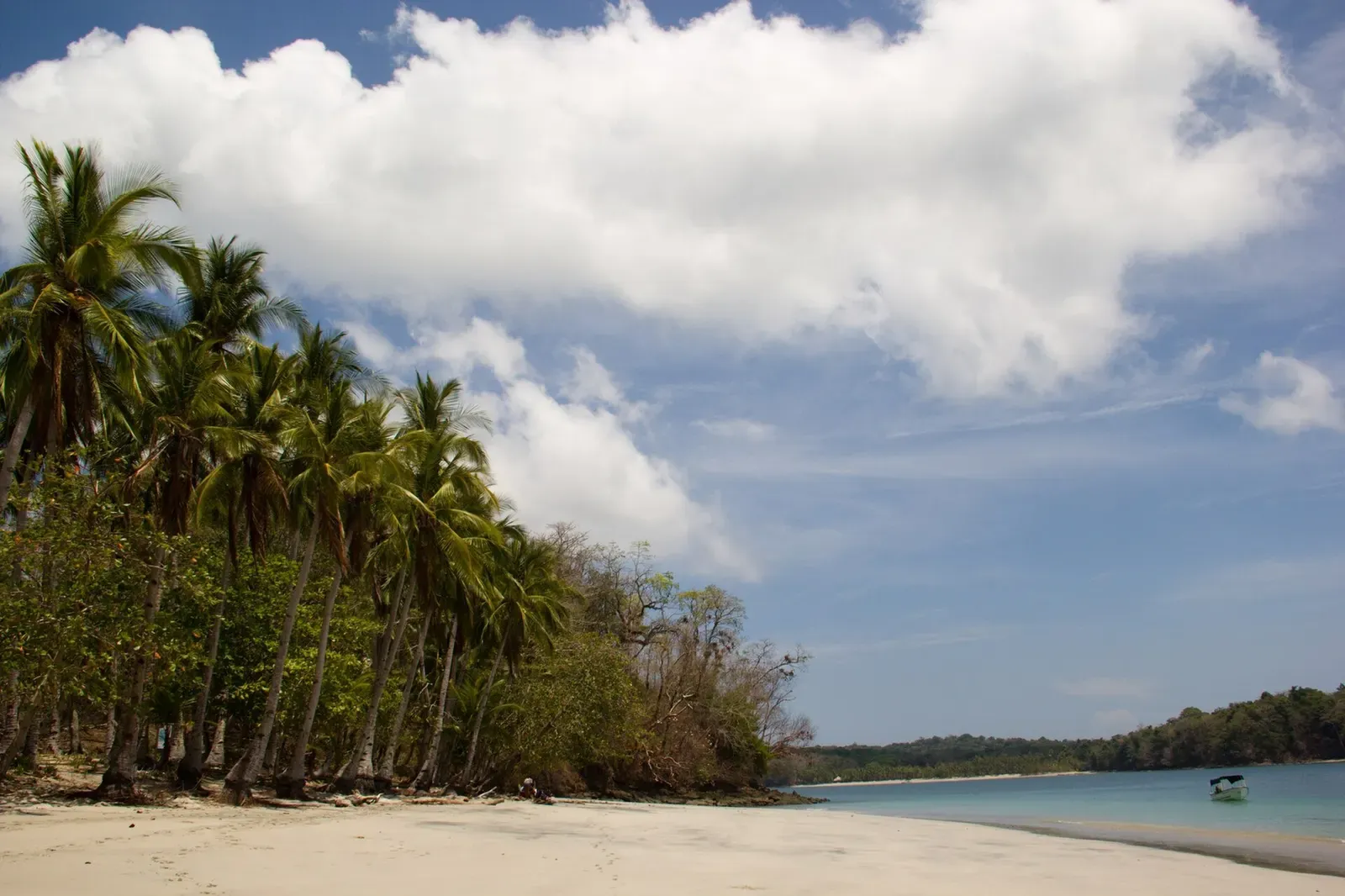
Photo: Mónica Mora · CC BY-SA 2.0
The Gulf of Chiriquí spreads across Panama's western Pacific shelf, and its outer edge holds Hannibal Bank — a seamount rising from 400 m to within 30 m of the surface, well enough known to marine scientists as an aggregation point for billfish and tuna that it has been studied for decades. Inshore, the Islas Secas and Isla Montuosa give warmer, easier reef diving, and humpbacks from both hemispheres pass through on separate migrations.
About diving in Gulf of Chiriquí
Almost every dive starts with a boat ride, and the length of the crossing sets the shape of the day. An inshore two-tank trip stays among the nearer rock islands and is back by early afternoon. Reaching the outer sites means an early departure, a long open-water leg with tanks stowed for the duration, and lunch taken aboard or on a beach. Sea state decides more than the calendar does: when the outside is rough, boats work the sheltered islands instead and the offshore plan slides a day.
The topography splits between inside and outside. Inshore, rocky ridges and boulder fields run out into sand channels with coral growing in patches on the shallow tops, and the water often carries a green, nutrient-heavy cast. The outer islands are steeper, with rock faces dropping into blue and current wrapping the points. Hannibal Bank is a different proposition again, with nothing showing above water to line up on, so you descend a line or into open blue and rely on the skipper to put you on the rock.
The characteristic dive is a hang rather than a tour. You settle behind structure out of the flow and watch what comes past, and as much happens overhead as in front of you, where bait balls form and collapse and hunting fish cut through them. None of it runs to a schedule. Plenty of dives end quietly on the reef, and the ones that deliver often do it early, before the group has drifted off the high ground and the guide calls it.
Treat it as a numbers game across several days rather than a single outing, since the offshore sites reward repetition and one blown-out morning is not a verdict on the place. Mixed groups still work, because less experienced divers can stay on the inner islands while the rest go outside. Anyone hoping for consistently clear water and unhurried macro photography should know that visibility swings too widely here to build a photo trip around.
When to dive Gulf of Chiriquí
| Jan | Feb | Mar | Apr | May | Jun | Jul | Aug | Sep | Oct | Nov | Dec |
|---|---|---|---|---|---|---|---|---|---|---|---|
| Good | Good | Prime | Prime | Good | Fair | Good | Good | Prime | Prime | Fair | Good |
Dec–Apr is the dry season with the calmest crossings; Sep–Oct is rainier but overlaps the southern humpback migration.
Getting there
David is the usual air gateway, roughly an hour's domestic hop from Panama City, with a road transfer on to Boca Chica for most day boats. Islas Secas is reached by boat from the mainland. Liveaboards working this coast tend to pair the gulf with Coiba to the southeast and sell the two as one multi-day trip.
Wildlife calendar
Two humpback populations use this coast at different times, northern-hemisphere animals roughly December to March and southern-hemisphere ones roughly July to October. Mobulas and the occasional whale shark are likeliest in the greener, plankton-heavy water of September and October. Whitetips rest on sand by day, turtles and barracuda hold inshore, and dolphins are common on the crossings.
Dive types & marine life
- Seamount
- Reef
- Pelagic & blue water
- Wall
- Drift
- Reef sharks
- Whales
- Sea turtles
- Trevally & jacks
- Mobula rays
- Dolphins
- Tuna
- Marlin & sailfish
- Whale sharks
- Barracuda
Notable dive sites in Gulf of Chiriquí
Hannibal Bank
Offshore seamount rising to 30 m, the region's big-animal magnet.
Isla Montuosa
Outer island with walls, current and reliable whitetip reef sharks.
Islas Secas
Sheltered island group with easy reef and coral in 10–20 m.
Isla Ladrones
Rock islands closer inshore, dived when the outer sites are rough.
Photo credits
- Palm trees line a white sand beach beside turquoise water on Isla Bolaños in the Gulf of Chiriquí. by Mónica Mora, CC BY-SA 2.0, via Openverse
Similar destinations
The world's largest known aggregation of oceanic manta rays
Whitetip reef sharks stack up by the dozen on volcanic pinnacles
Humpback song fills every dive from July through October
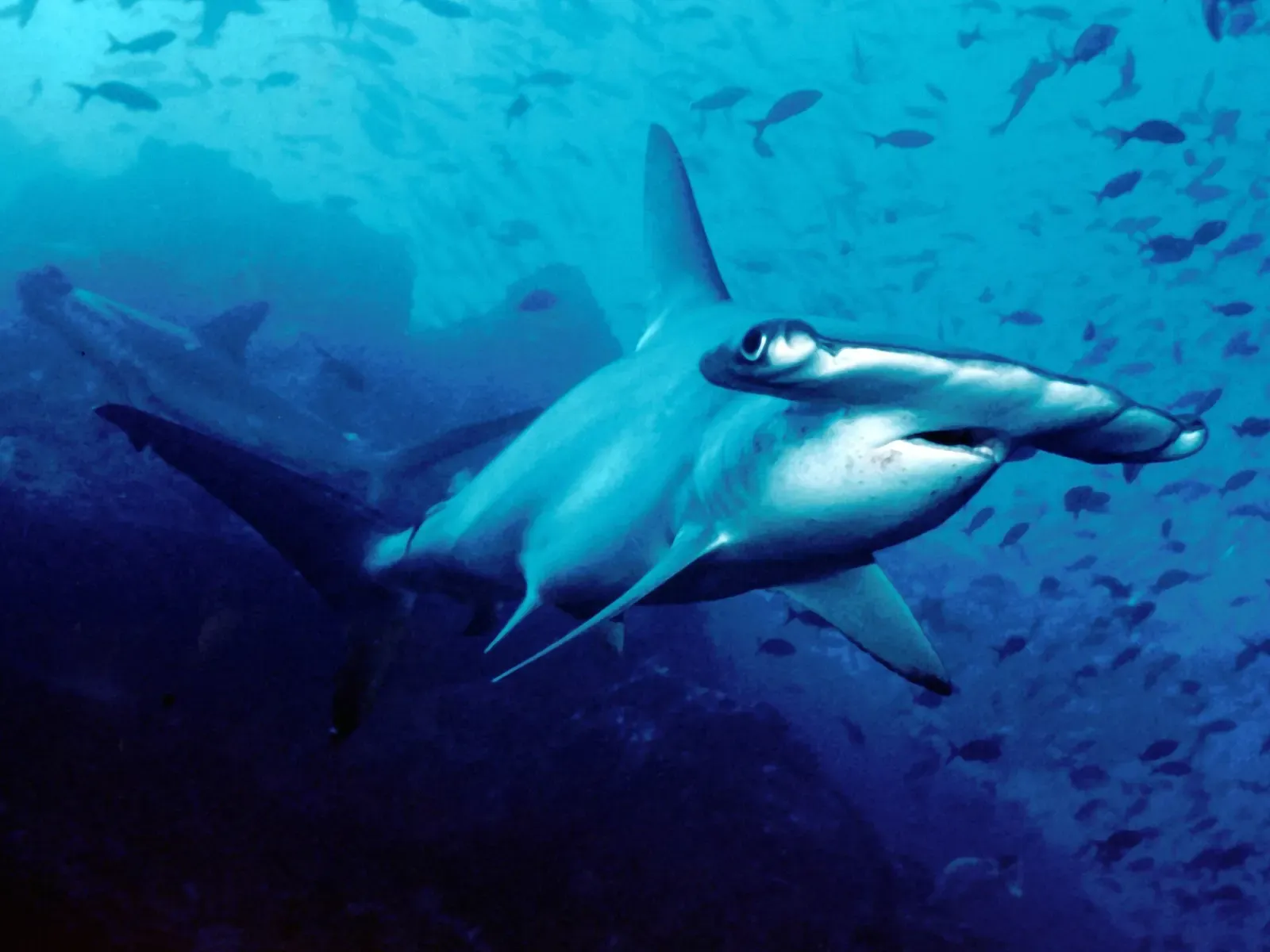
Scalloped hammerhead schools circle Bajo Alcyone's cleaning station in the current