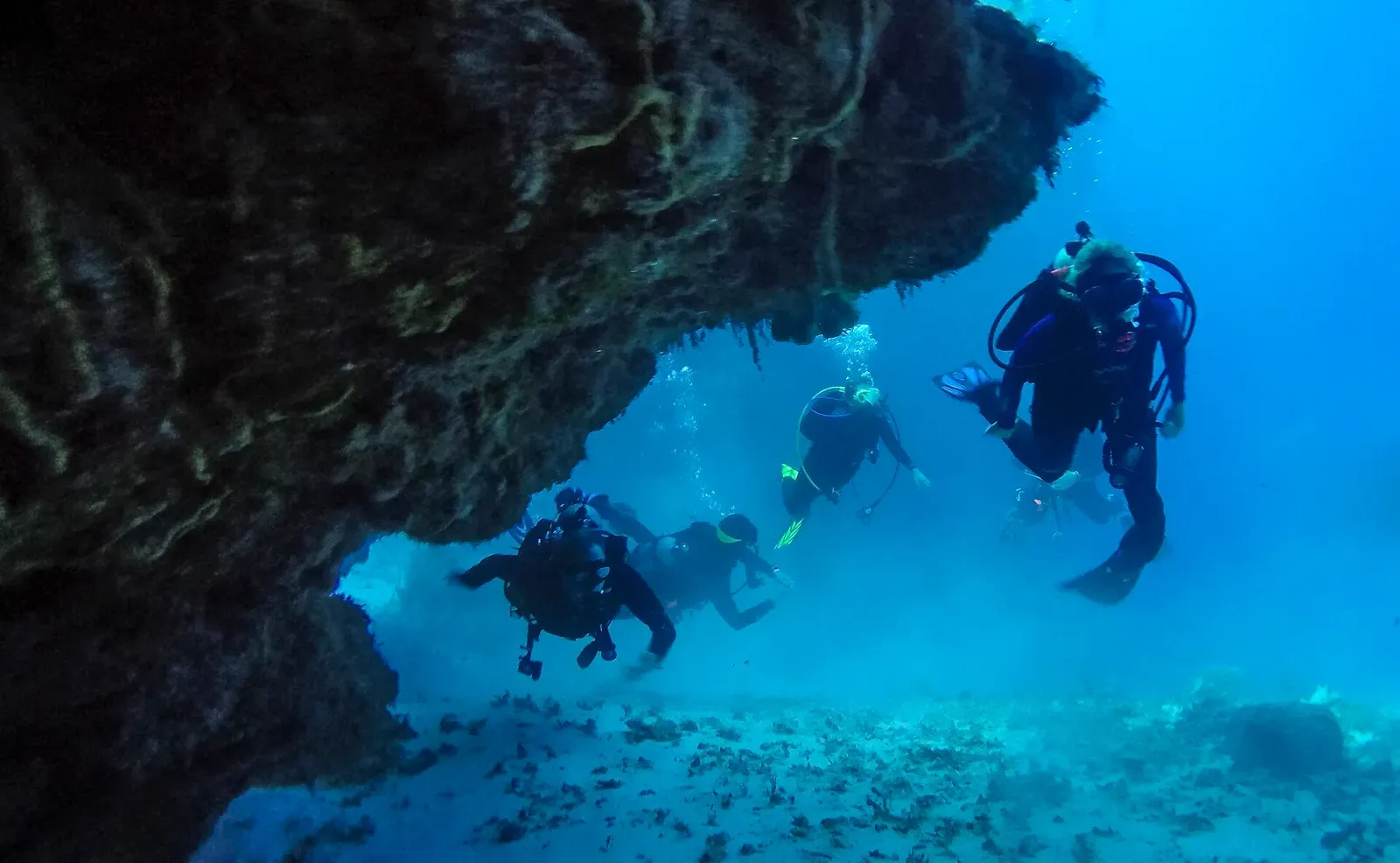
Caribbean · Mexico
Cozumel
Drift along sponge-covered walls with 20–40 m visibility on the sheltered leeward coast
Photo: Matthew T Rader · CC BY-SA 4.0
Cozumel is a drift-diving island where the Yucatan Current sweeps divers along a series of spur-and-groove walls draped in barrel sponges and black coral. Boats drop divers up-current and let them ride the reef at 15 to 30 meters, watching eagle rays glide over the drop-off in the cool-water months, while a handful of shore entries along the hotel strip serve checkout, macro and night dives. Punta Sur still hosts a small, protected winter aggregation of Nassau grouper.
About diving in Cozumel
The pattern is a two-tank morning boat and very little else to arrange. Crews run south, dive the deeper site first, break for an hour on the water, then finish shallower and closer to town. Nobody ties up: divers roll in together and the boat follows the bubbles, collecting everyone wherever they surface. Afternoon single-tank trips and night dives leave from the same marinas, and a national marine park fee is charged on top of the trip, usually collected by the operator.
The reefs run in a line down the sheltered west side of the island, and the grooves between the coral buttresses do more than break the reef up: they funnel the flow and set the line of the dive. The buttresses themselves are undercut and tunnelled, so time goes on slipping in and out of gaps rather than following a reef edge. Sites grow deeper, taller and more carved the further south the boat runs; the northern reefs are shallower, the flow across them gentler, and being nearest the marinas they take the short afternoon trips.
Current strength is the day's main variable, and it is rarely known until the boat is over the site. On a fast day one tank covers a long stretch of reef; on a slow one a group can work the same set of canyons properly, which is when the small residents under the ledges get found. Conditions are least dependable from August through November, and even in the calm early-year months a northerly blow can shut the port for a day, so leave slack rather than booking a tight connection home.
It suits divers who can hold trim without fighting the water; buoyancy counts for more here than a logged depth. The shallower northern reefs are where less experienced divers usually start, with a guide setting the pace. It works less well for anyone who wants to park on a subject for twenty minutes: the wall and drift sites are boat-only, though a handful of shore entries along the hotel strip cover checkout dives, macro and night dives. Many people pair the island with the mainland cenotes, a ferry crossing and a drive up the coast away.
When to dive Cozumel
| Jan | Feb | Mar | Apr | May | Jun | Jul | Aug | Sep | Oct | Nov | Dec |
|---|---|---|---|---|---|---|---|---|---|---|---|
| Prime | Prime | Prime | Prime | Good | Good | Good | Fair | Fair | Fair | Fair | Good |
January–April is prime with December close behind; lighter trades keep the leeward side calm, though winter nortes can shut the port for a day. Peak hurricane risk falls in September and October.
Getting there
The island has its own airport; the alternative is flying into Cancun and taking the passenger ferry across from Playa del Carmen. San Miguel is the base for almost everyone, with shops, marinas and hotels along the waterfront and boats leaving from there. A hire car or scooter only pays off if you plan to cross to the windward side.
Wildlife calendar
Hawksbill and green turtles, big barracuda and grouper hold on the reef year-round, and nurse sharks lie up under the coral buttresses. Spotted eagle rays gather in the cool-water months, December to March, and thin out through early spring. The splendid toadfish, found essentially nowhere else, stays under ledges in any month.
Dive types & marine life
- Wall
- Drift
- Reef
- Eagle rays
- Sea turtles
- Groupers
- Barracuda
- Trevally & jacks
- Stingrays
Notable dive sites in Cozumel
Palancar Gardens
Maze of coral pinnacles, swim-throughs, and canyons on the main wall
Santa Rosa Wall
Sheer vertical wall with huge barrel sponges starting at 20 meters
Colombia Reef
Deep coral buttresses and canyons favored for big-animal encounters
Punta Sur
Strong drift on the deep south; Devil's Throat cavern (27–40 m, overhead) is for experienced divers only
Paradise Reef
Shallow, current-light reef used for night dives and checkout dives
Photos from Cozumel
Matthew T Rader · CC BY-SA 4.0
P.Lindgren · CC BY-SA 3.0
Matthew T Rader · CC BY-SA 4.0
Serge Melki · CC BY 2.0
Dive videos
Cozumel, Santa Rosa Wall: A Drift Dive in Cozumel · Dispatches from Somewhere on YouTube
Best Scuba Diving in the World, Cozumel, Mexico: Palancar Caves Wall (HD - 1080p) · Oleg Kaplun on YouTube
Photo credits
- Scuba divers swim through a coral archway lit by shafts of sunlight on a Cozumel reef by Matthew T Rader, CC BY-SA 4.0, via Wikimedia Commons
- Reef fish swim over coral heads and sea fans in Cozumel's protected marine park by Matthew T Rader, CC BY-SA 4.0, via Wikimedia Commons
- A green moray eel swims freely over the sandy bottom as a diver looks on in the distance by P.Lindgren, CC BY-SA 3.0, via Wikimedia Commons
- A spotted eagle ray glides over the white sand trailed by two smaller fish by Matthew T Rader, CC BY-SA 4.0, via Wikimedia Commons
- A sea turtle swims through open blue water off Cozumel by Serge Melki, CC BY 2.0, via Openverse
Similar destinations
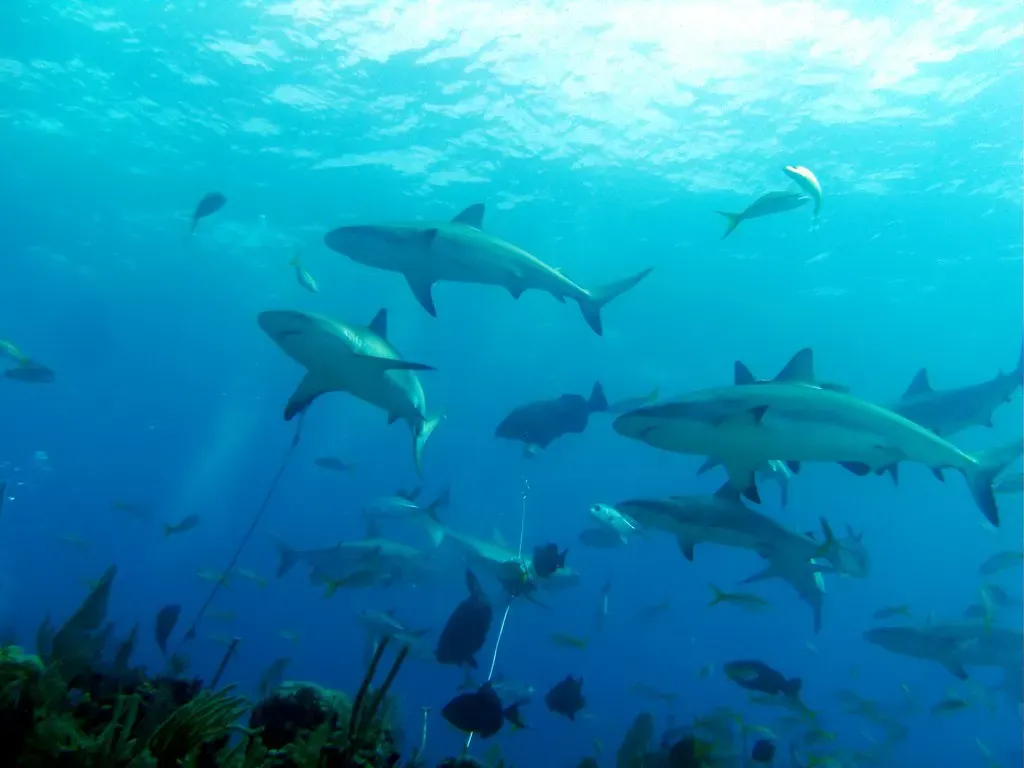
Descend into Angelfish Blue Hole, a vertical shaft opening onto a coral-rimmed cavern
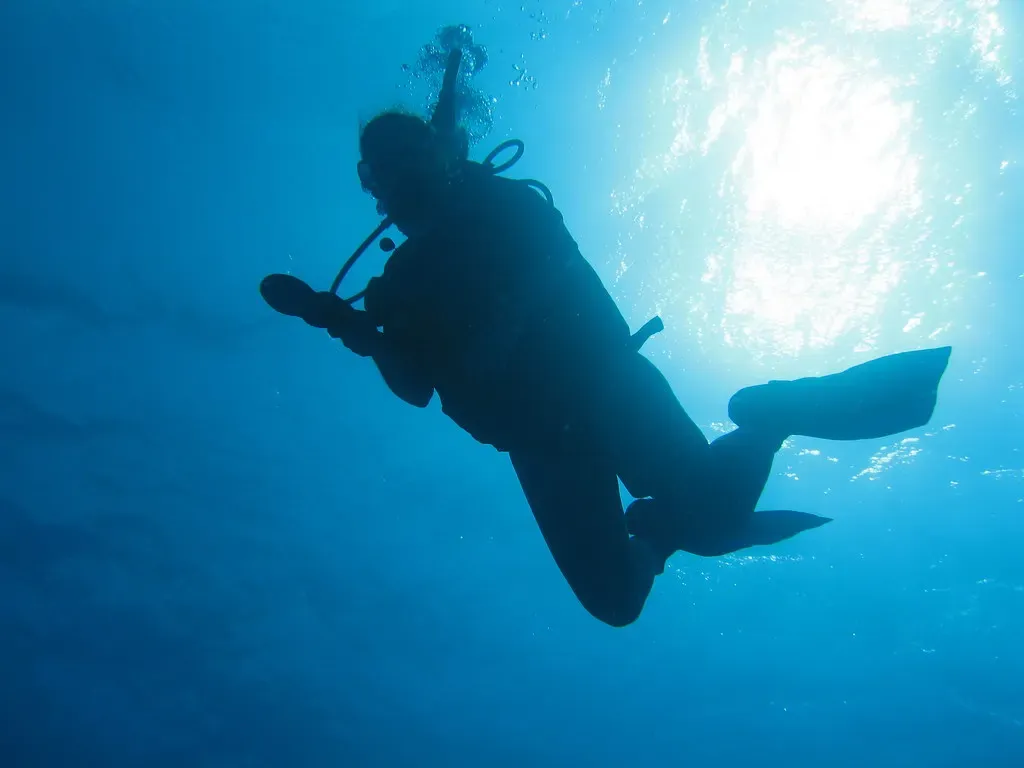
Hand-feed wild stingrays in chest-deep water, then drop over a sheer wall the same day
A 350-cay national park atoll with walls and almost no other divers


,_Cozumel.jpg)
_in_Cozumel,_Mexico.jpg)
Two dozen reef sharks circle a baited arena in 12 m of water