North America · United States
North Florida Springs
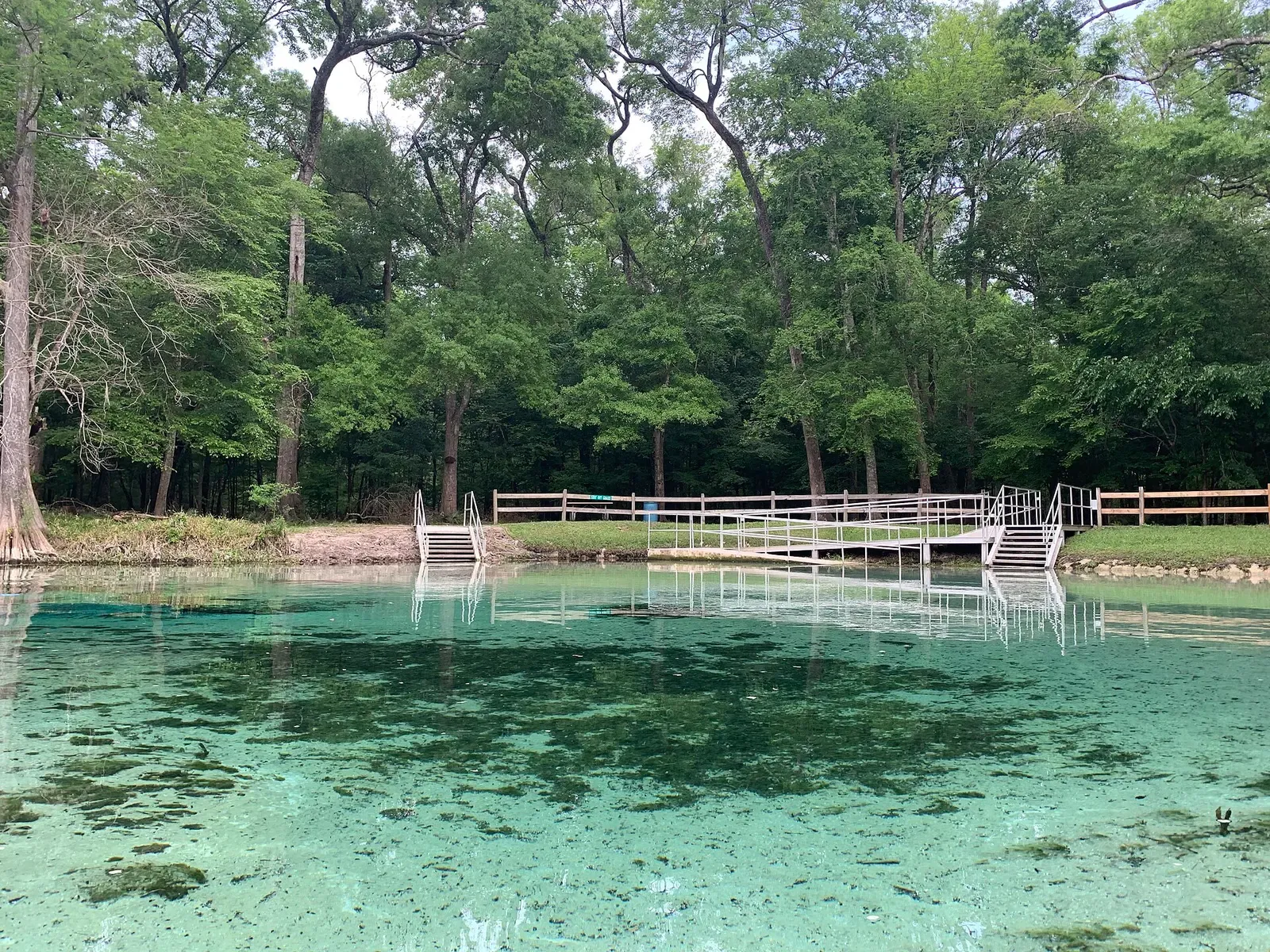
Spring water at a constant 21°C leads into mapped underwater cave systems.
Photo: LittleT889 · CC BY-SA 4.0
North Florida's limestone springs, including Ginnie Springs, Devil's Den, Peacock Springs, and Blue Grotto, pump out a constant flow of freshwater at around 21°C with visibility that can exceed 30 meters even where nearby ocean diving is turbid. Cavern-certified divers explore daylight zones just inside the cave mouths, while cave-certified divers follow permanent guidelines into some of the longest mapped underwater cave systems in the United States. Manatees visit some of these spring runs in the cooler months, most reliably at Manatee Springs.
About diving in North Florida Springs
There are no boats here and no dive schedule. You drive to the spring, pay at the gate, park as close to the water as the property allows and carry gear down steps or a boardwalk to a platform or the run itself. Days are self-directed: kit up, dive, walk back, swap tanks out of the car, go again. Some properties allow camping on site, and the shops in High Springs and Branford handle fills, sorb, rental sidemount rigs and guides, which is why divers base in those towns rather than commute.
The systems are cut into limestone, and the water reaching the surface has already travelled through it. That gives each site a character: a collapsed basin you drop into and circle, a spring run with steady outflow you swim against going in and ride coming back, or a siphon where the water pulls the other way and the workload reverses. Flow strength is the main thing separating one entrance from another, and at the strongest openings it dictates the whole dive plan.
The draw is light and clarity in an overhead environment. In the open basins the sun comes down through the hole in the rock and lights the floor, which is why so much training and photography happens there. Clarity is not a given, though: after heavy summer rain the rivers can push tannic water back into the systems they drain, and exhaust bubbles collecting on the ceiling bring silt down behind a team. Thermal cover is planned around dive length rather than the month, so a drysuit or a thick wetsuit is normal in August as in January.
This is a training destination first. Cavern and cave courses run all year and many divers arrive with a course booked rather than a holiday planned, then return to build hours in systems they already know. Open-water divers are not shut out, since the sinkhole basins are divable on a standard card and give a first look at what the training leads towards. What the springs do not offer is scenery in the ocean sense; the interest is rock, water and technique.
When to dive North Florida Springs
| Jan | Feb | Mar | Apr | May | Jun | Jul | Aug | Sep | Oct | Nov | Dec |
|---|---|---|---|---|---|---|---|---|---|---|---|
| Prime | Prime | Prime | Prime | Good | Good | Fair | Fair | Fair | Good | Prime | Prime |
Spring water stays near a constant 21°C year-round; summer wet season (June-September) can cloud some systems with tannic river water, and manatees visit in the cooler months.
Getting there
Gainesville is the nearest airport, with Jacksonville, Orlando and Tampa all within a two- to three-hour drive, and a car is essential since the springs are scattered across rural North Florida. Most divers base in High Springs or Branford. Everything is shore entry, most properties charge a gate fee, and the state-park sites run on park hours.
Wildlife calendar
Wildlife is a side note rather than the reason to come. The sunlit basins and runs hold gar, mullet, sunfish and freshwater turtles, with crayfish in the darker water near the cavern zones. Manatees stay out in the river-fed spring runs rather than the cave systems, moving up once river temperatures drop through the prime November-to-April months; pursuing them is prohibited.
Dive types & marine life
- Cave & cavern
- Freshwater
- Dugongs & manatees
Notable dive sites in North Florida Springs
Ginnie Springs
Cavern zone leads to the Devil's Eye and Devil's Ear cave entrances.
Devil's Den
A collapsed limestone dome opens into a prehistoric-feeling sinkhole basin.
Peacock Springs
One of the longest mapped underwater cave systems in the US.
Blue Grotto
Funnel-shaped sinkhole widely used for cavern and cave training.
Troy Springs
The sunken steamboat Madison rests in the clear spring run.
Photos from North Florida Springs
Geoff Gallice · CC BY 2.0
Geoff Gallice · CC BY 2.0
Michael Rivera · CC BY-SA 4.0
Art Anderson · CC BY-SA 3.0
Dive videos
Diving a high-flow cave! The Devil's Spring system at Ginnie Springs in Florida! · BlueWorldTV on YouTube
Scuba Diving The DEVIL'S DEN Prehistoric Spring In Florida - Ep 112 · Blue Horizon Diving on YouTube
Photo credits
- Clear turquoise spring basin with wooden entry steps at Rum Island Springs on the Santa Fe River by LittleT889, CC BY-SA 4.0, via Wikimedia Commons
- Cypress trees draped in Spanish moss line the dark tannic water of the Santa Fe River by Geoff Gallice, CC BY 2.0, via Wikimedia Commons
- Bald cypress trees and their knees reflect in the still, dark water of the Santa Fe River by Geoff Gallice, CC BY 2.0, via Wikimedia Commons
- A boat ramp and dock lead into the tannic Santa Fe River at Santa Fe River Park by Michael Rivera, CC BY-SA 4.0, via Wikimedia Commons
- Cypress knees rise along the riverbank at Rum Island on the Santa Fe River by Art Anderson, CC BY-SA 3.0, via Wikimedia Commons
Similar destinations
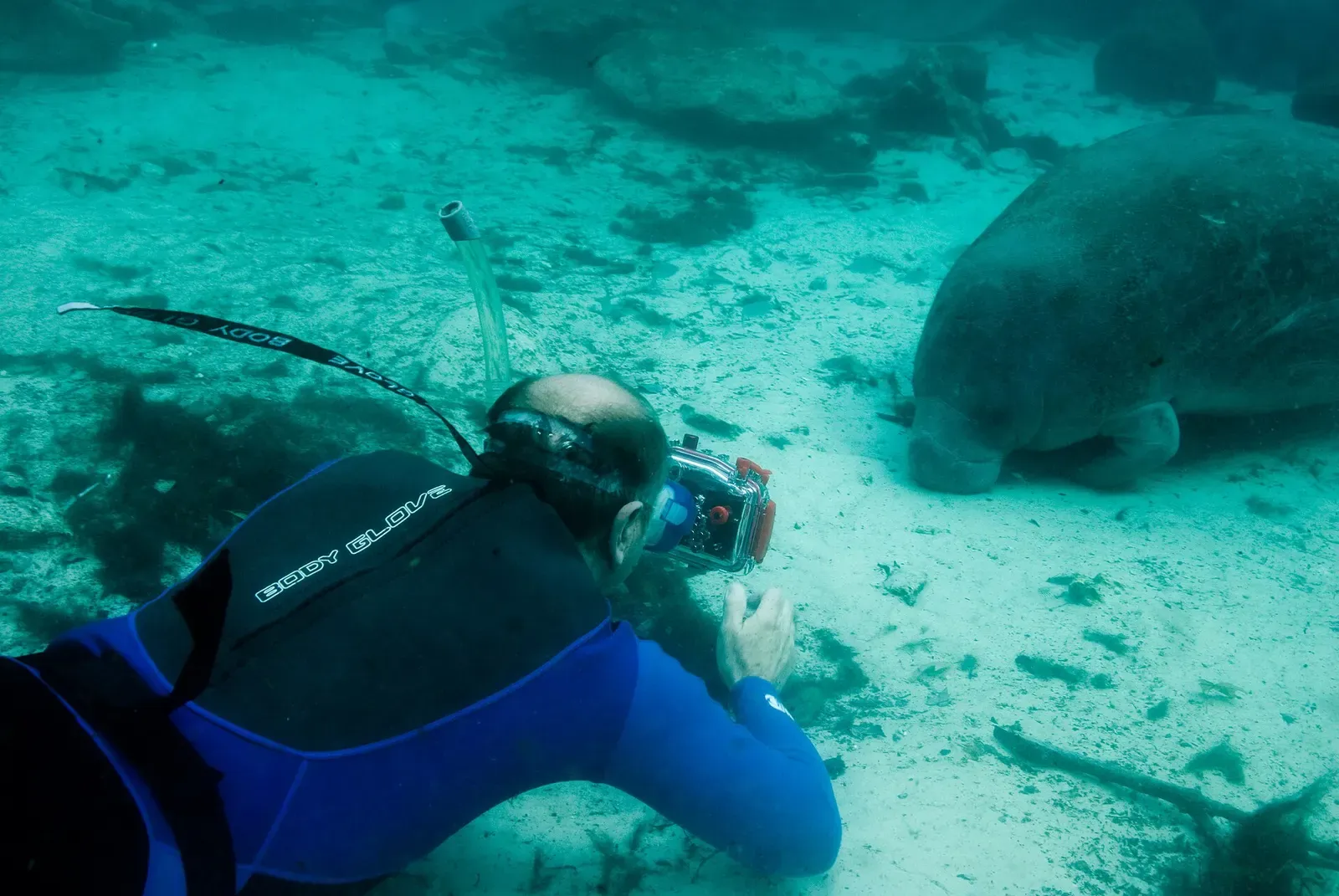
The only place in the US where you may legally swim with manatees
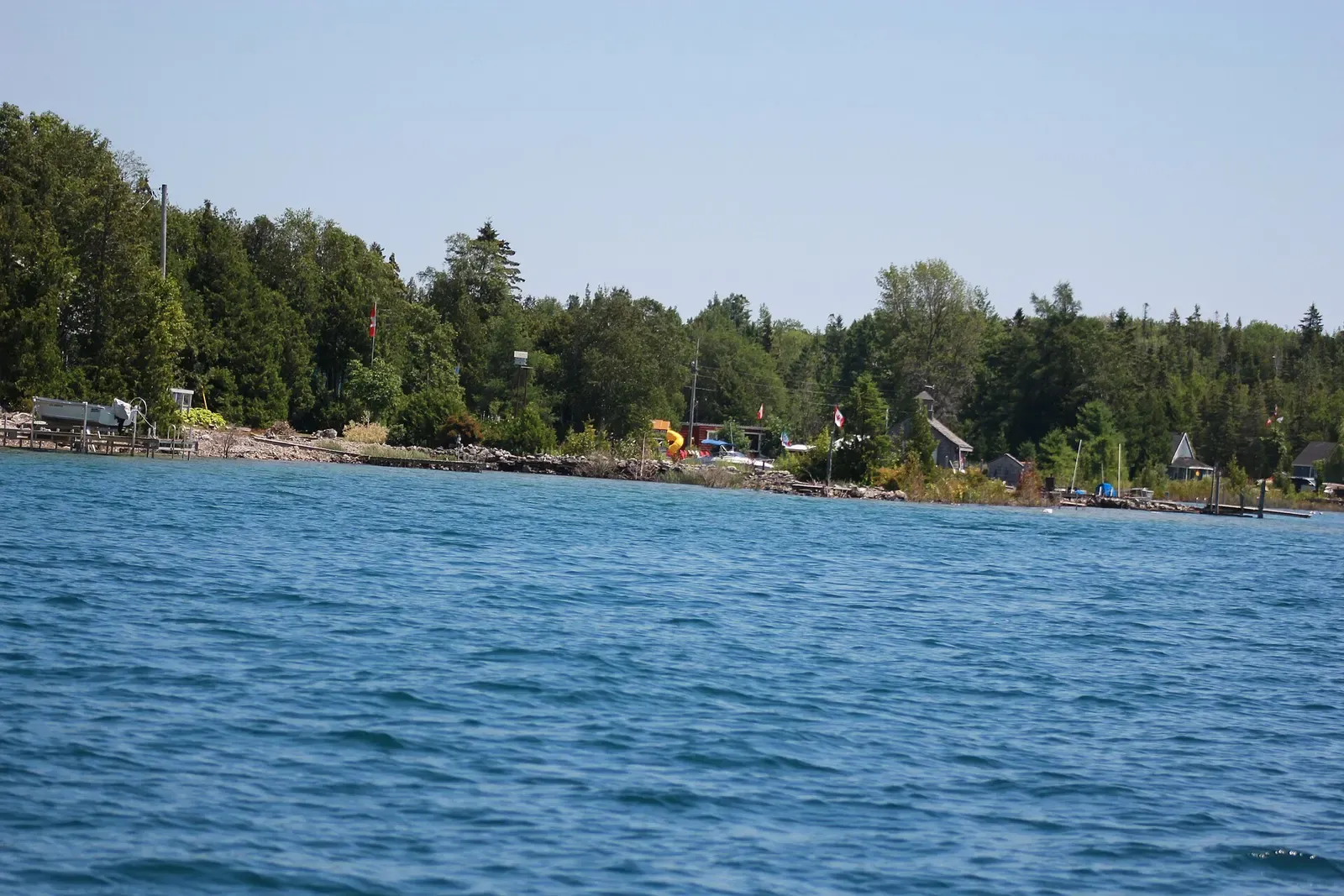
Nineteenth-century schooners preserved intact in cold fresh water

Nineteenth-century wrecks dived as drifts in a hard freshwater current

.jpg)
.jpg)

.jpg)
Playful sea lions and towering kelp forests around rocky island pinnacles.