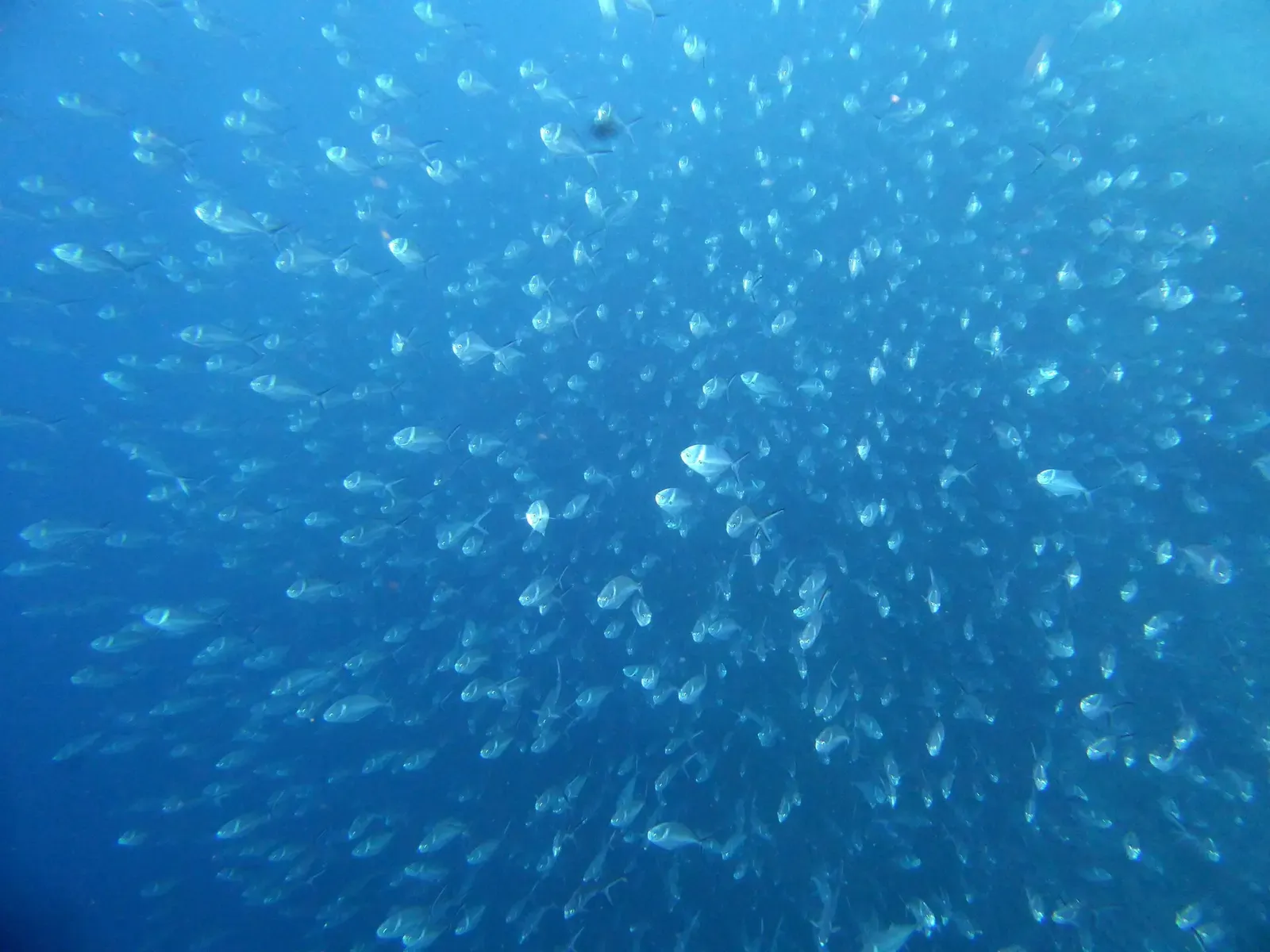
Eastern Pacific · Ecuador
Galápagos — Darwin & Wolf
Massive hammerhead schools and giant whale sharks patrol Darwin's submerged pillars
Photo: Kai Squires · CC BY 4.0
Darwin and Wolf are the northernmost Galápagos islands, submerged volcanic pinnacles reached only by liveaboard far from the inhabited central archipelago. Schools of scalloped hammerheads numbering in the hundreds patrol the walls and cleaning stations, while giant, gravid whale sharks pass through in the cooler months and Galápagos sea lions play in the surge. Strong, unpredictable currents and a cold Cromwell Current upwelling make conditions demanding even for experienced divers.
About diving in Galápagos — Darwin & Wolf
Darwin and Wolf cannot be booked on their own. The licensed vessels run fixed itineraries — usually a week — that give three or four days to the two northern islands and spend the rest on the central and western archipelago, so the pair arrive attached to a whole trip rather than as a day's diving. The run up from the central islands is an overnight crossing in open water and the return leg is the same, which puts the northern days in the middle of the week rather than at either end.
Once there, the pattern repeats: three or four dives a day off the pangas, all of them at the same two islands. Entries are negative and quick, because the surface current can carry a group past the site in the time it takes to clear your ears. The dive itself is mostly stationary — you settle onto a rocky ledge out of the worst of the flow, stay low and watch the wall and the water above it. Neither island can be landed on, so between dives the ship sits in the lee and the day is water, deck, water.
The rest of the itinerary is what stops the trip being a queue for sharks. Cold upwelling along the west sides of Isabela and Fernandina produces completely different diving: dark volcanic rock, cool green water, marine iguanas grazing in the shallows, and the sunfish and rays that give the archipelago its odd, un-tropical character. A sheltered central site near Santa Cruz usually covers the check-out dive, and the last day is normally kept dry before the flight home.
Conditions do the filtering. Visibility here runs well short of tropical numbers, surge works the shallows, and current at the northern sites can change direction partway through a dive. A hood and a thick suit are normal kit on the equator. It suits divers who already handle moving water without thinking about it, and who want a trip where the topside — sea lions on the swim step, the seabird colonies, the islands themselves — counts for as much as the dives.
When to dive Galápagos — Darwin & Wolf
| Jan | Feb | Mar | Apr | May | Jun | Jul | Aug | Sep | Oct | Nov | Dec |
|---|---|---|---|---|---|---|---|---|---|---|---|
| Good | Good | Good | Good | Good | Prime | Prime | Prime | Prime | Prime | Prime | Good |
Jun-Nov's cool, nutrient-rich water brings the biggest hammerhead schools and near-guaranteed whale sharks; Dec-May is calmer with good hammerhead and manta sightings but few whale sharks.
Getting there
Route in through Quito or Guayaquil, where the transit control card is issued, then take a domestic flight to Baltra or San Cristóbal; the park entrance fee is paid on arrival and boats normally board the same day. Cabins on the licensed dive vessels are few and go many months ahead, so the flights follow the boat's dates rather than the other way round.
Wildlife calendar
Hammerhead schools, Galápagos sharks, turtles and sea lions hold on the northern walls all year. Whale sharks arrive with the cool water of the June-to-November prime months, when the schools are also at their biggest; the calmer December-to-May half leans more on mantas and eagle rays. Sunfish belong to the cold western sites the itinerary covers, not to Darwin.
Dive types & marine life
- Pelagic & blue water
- Wall
- Drift
- Seamount
- Night
- Whale sharks
- Hammerheads
- Reef sharks
- Seals & sea lions
- Mola mola
- Dolphins
- Eagle rays
- Sea turtles
- Manta rays
Notable dive sites in Galápagos — Darwin & Wolf
Darwin's Arch
Iconic submerged pillars (the arch collapsed in 2021) with the densest hammerhead schools
El Arenal
Sandy drop-off cleaning station off Darwin with strong current and hammerheads
Shark Bay
Wolf Island site renowned for hammerhead and Galápagos shark encounters
Landslide (El Derrumbe)
Jagged, sloped wall at Wolf with strong current and schooling sharks
The Cave
Swim-through cavern at Wolf with soft corals, hammerheads and hunting tuna
Photos from Galápagos — Darwin & Wolf
Kai Squires · CC BY 4.0
Kai Squires · CC BY 4.0
Kai Squires · CC BY 4.0
Dive videos
Galapagos - Wolf and Darwin Islands - Humboldt Explorer Liveaboard - December 2024 · Kris N Chris Henry on YouTube
Hammerheads and Whale Sharks! | Darwin & Wolf, Galapagos Islands | Scuba Diving · Omni Reef on YouTube
Photo credits
- A dense school of silvery steel pompano fills the blue water near Wolf Island, Galápagos. by Kai Squires, CC BY 4.0, via Wikimedia Commons
- Steel pompano swim just beneath the sunlit surface off Wolf Island. by Kai Squires, CC BY 4.0, via Wikimedia Commons
- A small group of steel pompano swims under the rippled ocean surface. by Kai Squires, CC BY 4.0, via Wikimedia Commons
- A large school of steel pompano scatters light near the water's surface. by Kai Squires, CC BY 4.0, via Wikimedia Commons
Similar destinations
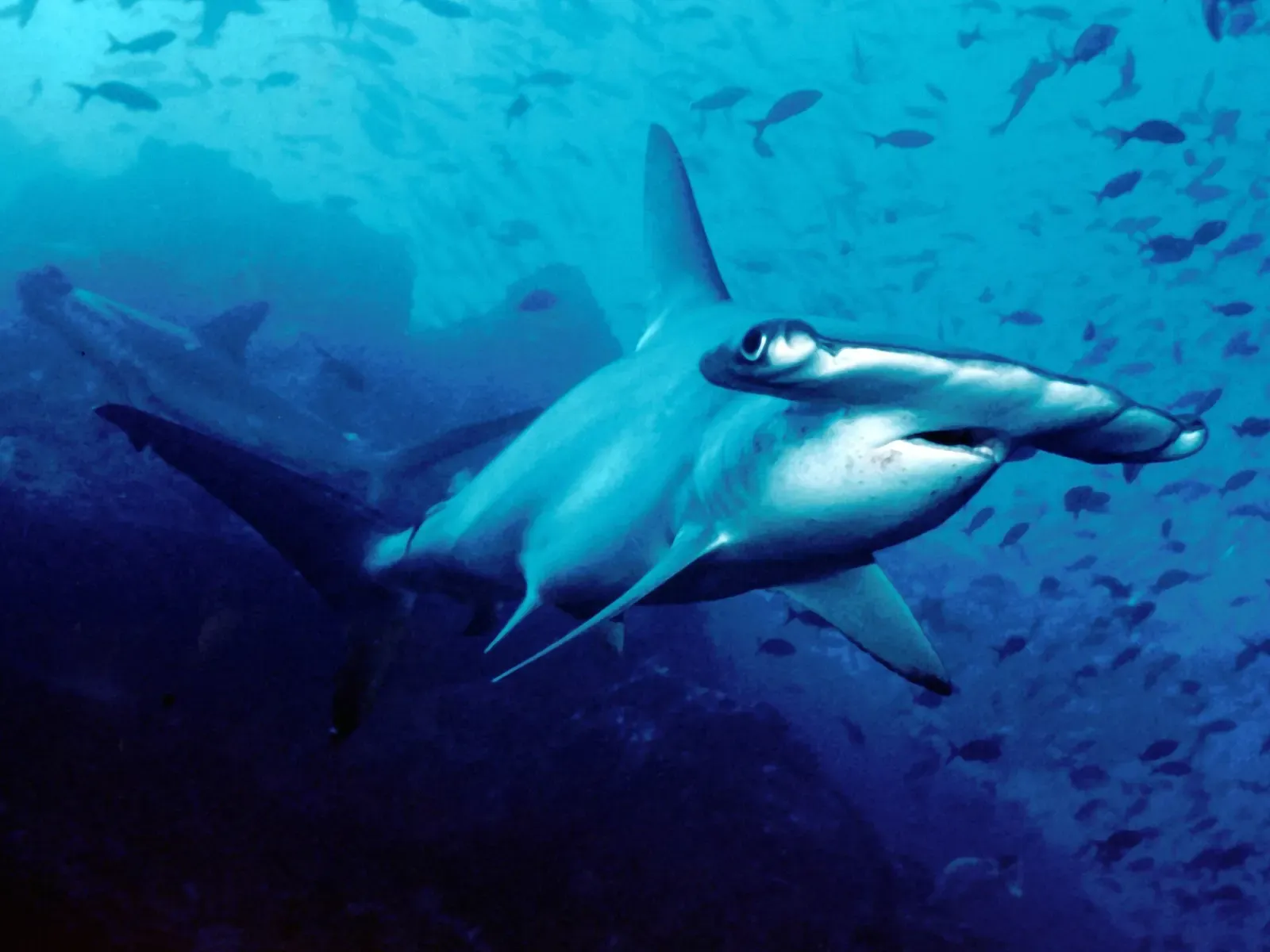
Scalloped hammerhead schools circle Bajo Alcyone's cleaning station in the current
Eastern Pacific
Malpelo
Colombia
Hammerhead schools of 200-plus circle La Nevera's cold-water cleaning station
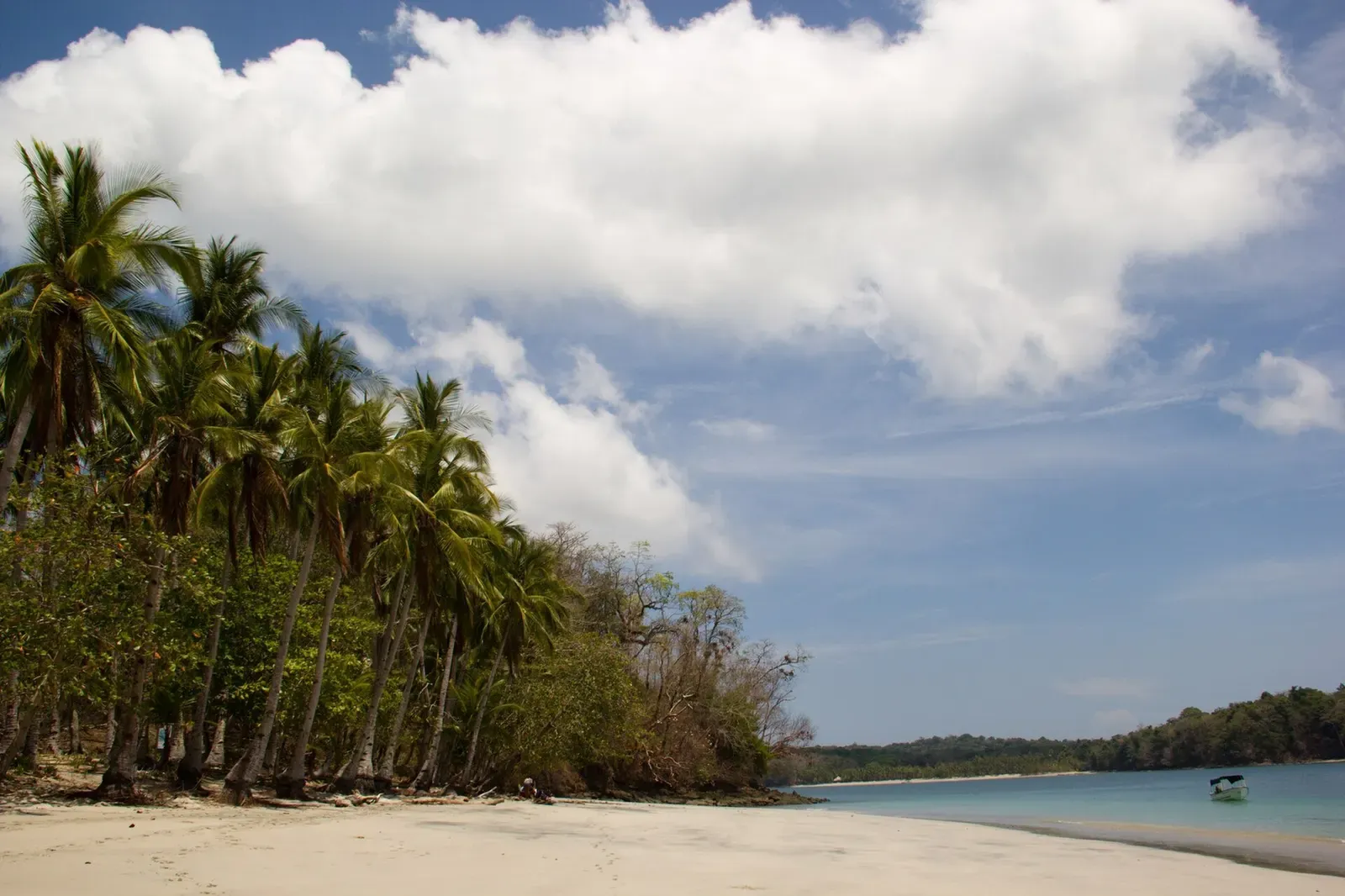


Hannibal Bank rises from 400 m and pulls in billfish and tuna
Eastern Pacific
Bat Islands
Costa Rica
Bull sharks cruise past divers settled on the bottom at the Big Scare