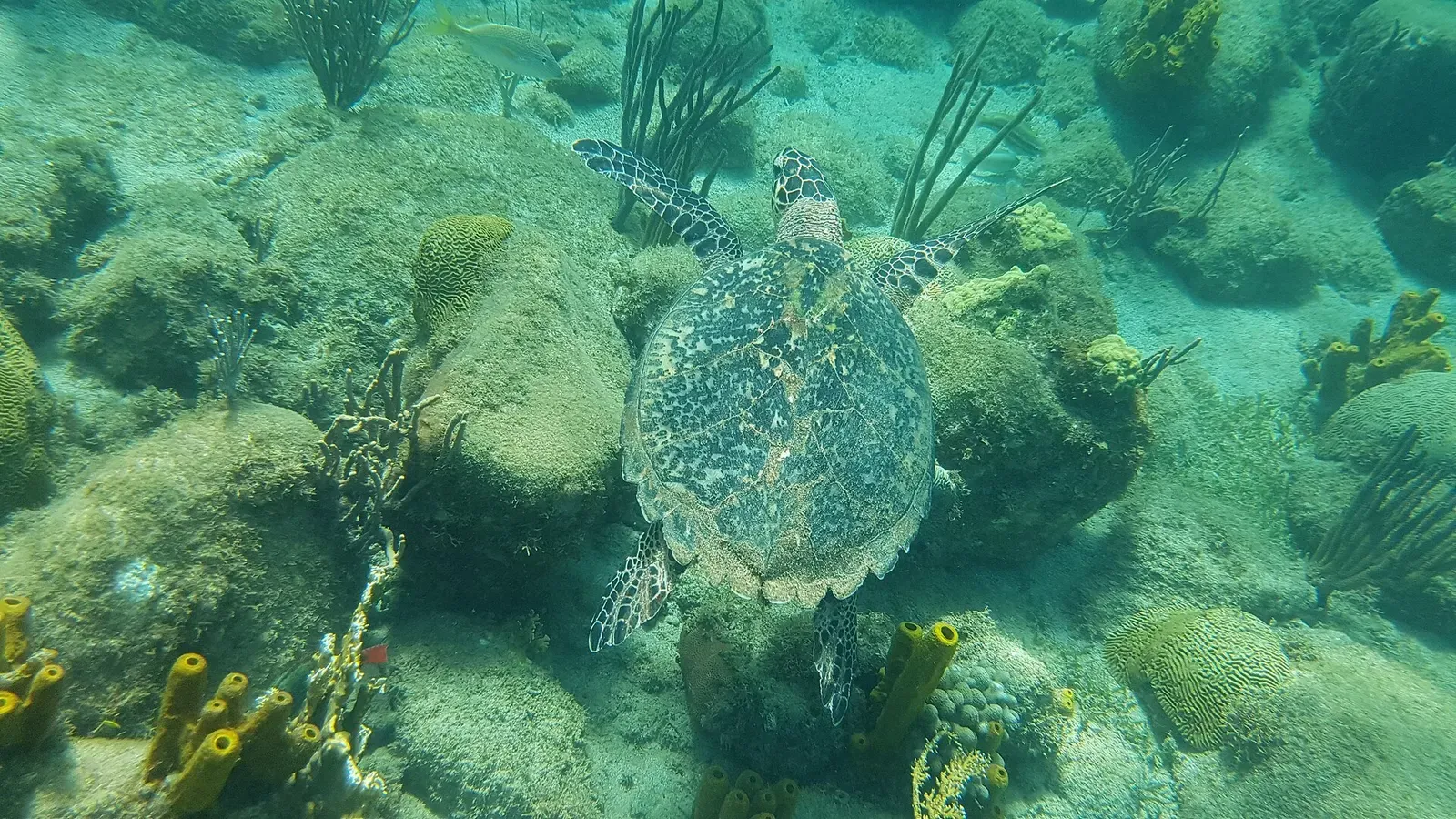
Caribbean · Guadeloupe
Guadeloupe — Cousteau Reserve
A bronze Cousteau sits at 12 m in the reserve he made famous
Photo: Antoine Cupial · CC BY-SA 4.0
Jacques Cousteau named the water around Pigeon Island among the world's best dive sites in the 1950s, and the reserve that now carries his name protects it. The diving is gentle and shallow — coral gardens, volcanic boulders and a sheltered channel with almost no current — and a bronze bust of Cousteau sits on the seabed at 12 m. Twenty kilometres offshore, the seamount of Sec Pâté rises from deep water and offers the region's one genuinely serious dive.
About diving in Guadeloupe — Cousteau Reserve
Diving here runs on short crossings. Boats leave the beach at Malendure on Basse-Terre's west coast and are over the Pigeon islets within minutes, so centres tend to schedule several departures through the day rather than committing everyone to one long morning, and adding a dive at short notice is usually straightforward. Briefings are given in French, with English available at most shops if you ask for it. It is busy water: snorkel boats, glass-bottom boats and dive boats all work the same sheltered channel.
Basse-Terre is a volcanic island and the ground underwater shows it. Basalt boulders and lava slabs stack into ledges and swim-throughs, with coral, sponge and sea fans growing over the rock rather than building a continuous reef, and dark volcanic sand shelving away beyond. The islets sit inside protected water managed as part of the national park, so boats pick up moorings instead of anchoring. Sites separate by exposure more than by depth: the channel stays flat on almost any day, while the island tips pick up moving water and hold more fish.
Because the profiles are gentle, most of the interest is close-range work — octopus in the rubble, nudibranchs on the sponges, turtles grazing while snorkellers cross overhead — and night dives on the same shallow ground are a fixture rather than an event. The offshore seamount is the deliberate opposite: a long open crossing, no shelter and real current, with a summit inside recreational range and flanks that fall straight past it. It runs only when the sea is flat and enough divers sign on, so plan for it but expect it to move.
That mix suits new divers, families splitting their time between diving and snorkelling, and photographers who would rather work a small area repeatedly than cover distance. Mixed-ability groups do well, since one crossing can serve both an easy coral dive and a livelier point. Divers who want big animals on every dive, or a lot of variety, will work through the core sites in a few days; the honest approach is to treat the reserve as one part of a wider Guadeloupe trip.
When to dive Guadeloupe — Cousteau Reserve
| Jan | Feb | Mar | Apr | May | Jun | Jul | Aug | Sep | Oct | Nov | Dec |
|---|---|---|---|---|---|---|---|---|---|---|---|
| Prime | Prime | Prime | Prime | Good | Good | Good | Fair | Fair | Fair | Good | Prime |
Dec–May is the dry season with the calmest water; Aug–Oct brings hurricane risk and the heaviest rain.
Getting there
Guadeloupe Pôle Caraïbes at Pointe-à-Pitre is the gateway, and from there it is a drive across to Basse-Terre's west coast, where Bouillante and the beach at Malendure hold the dive centres. Every site is reached by boat and the crossings are short, but a hire car is worth having, since the coast road is the only practical way to reach the centres.
Wildlife calendar
Turtles are the constant, grazing the shallow ground year-round alongside octopus and clouds of small reef fish, while slow shallow dives turn up nudibranchs and other macro life. Barracuda and grouper hold at the exposed points, and eagle rays cross the sand. The dry December-to-May stretch brings the calmest water and the best odds offshore, where the larger pelagic traffic is.
Dive types & marine life
- Reef
- Coral garden
- Night
- Drift
- Seamount
- Wall
- Sea turtles
- Reef fish swarms
- Nudibranchs
- Macro critters
- Barracuda
- Groupers
- Eagle rays
- Octopus & cuttlefish
Notable dive sites in Guadeloupe — Cousteau Reserve
Jardin de Corail
Shallow coral garden in 12 m, the reserve's main and easiest dive.
Buste de Cousteau
Bronze bust of Cousteau on the seabed at 12 m off Pigeon Island.
La Piscine
Sheltered volcanic bowl in 15 m, flat calm and used for training.
Pointe Barracuda
Island tip with more current and resident barracuda schools.
Sec Pâté
Offshore seamount rising from 60 m to 18 m, with pelagics and current.
Photos from Guadeloupe — Cousteau Reserve
Fish and Dive · CC BY 4.0
Fish and Dive · CC BY 4.0
Antoine Cupial · CC BY-SA 4.0
Antoine Cupial · CC BY-SA 4.0
Dive videos
Plongée dans la Réserve Cousteau (Îlet Pigeon, Guadeloupe) · morgunkorn on YouTube
Photo credits
- A hawksbill turtle swims over a coral reef in the Cousteau Reserve off Guadeloupe. by Antoine Cupial, CC BY-SA 4.0, via Wikimedia Commons
- A four-eyed butterflyfish hovers over rocky reef in the waters off Guadeloupe. by Fish and Dive, CC BY 4.0, via Wikimedia Commons
- A Christmas tree worm spirals open on coral in the waters off Guadeloupe. by Fish and Dive, CC BY 4.0, via Wikimedia Commons
- Yellow tube sponges and brain coral cover a rocky reef in the Cousteau Reserve. by Antoine Cupial, CC BY-SA 4.0, via Wikimedia Commons
- Small striped fish and dark sea urchins shelter among boulders on the reef floor. by Antoine Cupial, CC BY-SA 4.0, via Wikimedia Commons
Similar destinations
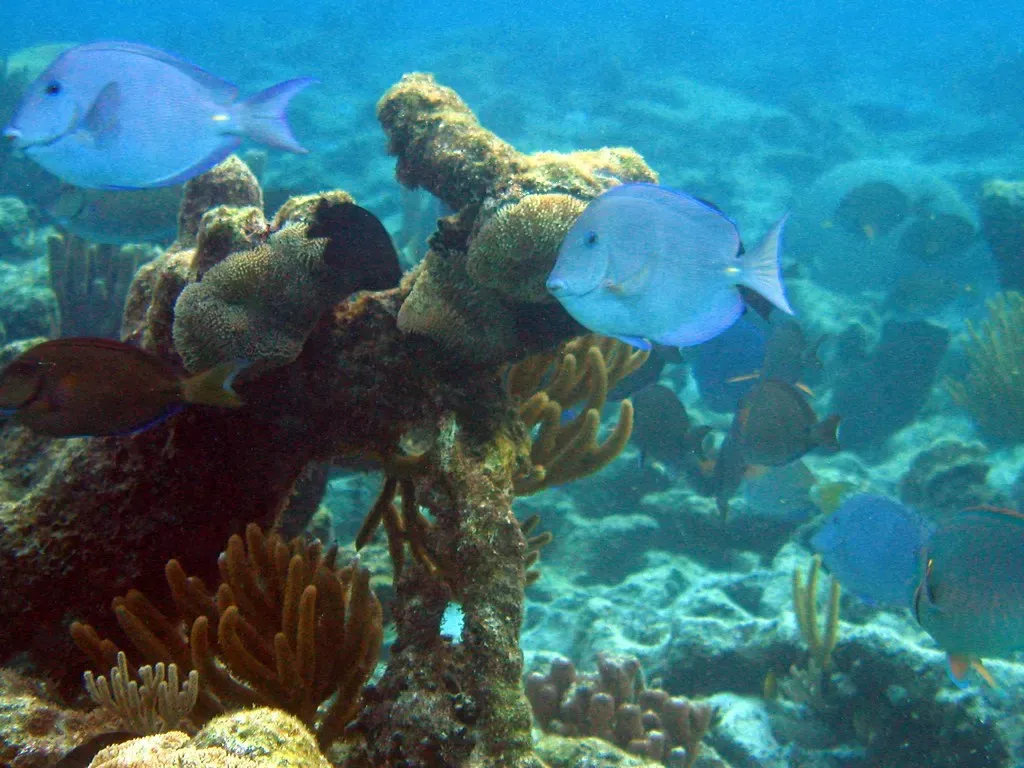
Swim off a beach onto a wall that drops past three thousand metres
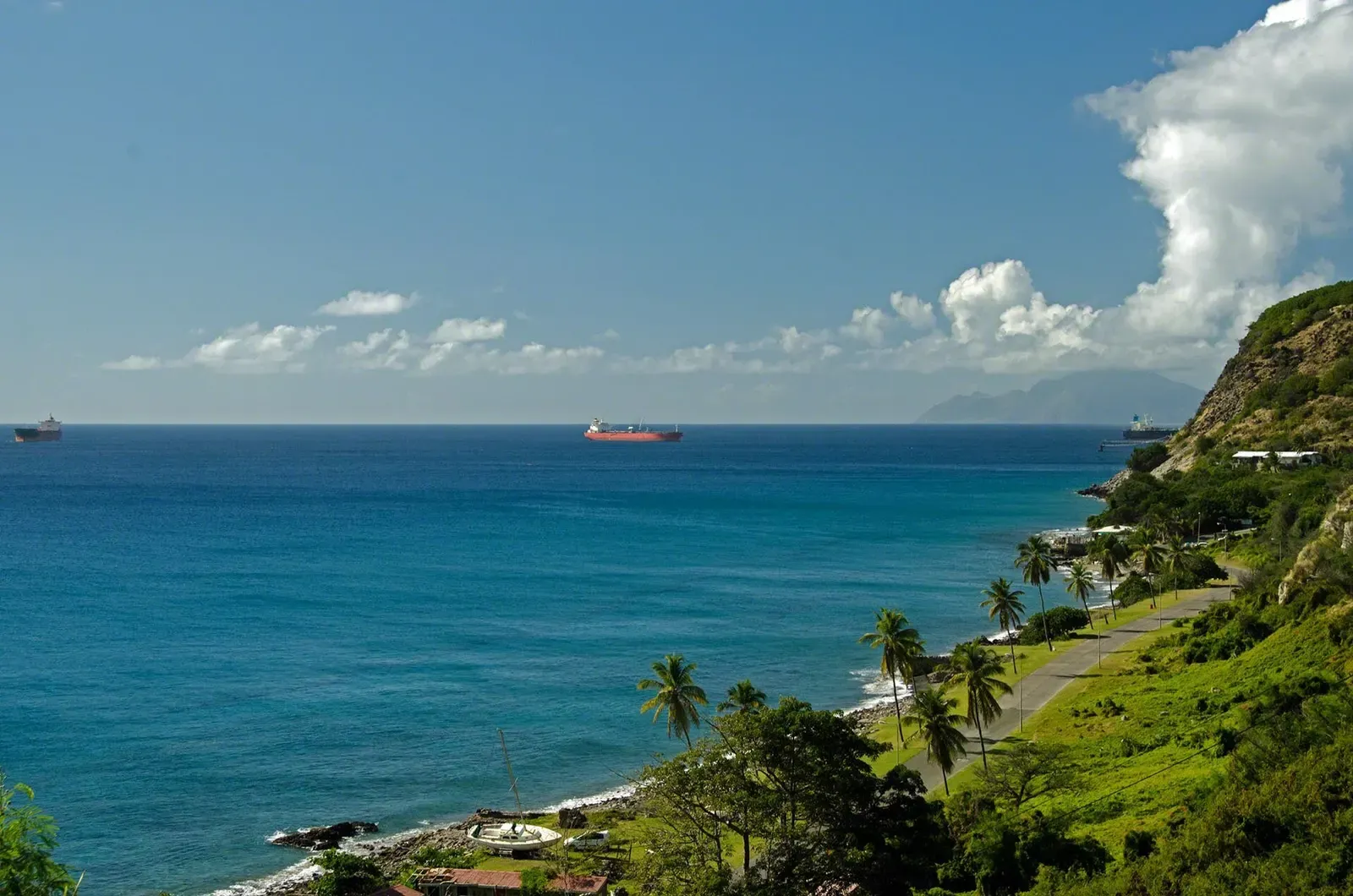
Swim over the ballast blocks of a drowned eighteenth-century port
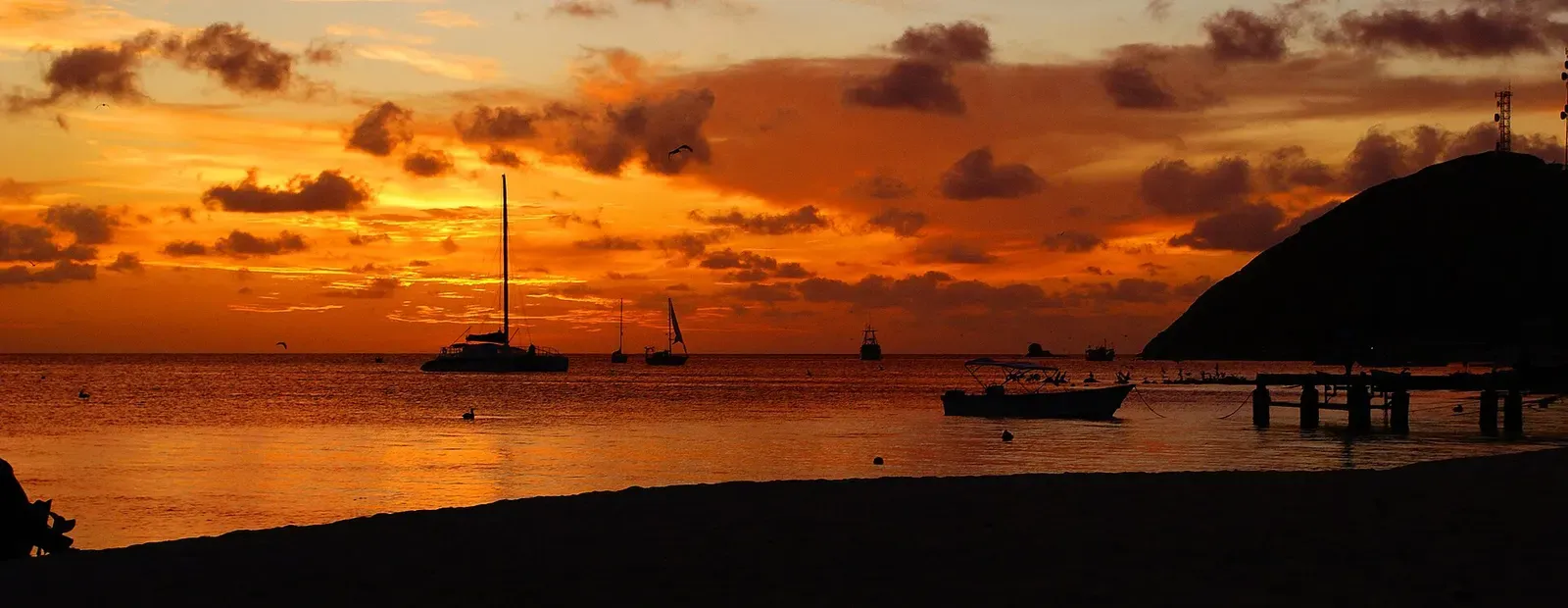


A 350-cay national park atoll with walls and almost no other divers
Caribbean
María la Gorda
Cuba
Forests of black coral in a bay that is flat calm nearly every day