North America · United States
North Carolina Wrecks
Sand tiger sharks aggregate around WWII wrecks in the Graveyard of the Atlantic.
Dozens of World War II-era shipwrecks and a torpedoed German U-boat lie off North Carolina's Outer Banks in the so-called Graveyard of the Atlantic, where the warm Gulf Stream meets the cold Virginia Coastal Drift. These offshore wrecks, including the U-352 and the freighters Papoose and Aeolus, host large seasonal aggregations of sand tiger sharks gathering in and around the wreckage. Trips run well offshore in open-ocean conditions, with strong current and depths beyond 30 meters common.
About diving in North Carolina Wrecks
Every dive here costs a full day on a boat. Charters leave the docks early, steam well offshore to reach the wreck line, and run two dives with a long surface interval on the water before heading back in, so anything left behind on the dock stays there. The crew hooks the wreck and ties in a line, divers descend it through open blue water with no bottom in sight, and that same line is the way home. Most boats fill nitrox as the default mix, trips are called off for sea state as often as for anything else, and the fleet effectively stands down through midwinter.
The water decides the day. A site that was blue and warm one week can be green and markedly colder the next as the edge of the Gulf Stream shifts, and the change sometimes arrives partway down the line rather than at the surface. Current over the wreckage is the other variable: divers plan to work the sheltered side of a hull and stay in contact with structure, and being carried off into open water is the thing crews brief hardest against.
The war-era casualties are mostly broken down rather than standing. What you generally find is a debris field on flat sand, plating and boilers and engine parts and ribs, low enough that the whole site sits inside your visibility on a good day and vanishes on a poor one. The ships put down deliberately as artificial reefs keep more shape, and some sit shallow enough to make an easier second dive. Against an otherwise empty bottom any of it works as an oasis and concentrates what lives out there. Identifications on the older, more scattered sites are not all equally settled, and crews will say so.
This is a wreck diver's destination and it filters people accordingly. Most of the charter wrecks sit somewhere between roughly 20 and 40 m, so comfort on a descent line, honest gas planning and a realistic sense of your own limits in current count for more here than warm-water logbook pages, and a long ride offshore has to be tolerable. Photographers come for large animals against structure and technical divers for the deeper hulls. Anyone wanting shallow reef, shore access or a schedule they can guarantee weeks ahead will be frustrated.
When to dive North Carolina Wrecks
| Jan | Feb | Mar | Apr | May | Jun | Jul | Aug | Sep | Oct | Nov | Dec |
|---|---|---|---|---|---|---|---|---|---|---|---|
| Off-season | Off-season | Fair | Fair | Good | Good | Good | Good | Prime | Prime | Good | Off-season |
Charter season runs roughly April-November; sand tiger shark aggregations peak in September-October, while December-February seas are too rough for most boats.
Getting there
Most divers fly into Raleigh-Durham or Wilmington and drive to the coast, basing around Morehead City and Beaufort where the charter fleet sits. It is day-boat diving only, with no shore option, and boats fill early for the September-October peak, so book well ahead and leave slack for weather days.
Wildlife calendar
Sand tigers hold over the wrecks through the warm charter months and are at their thickest around the September-October peak. The metal carries schooling jacks and baitfish, barracuda above the highest structure, grouper tucked into the plating and invasive lionfish almost everywhere. Loggerhead turtles rest in the wreckage, and dolphins often show up on the ride out.
Dive types & marine life
- Wreck
- Drift
- Sand tiger sharks
- Sea turtles
- Barracuda
- Trevally & jacks
- Eagle rays
- Dolphins
- Groupers
Notable dive sites in North Carolina Wrecks
U-352
German U-boat sunk in 1942, now a shallow artificial reef for sand tigers.
USS Schurz
WWI-era cruiser wreck scattered across the sandy bottom.
Papoose
Tanker wreck famous for large sand tiger shark aggregations.
Caribsea
Freighter torpedoed in 1942, broken and encrusted with coral.
Aeolus
Cable-repair ship deliberately sunk, split into three sections by storms.
Dive videos
Wreck Dive on German U Boat U-352 off North Carolina · Richard Wilder on YouTube
Diving with Sand Tiger Sharks in North Carolina - The Hyde Shipwreck · Karim Lounes on YouTube
Similar destinations
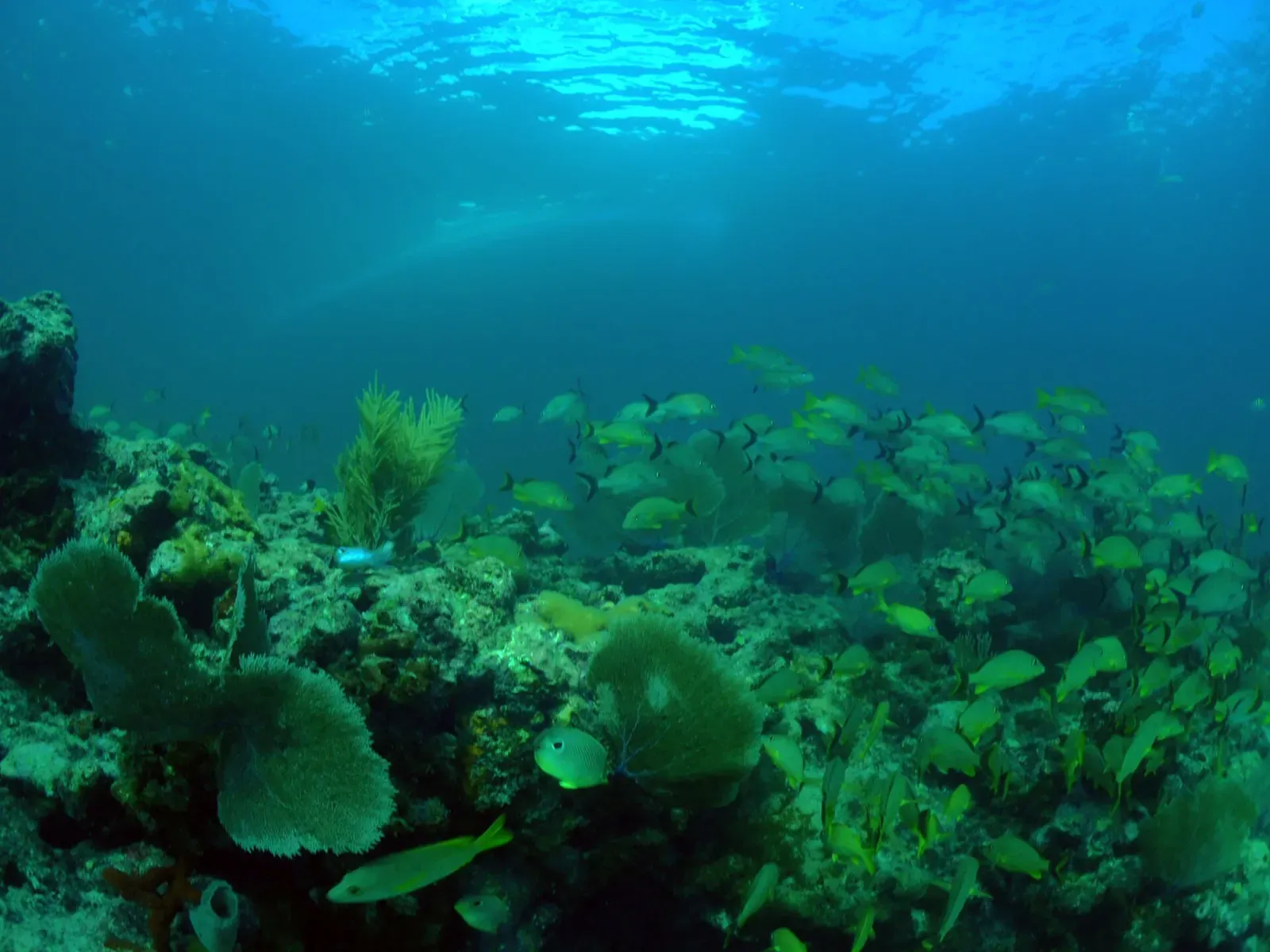
Warm shallow reefs and famous wrecks stretching from Key Largo to Key West.
Goliath groupers over 200 kg mass on the wrecks to spawn each August
A recovered coral reef with dense jack schools and seasonal bull sharks.
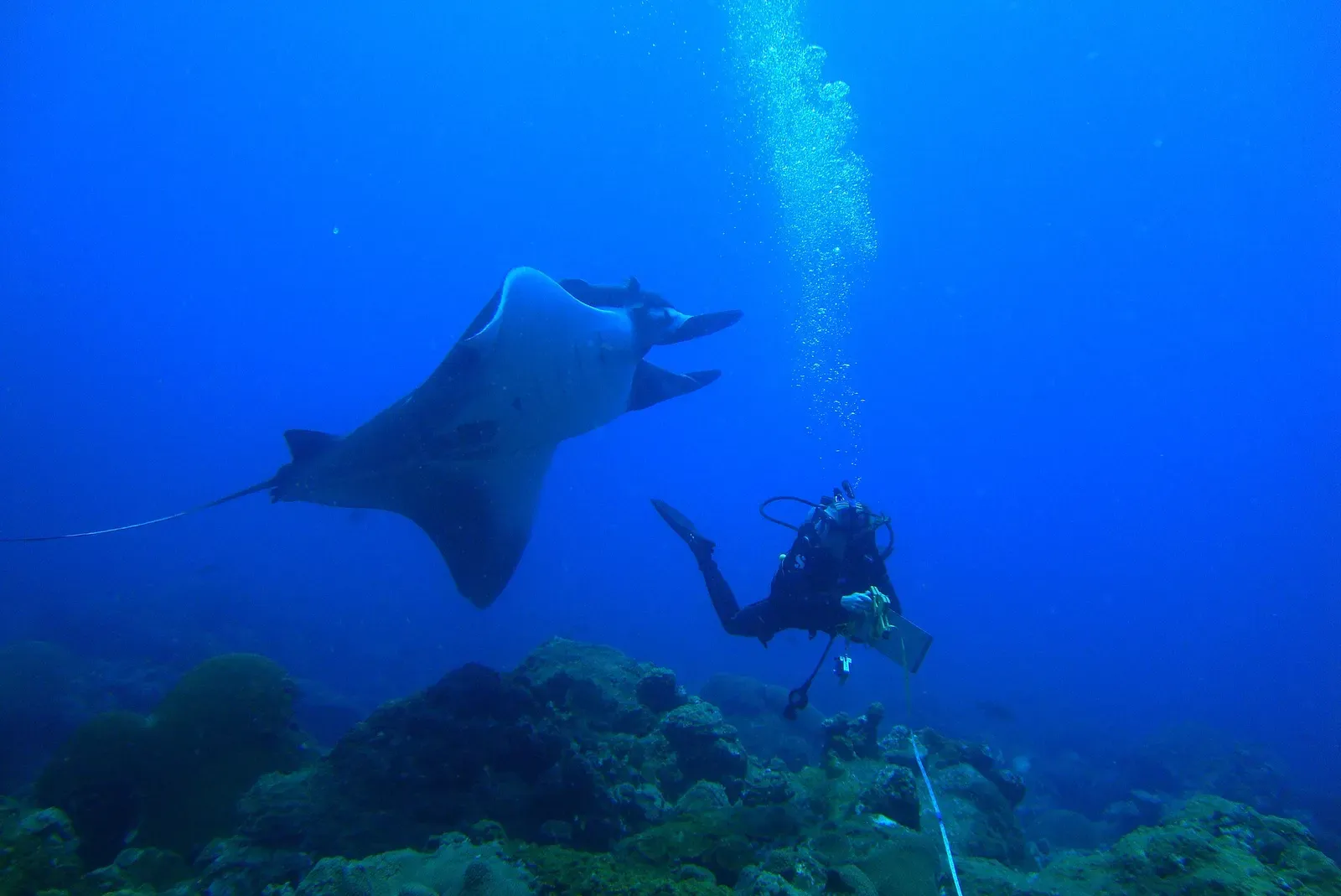
Healthy coral reef caps 100 miles offshore, famous for August coral spawning.