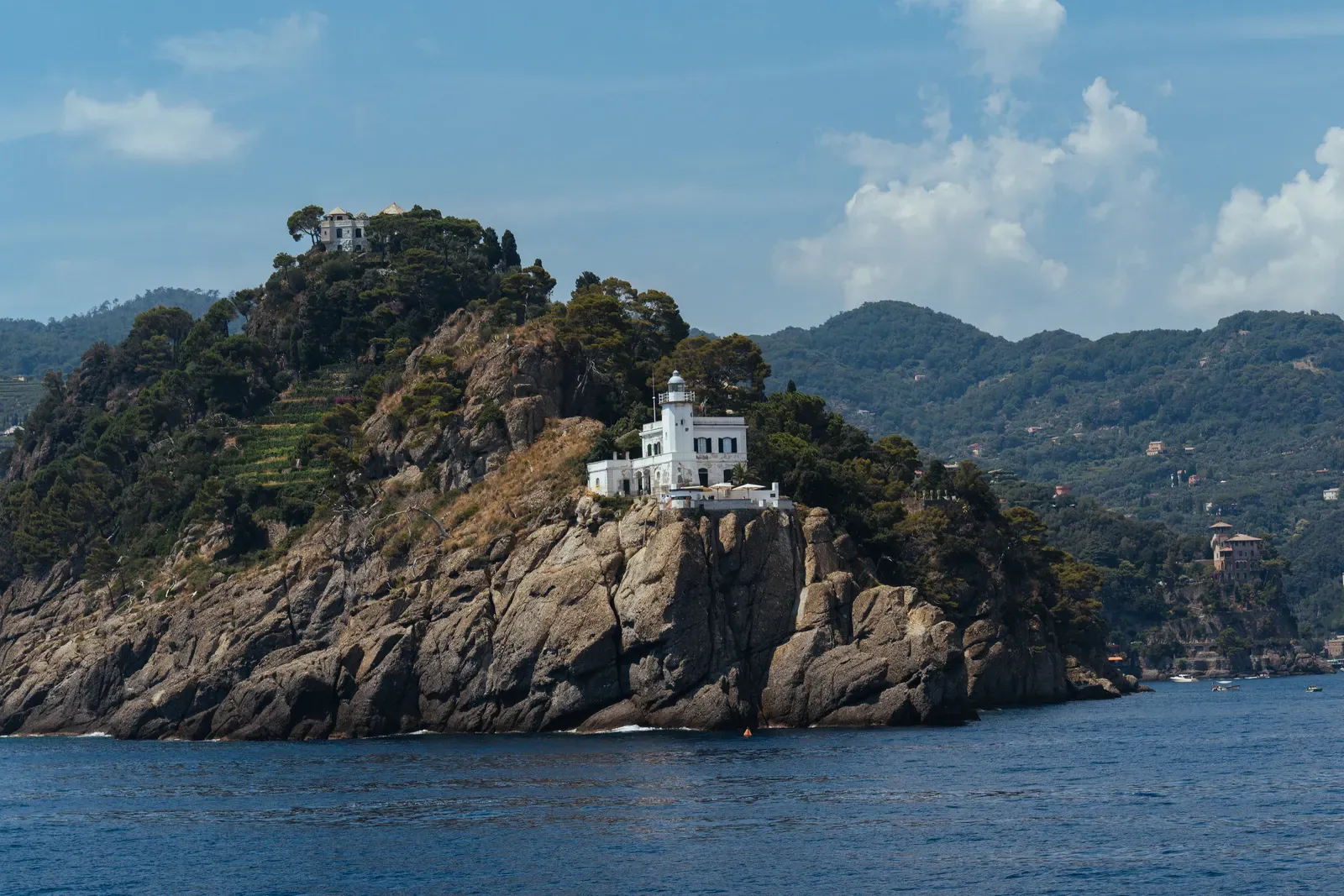
Mediterranean · Italy
Portofino Marine Reserve
Red gorgonian forests below 25 m and a bronze Christ at 17 m
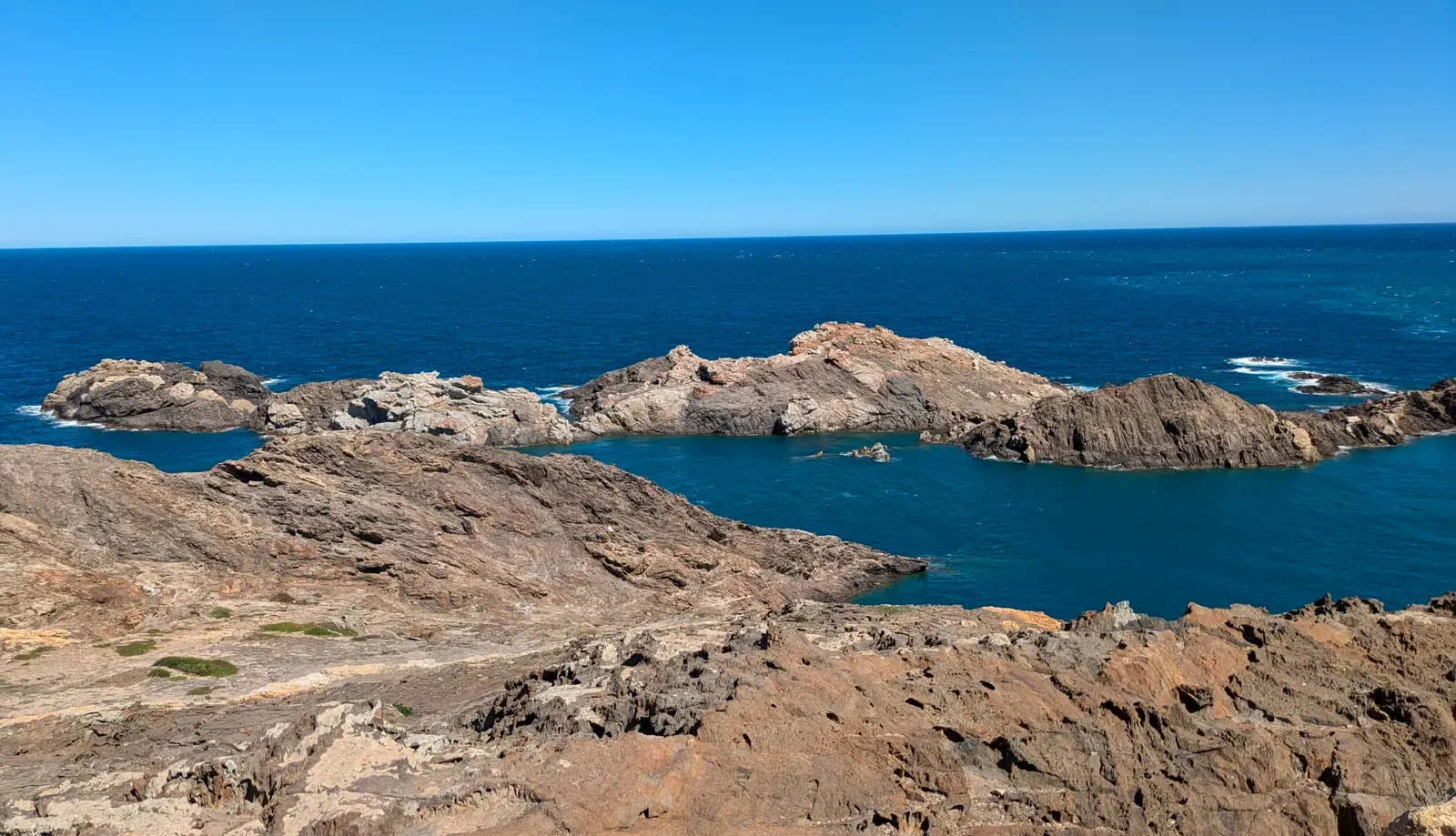
Photo: Stefan Schäfer, Lich · CC BY-SA 4.0
The Portofino promontory drops straight into the Ligurian Sea, and below 25 m its walls carry some of the densest red gorgonian forests in the Mediterranean — fans a metre across, packed shoulder to shoulder in the cold water that upwells against the headland. The reserve's other draw is the Cristo degli Abissi, a bronze Christ placed on the seabed at 17 m in the bay of San Fruttuoso in 1954 and copied at dive sites worldwide since.
About diving in Portofino Marine Reserve
Diving here is boat-only and short-range: centres in Santa Margherita Ligure and Camogli run out to fixed moorings on the promontory, with crossings measured in minutes rather than hours. Sites are chosen on the day according to which side of the headland the wind is hitting, so the same operator may run the exposed southern walls one morning and sheltered eastern rock such as Colombara the next. Everything is guided and booked through operators authorised by the reserve.
The underwater ground is the cliff itself, carrying on below the waterline as vertical rock broken by ledges, overhangs and short swim-throughs. The upper 20 m is bright and algae-covered; below that the light drops, the water turns noticeably colder, and the red gorgonian fans start at around 25 m, thickest on the deep wall at Punta del Faro and on the flanks of the Secca dell'Isuela, a pinnacle that tops out at 12 m and drops away on every side. The overhangs at Testa del Leone carry dense yellow cup coral between 20 and 35 m.
The set-piece is the Cristo degli Abissi in San Fruttuoso bay, a bronze figure set on the seabed at 17 m and so within Open Water limits, usually lit with a torch to lift it out of the green light. Beyond it the reserve is Advanced ground: the best rock starts at 25 m, the profiles are deep, and the cold at depth argues for a proper suit. It suits divers who read a wall slowly and photograph invertebrates rather than those hoping for big animals. Night dives run in the sheltered bays.
When to dive Portofino Marine Reserve
| Jan | Feb | Mar | Apr | May | Jun | Jul | Aug | Sep | Oct | Nov | Dec |
|---|---|---|---|---|---|---|---|---|---|---|---|
| Fair | Fair | Fair | Good | Good | Prime | Prime | Prime | Prime | Good | Fair | Fair |
May–Oct is the settled season; visibility is often best in late autumn, and winter storms close the exposed southern walls.
Getting there
Genoa is the nearest airport and the coastal railway runs to Camogli and Santa Margherita Ligure, the two usual bases; Portofino village itself is small and expensive. Diving in the reserve is boat-based with authorised operators, and there is no shore diving.
Wildlife calendar
The draw is fixed life: red gorgonian fans below 25 m, yellow cup coral under the overhangs, and nudibranchs and small crustaceans on the rock year-round. Dusky grouper, octopus and cuttlefish are resident, while barracuda and fish shoals show over the shallows through the settled June–September peak.
Dive types & marine life
- Wall
- Reef
- Cave & cavern
- Night
- Groupers
- Octopus & cuttlefish
- Nudibranchs
- Reef fish swarms
- Macro critters
- Barracuda
Notable dive sites in Portofino Marine Reserve
Cristo degli Abissi
Bronze statue placed on the seabed at 17 m in San Fruttuoso bay.
Secca dell'Isuela
Submerged pinnacle rising to 12 m, the reserve's richest wall.
Punta del Faro
Deep wall under the lighthouse, gorgonian-covered from 30 m.
Colombara
Sheltered wall on the eastern side, good when the south wind blows.
Testa del Leone
Rock face with overhangs and dense yellow cup coral at 20–35 m.
Dive videos
Scuba Diving in PORTOFINO 2023 (4K, Panasonic Lumix GH6) · Marcel Steuermann on YouTube
Scuba diving in Portofino (4K, Panasonic Lumix G80/81/85)) · Marcel Steuermann on YouTube
Photo credits
- Portofino lighthouse on a rocky headland dropping into the Ligurian Sea by Stefan Schäfer, Lich, CC BY-SA 4.0, via Wikimedia Commons
Similar destinations
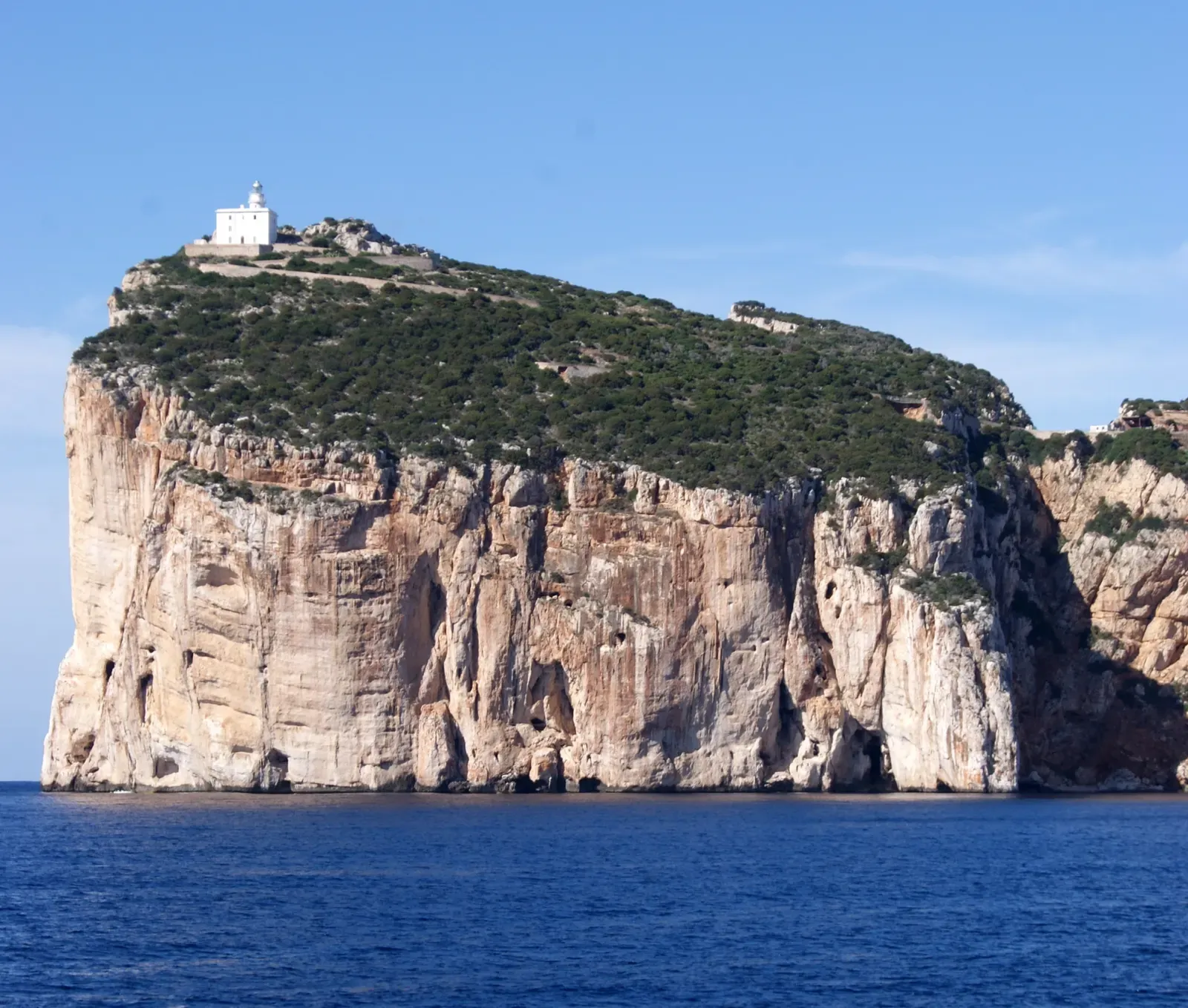
The Mediterranean's largest sea cave, with entrances from 8 m to 33 m
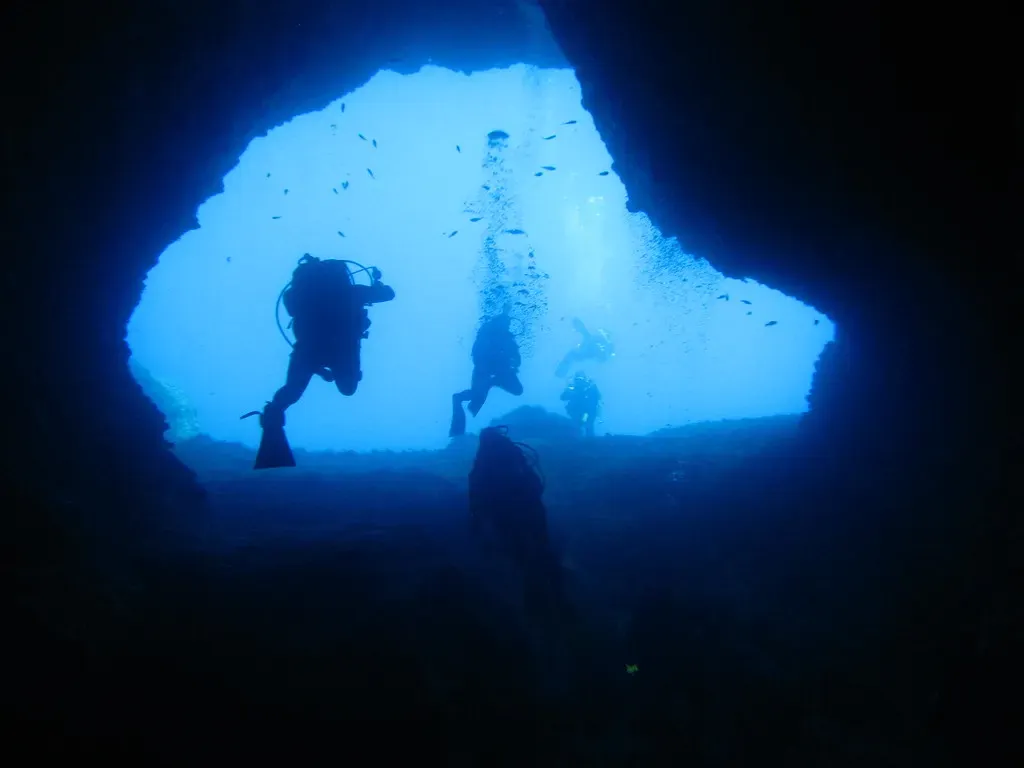
Fossil elephant tusks inside a cave whose entrance is now at 10 m
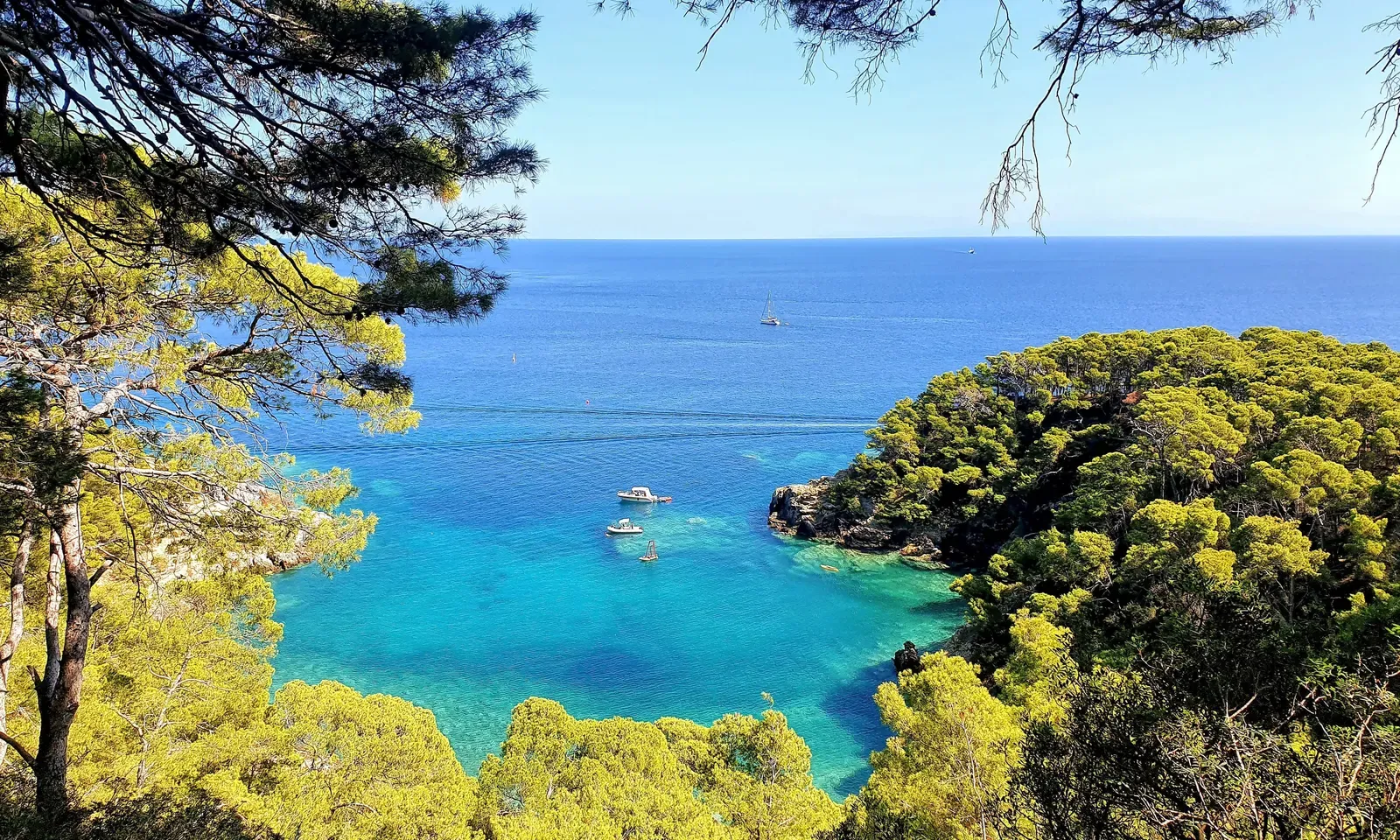
A bronze Padre Pio stands on a submerged rock at 14 m

Schist walls, tunnels and red gorgonian fans at the Pyrenees' end