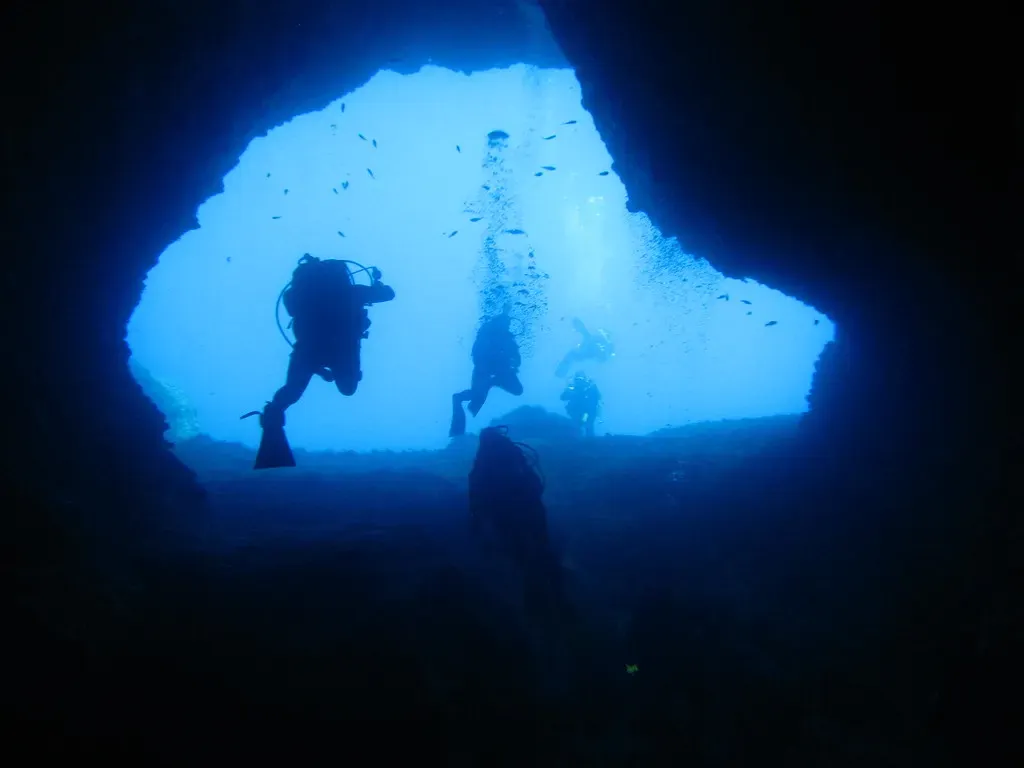
Crete's diving is built on caves and wartime debris. The Elephant Cave near Chania was dry land during the last ice age and still holds the fossilised bones and tusks of extinct dwarf elephants, its entrance now at 10 m; divers surface inside a stalactite chamber. Offshore, a Messerschmitt Bf 109 lost in the 1941 fighting — its exact identity still debated — lies almost intact on sand, and the limestone coast is cut with caverns, arches and drop-offs.
About diving in Crete
Day to day, Crete is easy holiday diving. Centres along the coast run two-tank morning boats with short crossings to the sites, and sheltered training bays like Mononaftis are straight walk-ins from the beach, so a bad forecast rarely wipes out the day entirely. Conditions are undemanding in the ways that matter — long bottom times, easy navigation, a thicker suit rather than different plans in the cooler months — and there is enough interest close inshore that night dives are a regular fixture rather than a novelty.
The island's limestone simply carries on below the waterline. That gives structure rather than colour: boulder slopes, arches, short swim-throughs and drop-offs that finish on clean sand, with little sediment to stir up and good light down the rock faces. Most dives sit in a band between roughly 8 m and 35 m, which makes for long bottom times, and much of the pleasure is in poking a torch into shaded cracks rather than swimming any distance.
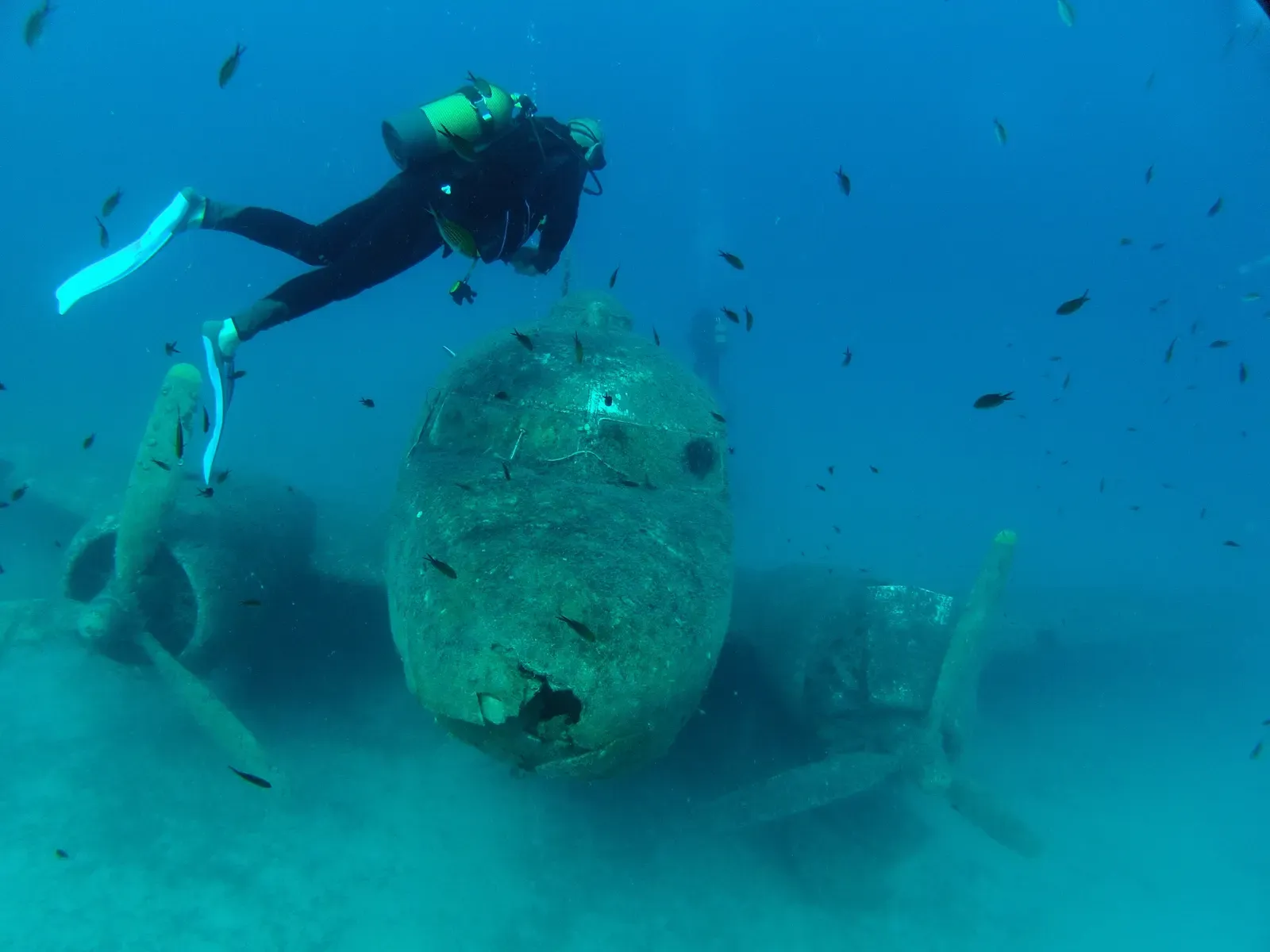
The set pieces are the caves and the wartime metal. Swimming into the Elephant Cave means crossing from blue water into torchlight, following the rock passage up until the surface flattens into a dark air chamber hung with stalactites; the fossil bones held in the rock sit behind a look-don't-touch rule and the guides police it. The fighter aircraft is the opposite kind of dive — a slow circuit over open sand around an airframe the sea has kept surprisingly whole, wings and cockpit frame still legible after eighty years.
It suits beginners, rusty divers and mixed groups where not everyone dives, since the shore entries and short boat runs make half-days workable. Divers chasing big animals or deep steel will find it thin. Open Water covers the reefs and the shallow caverns; the Elephant Cave is the step up: guided only, with operators setting their own entry requirements — some ask for Advanced — and it demands settled buoyancy, because the interesting part is an overhead environment where a rushed ascent is not an option.
When to dive Crete
| Jan | Feb | Mar | Apr | May | Jun | Jul | Aug | Sep | Oct | Nov | Dec |
|---|---|---|---|---|---|---|---|---|---|---|---|
| Fair | Fair | Fair | Good | Good | Prime | Prime | Prime | Prime | Prime | Good | Fair |
Apr–Nov is the season with Jun–Oct warmest; the meltemi blows hardest in July and August and closes the north coast.
Getting there
Chania and Heraklion both have airports and ferry links to Piraeus, and most dive centres sit within a short drive of one or the other. Shore entries at sheltered bays cut the boat time. When the meltemi blows hardest in July and August and closes the north coast, the south coast is the fallback.
Wildlife calendar
The life is small and worth hunting: dusky groupers under ledges, octopus and cuttlefish in the rubble, nudibranchs and macro on the rock, shoals of small fish over the boulders and barracuda higher in the water. Loggerhead turtles turn up occasionally. June to October is the reliable window, and night dives are when the cephalopods come out.
Dive types & marine life
- Cave & cavern
- Wall
- Wreck
- Reef
- Night
- Groupers
- Octopus & cuttlefish
- Nudibranchs
- Reef fish swarms
- Barracuda
- Sea turtles
- Macro critters
Notable dive sites in Crete
Elephant Cave
Submerged cave at 10 m holding fossilised dwarf elephant remains.
Messerschmitt Bf 109
German fighter lost in the 1941 fighting, lying largely intact on sand at 24 m
El Greco Cave
Tunnel cave at Agia Pelagia entered at 17 m, with stalactites and a freshwater shimmer
Mononaftis
Sheltered bay with rock reef and easy shore entry, used for training.
Photos from Crete
nsyll · CC BY 2.0
nsyll · CC BY 2.0
nsyll · CC BY 2.0
Dive videos
Crete, Diving Elephant Cave - Just amazing! · Mostly Water on YouTube
WE CAN'T BELIEVE THIS EXISTS! | DIVING in ELEPHANT CAVE, CATHEDRAL | Chania, Crete 🇬🇷 · Magnus Ferdinand on YouTube
Photo credits
- Divers silhouetted in the blue entrance of the Elephant Cave by nsyll, CC BY 2.0, via Openverse
- Two divers over rocky reef in clear blue water outside a cavern by nsyll, CC BY 2.0, via Openverse
- Fossilised dwarf elephant remains embedded in cave rock under a dive light by nsyll, CC BY 2.0, via Openverse
- Spiny lobster with banded antennae sheltering beneath a rocky overhang by nsyll, CC BY 2.0, via Openverse
Similar destinations
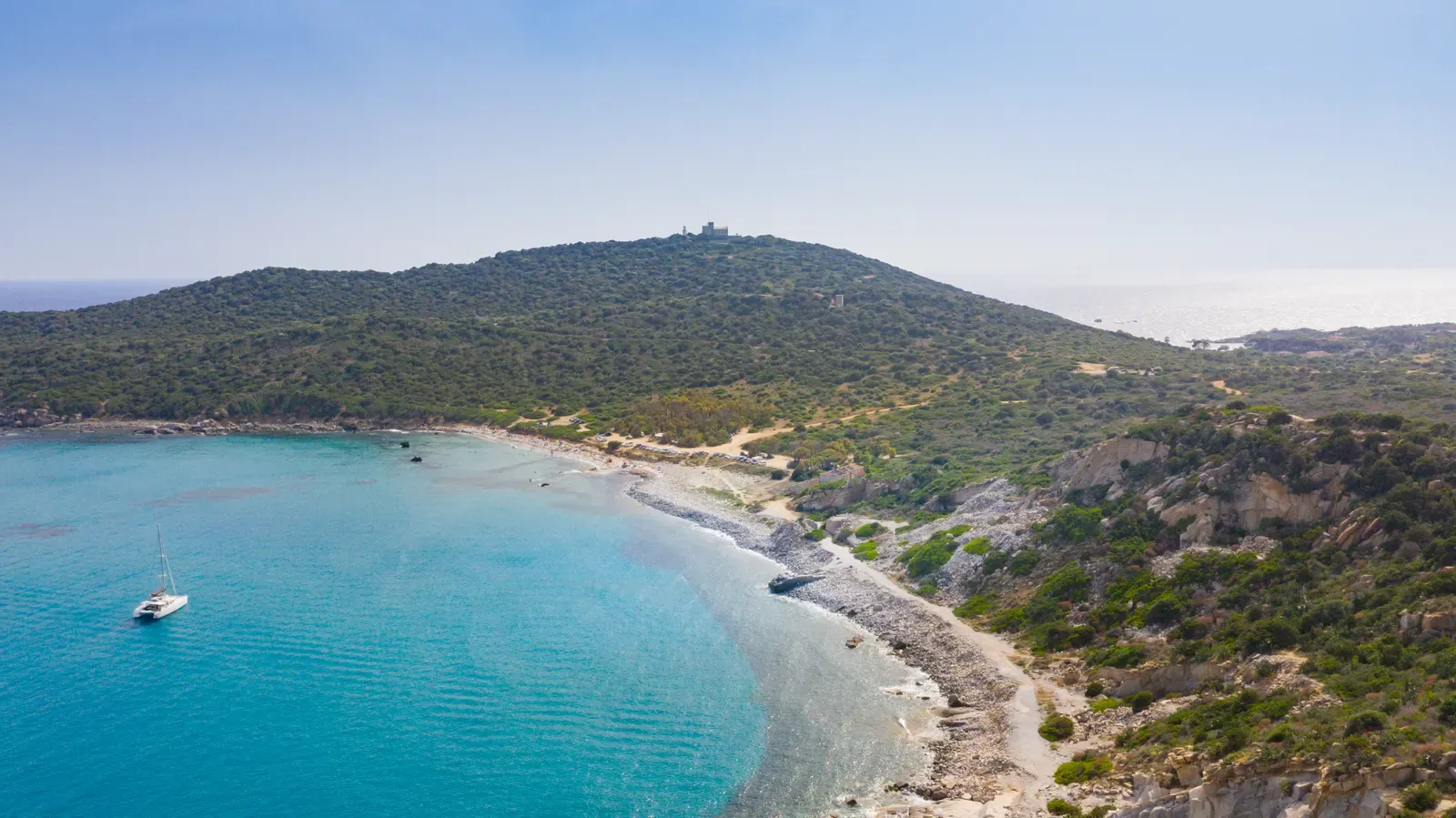
Granite seamounts rising to the surface off Sardinia's south-east corner
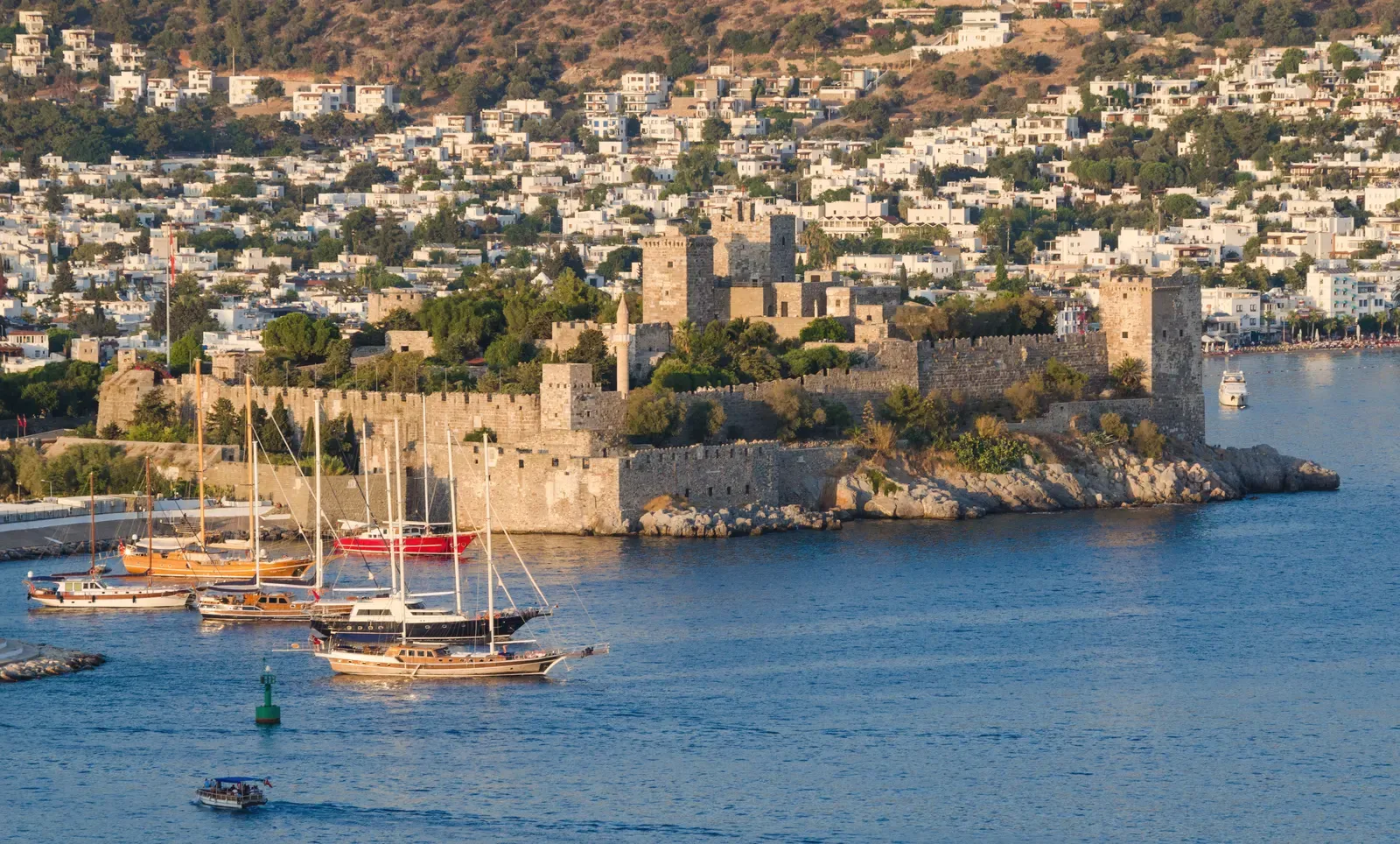
A hot spring vents into the sea off Karaada's caves
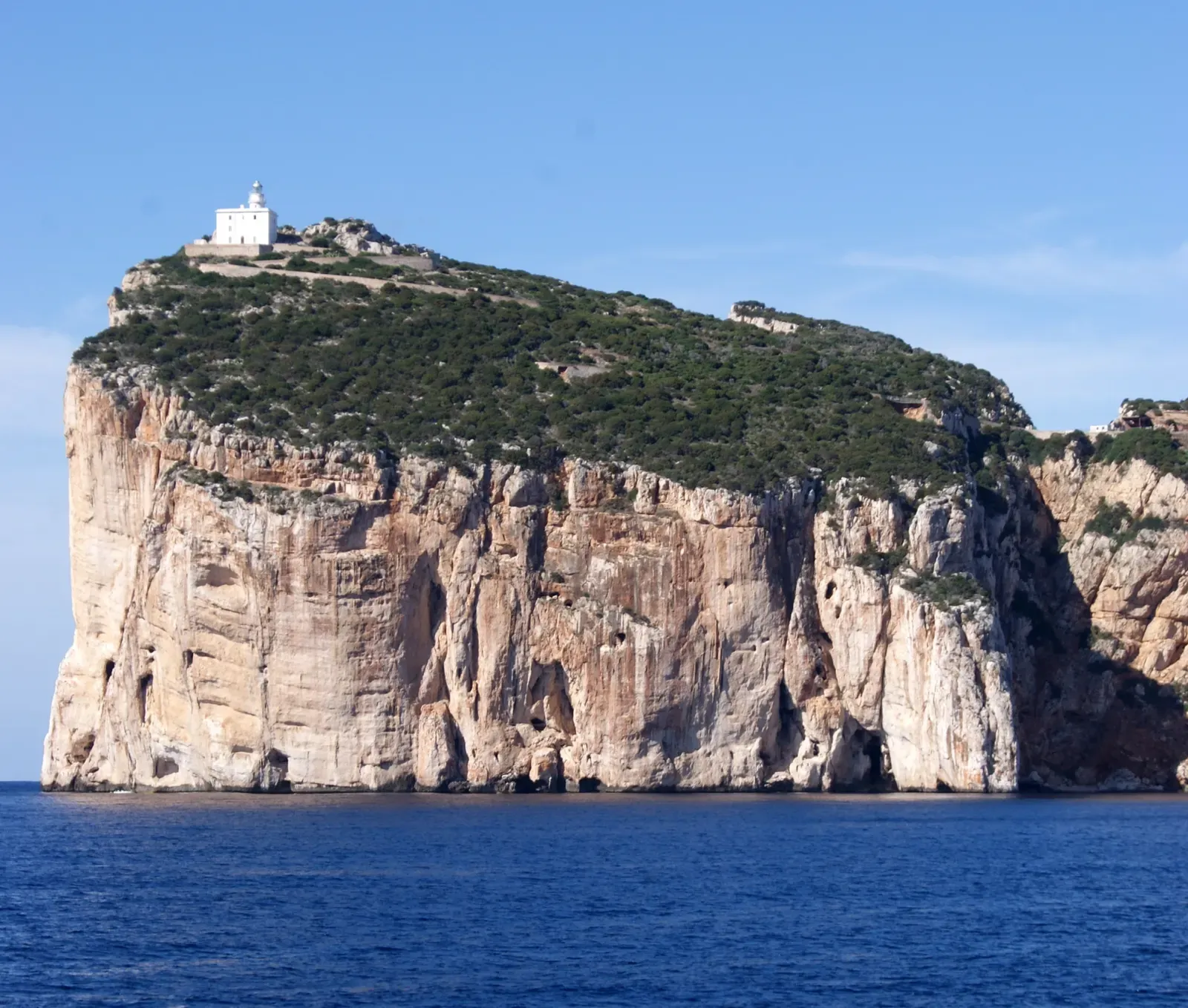
The Mediterranean's largest sea cave, with entrances from 8 m to 33 m
A sunken DC-3 and a replica Bronze Age ship on the Lycian coast