Mediterranean · Turkey
Bodrum
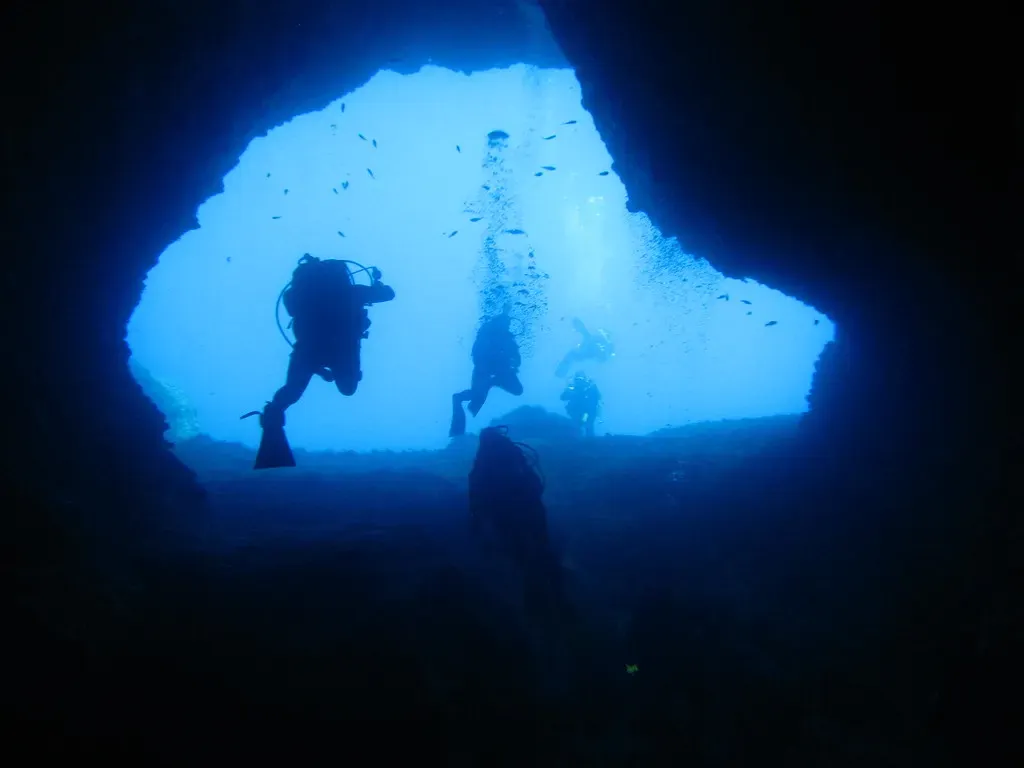
A hot spring vents into the sea off Karaada's caves
Photo: Serhio Magpie · CC BY 4.0
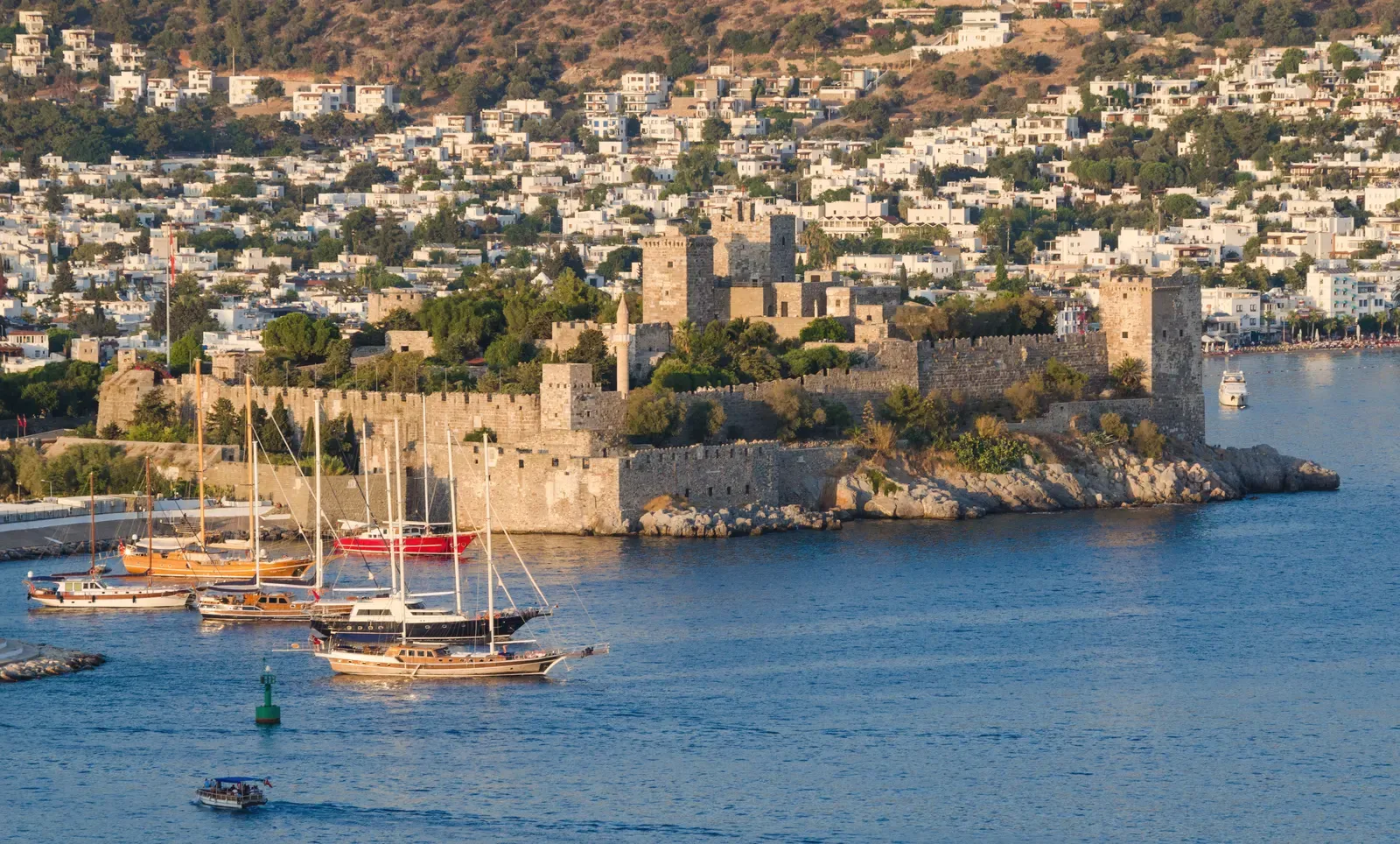
Bodrum sits on the Aegean where Turkish diving effectively began — the town's castle holds the Museum of Underwater Archaeology, built on Bronze Age cargoes recovered from this coast. The diving itself is gentler than Kaş down the Mediterranean shore: shallow rock and seagrass around Karaada with caves and a hot spring venting into the sea, a purpose-sunk cargo ship at 30 m, and clear, mild water from late spring into October.
About diving in Bodrum
The pattern is a day boat out of Bodrum harbour, often a converted wooden gulet, running across to Karaada or along the peninsula for two dives with a long lunch stop between them. Underwater it reads as Aegean rock and seagrass rather than reef: sloping boulder shoulders, short walls, sand and posidonia meadow in the shallows, and cavern mouths cut into the island flanks. Depths stay moderate on most sites, roughly 8 to 35 m, which keeps bottom times generous.
Karaada carries the set pieces, the caves and the hot spring that vents into the sea close inshore, and it is near enough to town that boats are there quickly. The Pınar 1 is the one dive that needs planning: a cargo ship sunk deliberately as an artificial reef, sitting upright at 30 m, so Advanced or a deep certification and a single controlled descent rather than something to wander around. Küdür Point, on the exposed western side of the peninsula, holds the best fish density and is best on a calm morning.
It is a forgiving coast to dive and a common one to learn on, with training sites on shallow rock and sand and little current to work against. Experienced divers should read it as gentle rather than dull, since the interest lies in the seagrass life, the cavern light and the wreck. The season runs roughly April to October, and the meltemi is the main disruption; it can blow hard through midsummer afternoons, so boats tend to leave early and be back before the worst of it.
When to dive Bodrum
| Jan | Feb | Mar | Apr | May | Jun | Jul | Aug | Sep | Oct | Nov | Dec |
|---|---|---|---|---|---|---|---|---|---|---|---|
| Off-season | Off-season | Fair | Good | Good | Prime | Prime | Prime | Prime | Good | Fair | Off-season |
Apr–Oct is the operating season with Jun–Sep warmest; the meltemi can blow hard through midsummer afternoons.
Getting there
Milas-Bodrum airport serves the peninsula, roughly 40 minutes by road from town, and there are seasonal catamaran crossings from Kos. Most divers base in Bodrum itself or in nearby bays such as Gümbet, Bitez or Turgutreis. Diving is run as boat days from the harbour rather than from shore.
Wildlife calendar
Seagrass and rock hold octopus, cuttlefish and nudibranchs right through the season, with grouper on the deeper rock and around the wreck. Fish schools and barracuda are densest in the June to September peak, and loggerhead turtles cross the meadows in summer, though as a bonus rather than an expectation.
Dive types & marine life
- Reef
- Wall
- Wreck
- Cave & cavern
- Drift
- Groupers
- Barracuda
- Octopus & cuttlefish
- Nudibranchs
- Reef fish swarms
- Sea turtles
Notable dive sites in Bodrum
Karaada
Black Island, with sea caves, seagrass and a hot spring venting inshore.
Pınar 1
Cargo ship scuttled as an artificial reef, sitting upright at 30 m.
Küdür Point
Exposed headland with a wall and the area's best fish density.
Tavşan Adası
Rabbit Island, a shallow rock and sand site used for training.
Photos from Bodrum
Mustang Joe · CC0
Dive videos
Scuba Diving on PINAR 1 with Turkuaz Diving Center Bodrum - August 15 2024 · Turkuaz Dive Center on YouTube
Photo credits
- Bodrum Castle on its rocky headland at golden hour, gulets moored in the bay by Serhio Magpie, CC BY 4.0, via Wikimedia Commons
- Rocky shore of Bodrum Castle seen from the water with boats at anchor by Mustang Joe, CC0, via Wikimedia Commons
Similar destinations
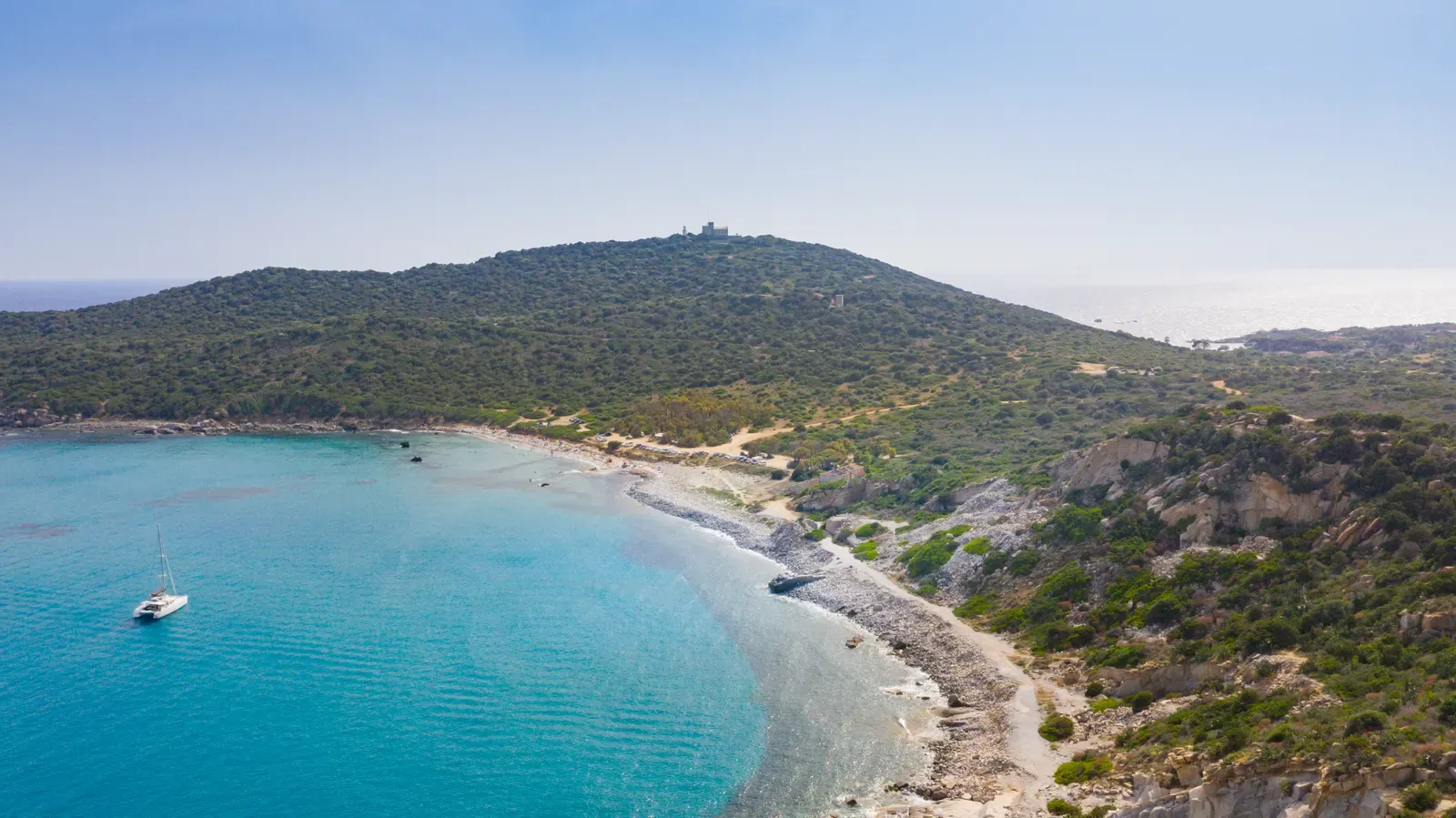
Granite seamounts rising to the surface off Sardinia's south-east corner
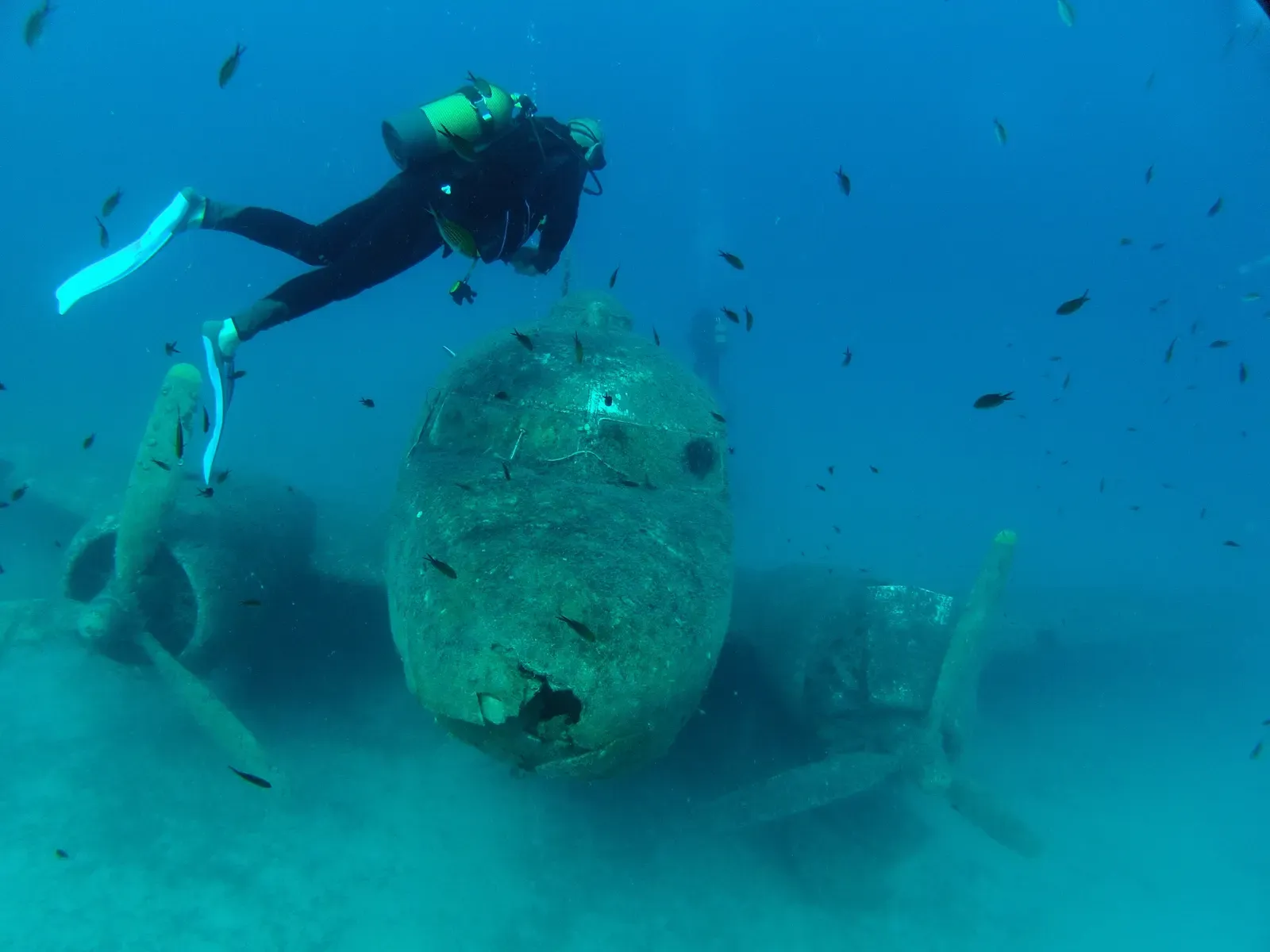
A sunken DC-3 and a replica Bronze Age ship on the Lycian coast
Where Cousteau ran the first underwater archaeological dig in 1952
.jpg)

Fossil elephant tusks inside a cave whose entrance is now at 10 m