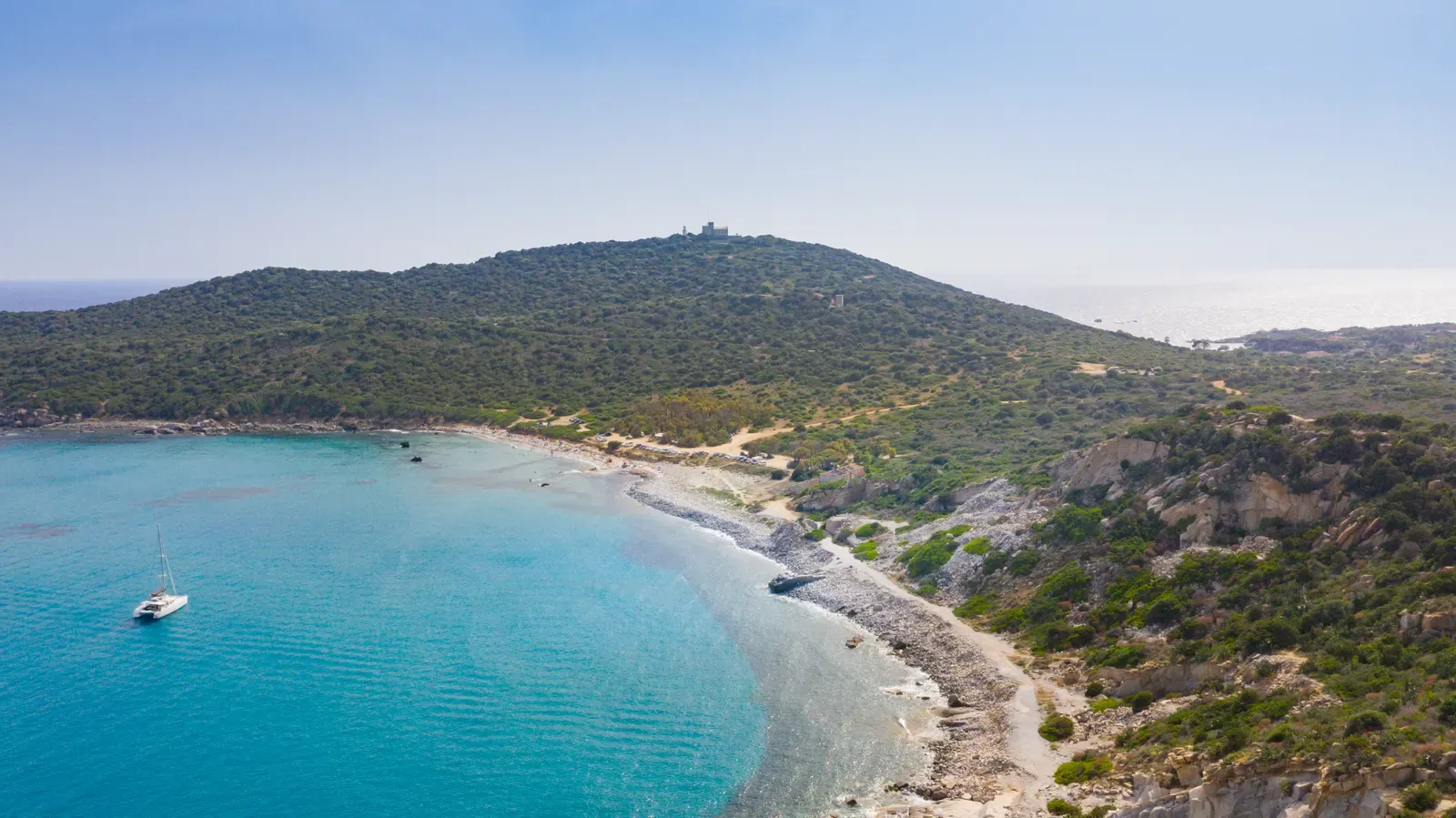
The marine protected area off Villasimius, at Sardinia's south-eastern corner, covers a set of granite seamounts that rise to within a few metres of the surface from 40 m of water. Secca di Cavoli is the best of them, a boulder field crusted with yellow cup coral and patrolled by dentex and big groupers, with a submerged statue of the Madonna at 12 m. A scuttled tug and the shallow granite around Isola dei Cavoli fill out the rest.
About diving in Capo Carbonara
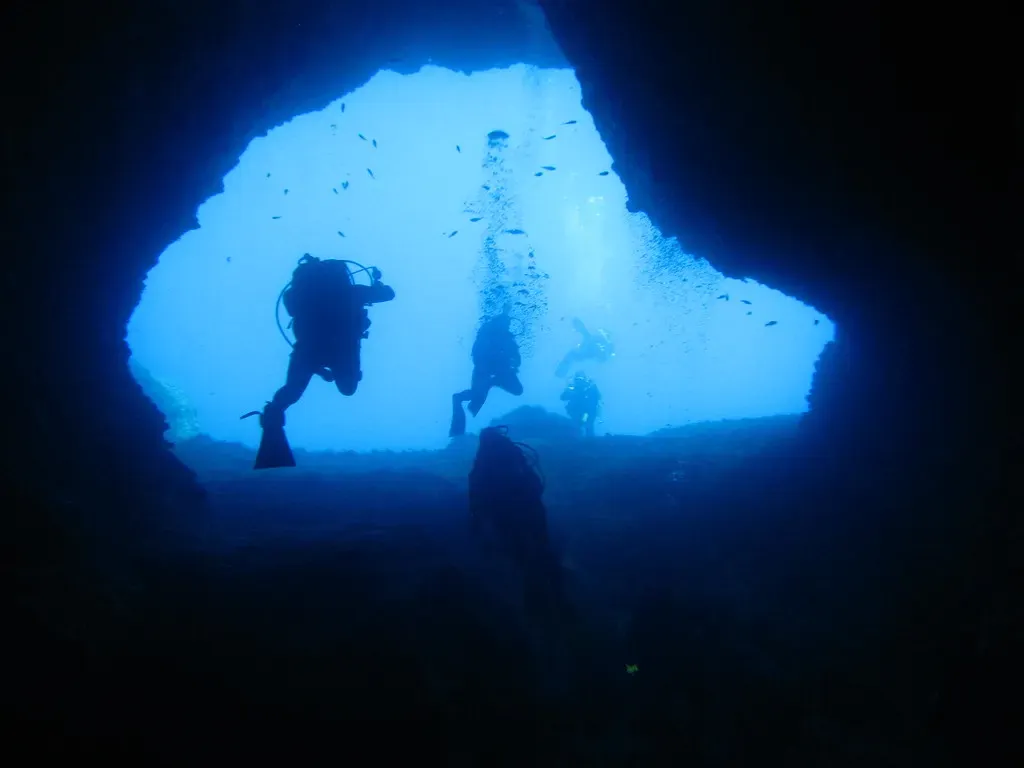
Diving here is straightforward and boat-based: a short run out of Villasimius to a seamount or an island shore, two dives in a morning, all of it inside the Capo Carbonara marine protected area and guided by an authorised centre. The granite shapes everything, rounded boulders stacked into canyons, cracks and swim-throughs, with pale sand channels running between them that keep the light bright well down the rock.
The seccas are the real draw. Secca di Cavoli rises from 40 m to within a few metres of the surface, with a Madonna statue standing at 12 m, and the fish stack up over the top, so a typical dive drops down one flank, works along the rock and finishes on the summit with gas to spare. Lower down, the boulders are crusted with yellow cup coral. The island ground around Isola dei Cavoli and Serpentara is calmer and shallower, and tends to be used for the second dive or for training.
It is an easy destination to dive and a good one to learn in, with forgiving shallow granite and light current on most days. What it asks for is patience with the weather, because the seamounts are exposed and boats move inshore whenever the wind gets up. Divers who like rock architecture and a decent chance of large grouper get the most from it; anyone chasing wrecks will find the list short, a scuttled tug and little else, and there is no dependable pelagic action.
When to dive Capo Carbonara
| Jan | Feb | Mar | Apr | May | Jun | Jul | Aug | Sep | Oct | Nov | Dec |
|---|---|---|---|---|---|---|---|---|---|---|---|
| Fair | Fair | Fair | Good | Good | Prime | Prime | Prime | Prime | Good | Fair | Fair |
May–Oct is the settled season with the warmest water; the mistral and easterlies close the exposed seccas in winter.
Getting there
Cagliari is the gateway, its airport just outside the city, and the road transfer east to Villasimius takes about an hour. Everything runs as day boats from the marina and centres do not run shore dives, so a car mainly helps for reaching the town and the beaches.
Wildlife calendar
Grouper are resident on the seccas and often large, with dentex and barracuda passing through, heaviest in the prime June to September stretch. Octopus, cuttlefish and nudibranchs work the shallow granite from spring onwards, and turtles cross the sand and seagrass in summer, though never on schedule.
Dive types & marine life
- Reef
- Wall
- Wreck
- Cave & cavern
- Drift
- Groupers
- Barracuda
- Octopus & cuttlefish
- Nudibranchs
- Reef fish swarms
- Macro critters
- Sea turtles
Notable dive sites in Capo Carbonara
Secca di Cavoli
Granite seamount from 3 m to 40 m with a Madonna statue at 12 m.
Isola dei Cavoli
Lighthouse island with boulder slopes and easy shallow diving.
Secca dei Bermuda
Offshore rock rising to 18 m, with dentex and passing barracuda.
Variglioni
Rock spires off the cape with swim-throughs and dense cup coral.
Photos from Capo Carbonara
dronepicr · CC BY 2.0
Dive videos
Isola dei Cavoli Madonna del naufrago · Edoardo Valentini on YouTube
Photo credits
- Turquoise bay at Capo Carbonara seen from the air, with a catamaran anchored off the rocky shore by dronepicr, CC BY 2.0, via Wikimedia Commons
- Isola dei Cavoli and its lighthouse seen across calm blue water from the Sardinian shore by dronepicr, CC BY 2.0, via Wikimedia Commons
Similar destinations
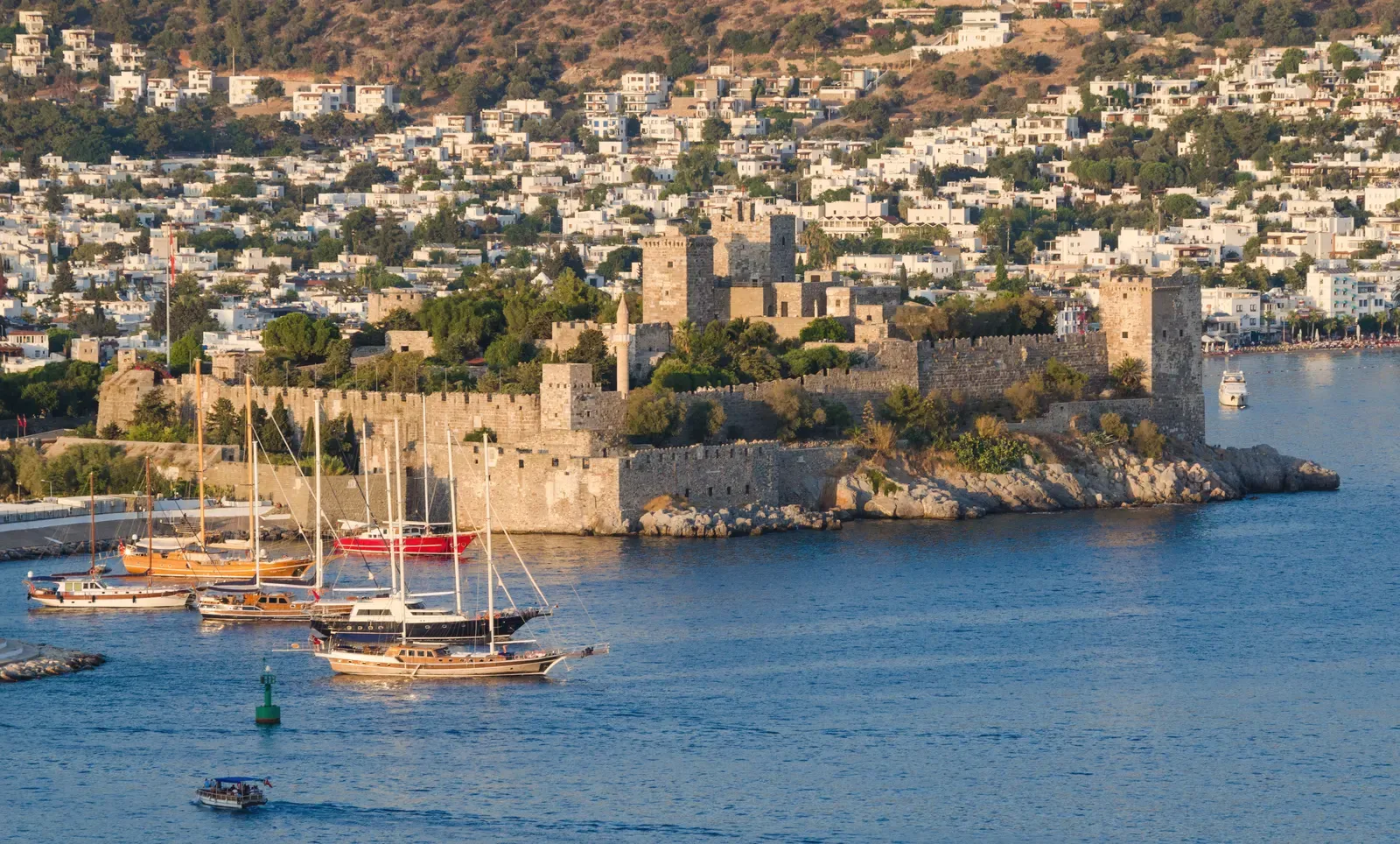
A hot spring vents into the sea off Karaada's caves
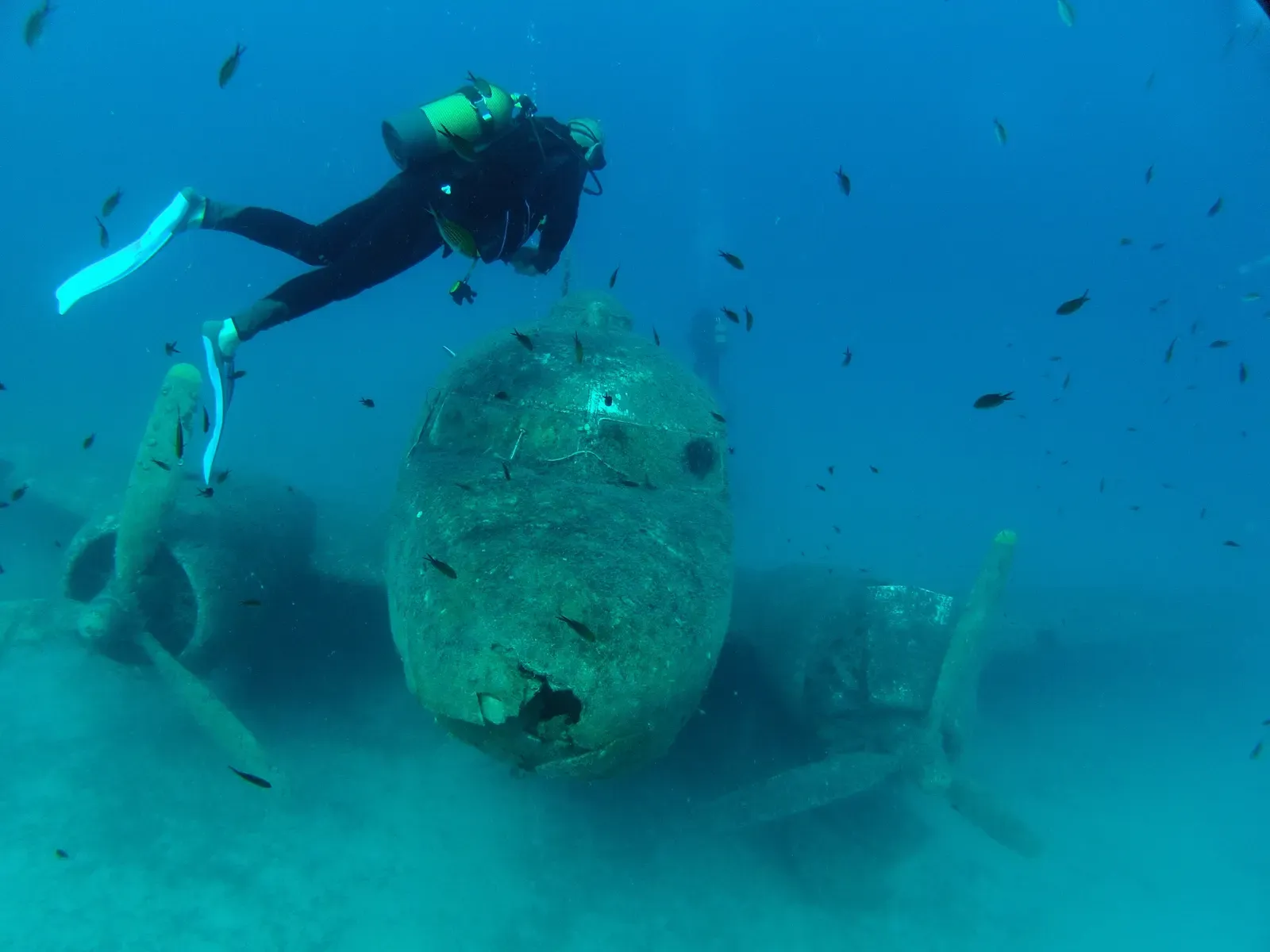
A sunken DC-3 and a replica Bronze Age ship on the Lycian coast
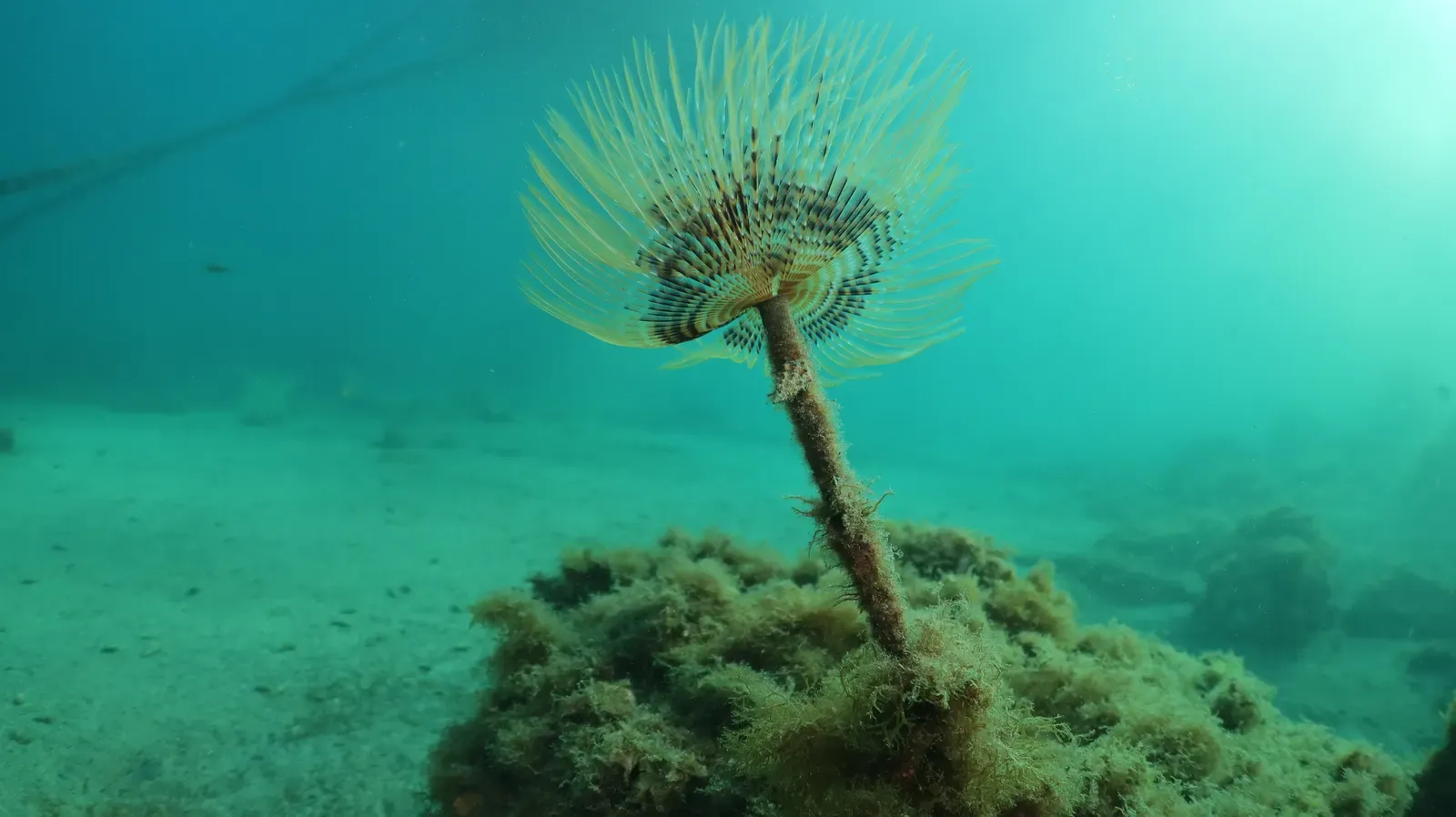
Where Cousteau ran the first underwater archaeological dig in 1952
.jpg)
_in_Sardinia,_Italy_(48399911771).jpg)
Fossil elephant tusks inside a cave whose entrance is now at 10 m