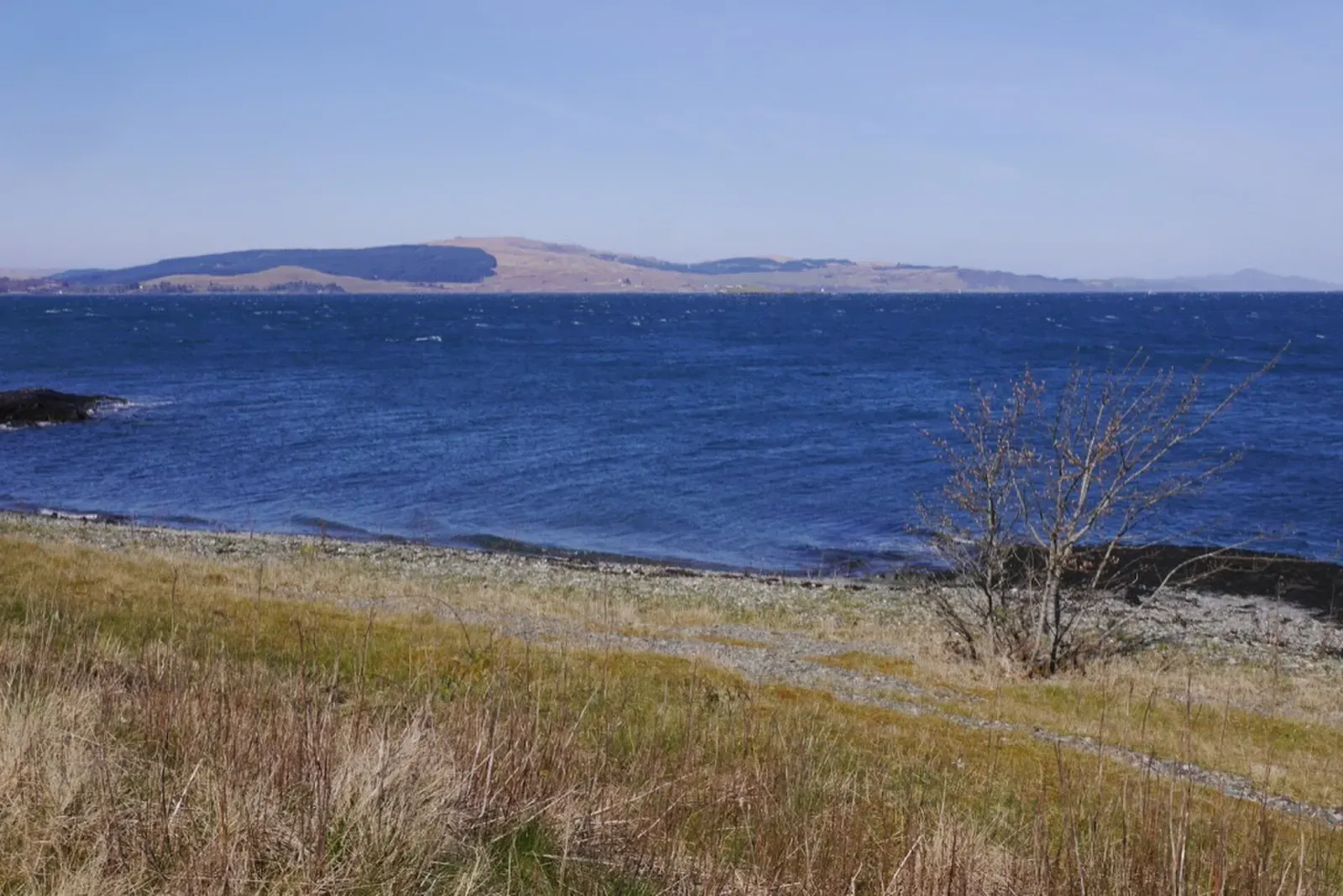
Cold Water · United Kingdom
Sound of Mull
The Rondo stands almost vertical, stern at 15 m and bow at 50
Photo: Richard Webb · CC BY-SA 2.0
The narrow channel between Mull and the Scottish mainland funnelled coastal shipping for two centuries and took a steady toll, leaving the best concentration of divable wrecks in Britain outside Scapa Flow. The Hispania sits upright at 25 to 30 m, so thickly covered in plumose anemones and dead man's fingers that her plating disappears. The Rondo stands almost vertically on her bow, stern at 15 m and bow at 50, and is swum like a wall.
About diving in Sound of Mull
The diary is written by the tide rather than the clock. Skippers work two dives a day around slack water, which can mean a first shot line before most people have had breakfast and a second in mid-afternoon, or both bunched into the middle of the day. The boat shots the wreck, teams go down and up the line, and everyone surfaces under a delayed SMB with the stream already building. Live-aboard hardboats are common on this coast and move along the Sound with the weather instead of running out and back from one port each day.
The Sound is a glacially cut channel with steep sides, and the ships lie on the slope rather than on a flat bottom, so depth changes as you swim a hull: the shallow end can be relaxed while the deep end needs gas and a plan to match. The bottom itself is soft, and a team that drops off the structure ends up in silt with nothing to look at. Away from the steel there are drift walls along the shores, kelp on the shallow shelf and sheltered reefs held in reserve for when the tide is wrong or the forecast closes the open water.
How much of a wreck you actually see is a matter of torchlight. Red is gone long before working depth here, so plating reads grey-green until a beam lands on it and the colour comes back. The hulls also differ more than a site list suggests: the losses span the 1880s to the 1950s, riveted iron at one end of that range and heavier steel at the other, and they run from structures you swim over to collapsed ribs and loose plating better crossed than entered. Photographers plan around the growth and the angle rather than the ship's name.
This is an advanced destination and honest about it. Beyond the obvious kit, the things that decide whether a trip works are unglamorous: being back at the line when the skipper said, holding a stop in a moving stream, and planning gas for a hull that gets deeper the further you swim it. Divers without decompression training can still fill a week on shallower structure and reef, but they will sit out the headline dives and should say so when booking rather than on the boat. Anyone still learning buoyancy in a drysuit will get little back from the Sound.
When to dive Sound of Mull
| Jan | Feb | Mar | Apr | May | Jun | Jul | Aug | Sep | Oct | Nov | Dec |
|---|---|---|---|---|---|---|---|---|---|---|---|
| Off-season | Off-season | Fair | Good | Good | Prime | Prime | Prime | Prime | Good | Fair | Off-season |
Apr–Oct is the season; visibility is often best in early spring before the plankton bloom, and winter gales stop the charters.
Getting there
Oban is the main jumping-off point, driveable from Glasgow and served by rail and ferries, with charters also running from Lochaline on the Morvern shore and Tobermory on Mull. Everything is done from a hardboat; there is no shore access to these wrecks. Multi-day charters save the daily run out to the far end of the Sound.
Wildlife calendar
Nudibranchs peak in spring and early summer, when most species are spawning and easiest to pick out on the hydroid growth. Shoals of saithe and pollack build over the wrecks through the June-to-September peak. Look into the dark spaces for conger and ling, squat lobsters among the plating and curled octopus on the shallower reefs; seals are more likely inshore than on the deep hulls.
Dive types & marine life
- Wreck
- Wall
- Reef
- Kelp forest
- Drift
- Seals & sea lions
- Macro critters
- Nudibranchs
- Octopus & cuttlefish
- Reef fish swarms
Notable dive sites in Sound of Mull
Hispania
Swedish steamer sunk in 1954, upright at 25–30 m under dense anemones.
Rondo
Steamer standing near-vertical on her bow, stern at 15 m and bow at 50 m.
Shuna
Steamer sunk in 1913, upright and largely intact at 30 m.
Thesis
1889 iron steamer with open ribs, running from 15 m to 30 m.
Breda
Dutch cargo ship bombed in 1940, in Ardmucknish Bay at 30 m.
Photos from Sound of Mull
Nick Birse · CC BY-SA 4.0
Peter Bond · CC BY-SA 2.0
Peter Bond · CC BY-SA 2.0
Andrew Wood · CC BY-SA 2.0
Dive videos
SS Hispania (Sound of Mull) - wreck diving with GoPro Hero4 · Scuba Scotland on YouTube
Diving the Wreck of the SS Rondo, Sound of Mull · Dory Video on YouTube
Photo credits
- Sunlit blue water of the Sound of Mull framed by hills, seen from the shore by Richard Webb, CC BY-SA 2.0, via Wikimedia Commons
- Northern Lighthouse Board buoy marking the wreck of the SS Hispania in the Sound of Mull by Nick Birse, CC BY-SA 4.0, via Wikimedia Commons
- Savary River flowing over a rocky shoreline into the Sound of Mull by Peter Bond, CC BY-SA 2.0, via Wikimedia Commons
- Tidal pool reflecting the sky on a pebble beach at Savary Bay along the Sound of Mull by Peter Bond, CC BY-SA 2.0, via Wikimedia Commons
- Misty view across a quiet bay on the Sound of Mull with a small rocky skerry by Andrew Wood, CC BY-SA 2.0, via Wikimedia Commons
Similar destinations
Cold Water
Lundy Island
United Kingdom
England's first marine reserve, and its grey seals follow divers around
Sweden's only cold-water coral reefs, inside its first marine national park
Basalt cliffs continuing underwater into surprisingly clear Atlantic water


Sherman tanks lie on the seabed beside the SS Empire Heritage