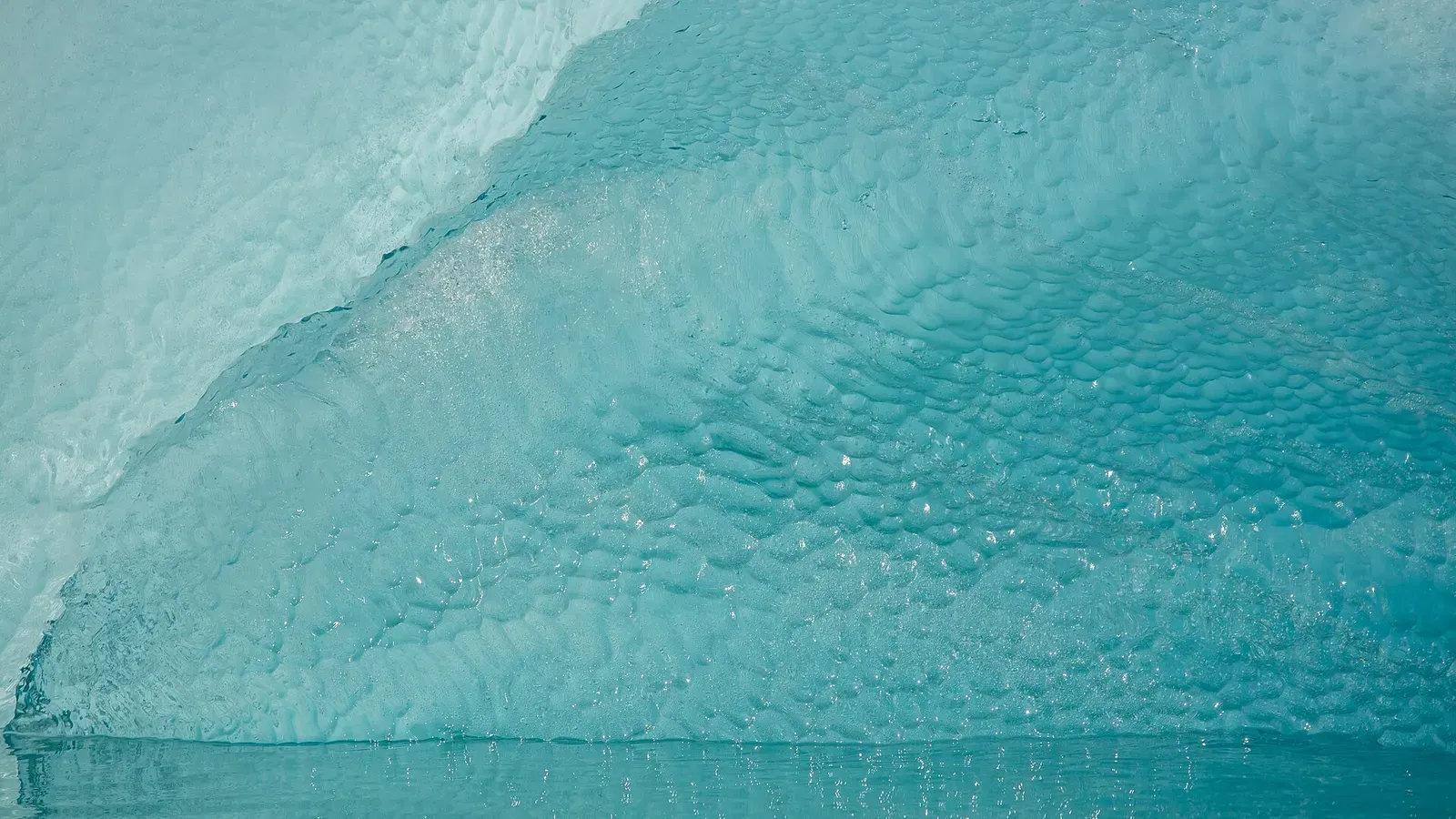
Cold Water · Norway
Svalbard
Walrus swim out to inspect divers at 78° north
Photo: Andreas Weith · CC BY-SA 4.0
Diving at 78° north is expedition work: everything runs from a ship, everything depends on ice and weather, and the water sits between -1 and 4°C for the entire season. What it buys is the high Arctic underwater — kelp forests growing in 24-hour daylight, ice keels lit blue from within, and the possibility of entering the water near a walrus haul-out and having several tonnes of curious animal swim over to inspect you. Bearded seals and beluga move through the same fjords.
About diving in Svalbard
The ship is the operation. Divers live aboard for a week or more and the plan is set the night before off the ice chart and the forecast rather than off a site list, with the vessel repositioning overnight and tenders going out to whatever the bay is actually offering. Two dives is a good day and weather regularly takes one of them away. Much of the value sits above the surface anyway: landings, bird cliffs and long hours on deck watching the coast go past.
Underwater the archipelago is more productive than most people expect. Fjord walls carry dense beds of sea stars, urchins, anemones and soft corals, and the shallows grow thick weed wherever the bottom is hard. Where glaciers and rivers discharge, the sediment is a fine flour that lifts at a single fin kick and is slow to settle, so one fjord can be sharp at one end and milky at the other. Glacier fronts are dived well clear of any active face, among grounded and drifting blocks.
Walrus are the centrepiece and the least controllable part of the trip. Encounters are shallow, usually on snorkel and in a small group, and they end when the animals lose interest. Norway has also been tightening its wildlife-approach rules, including minimum distances at haul-outs, so how close anyone gets is set by regulation and the guide rather than by what a group wants. Ice work is the other set piece, on the days the ship finds floes worth getting under. Both run with an armed bear watch, which shapes every landing.
Expedition diving asks for a particular kind of diver: someone who can manage heavy gear, thick gloves and near-freezing water without a guide alongside, and who will not resent a day that produces no diving at all. Task loading is the real difficulty rather than depth or current. It works for photographers after animals and ice instead of reef, and for anyone treating the diving as one strand of a polar voyage. It is a poor fit for divers who measure a trip by the number of dives logged.
When to dive Svalbard
| Jan | Feb | Mar | Apr | May | Jun | Jul | Aug | Sep | Oct | Nov | Dec |
|---|---|---|---|---|---|---|---|---|---|---|---|
| Off-season | Off-season | Off-season | Off-season | Fair | Prime | Prime | Prime | Good | Off-season | Off-season | Off-season |
Expedition ships operate Jun–Sep in the polar summer; outside that window the archipelago is dark, iced in and inaccessible.
Getting there
Everything starts in Longyearbyen, reached by air via Oslo or Tromso. From there it is entirely ship-based: expedition vessels sail from town and dive from tenders, so there is no shore diving to arrange and no independent option. Sailings run through the light season, from late spring to September, with midsummer the most reliable. Berths on dive-equipped ships are few, so book well ahead.
Wildlife calendar
Walrus at the haul-outs are the dependable large-animal encounter across the summer season, with bearded seals often curious near the tenders and beluga in the fjords. Underwater the interest is mostly invertebrate: sea stars, urchins, soft corals and nudibranchs on the walls, with amphipods and small sculpins in the kelp. Polar bears are a hazard to plan around, not a dive sighting.
Dive types & marine life
- Ice
- Kelp forest
- Wall
- Reef
- Seals & sea lions
- Whales
- Macro critters
- Nudibranchs
Notable dive sites in Svalbard
Smeerenburgfjorden
North-west fjord with walrus haul-outs and glacier-front ice diving.
Poolepynten
Walrus colony on Prins Karls Forland, the most reliable in-water encounter.
Kongsfjorden
Deep fjord off Ny-Ålesund with kelp beds and drifting glacier ice.
Hornsund
Southern fjord ringed by glaciers, dived among calved ice blocks.
Photos from Svalbard
Andreas Weith · CC BY-SA 4.0
Andreas Weith · CC BY-SA 4.0
Andreas Weith · CC BY-SA 4.0
Andreas Weith · CC BY-SA 4.0
Dive videos
Diving S/S FIGARO at Svalbard [4k] · Torgeir Prytz on YouTube
Diving on Svalbard - by Underwater Passion · Michał Procajło on YouTube
Photo credits
- Textured blue iceberg wall rising from the water in a Svalbard fjord by Andreas Weith, CC BY-SA 4.0, via Openverse
- A carved blue ice cave opening at the waterline of an iceberg in Liefdefjord by Andreas Weith, CC BY-SA 4.0, via Openverse
- Deep blue light glowing through a hollow in an iceberg near the Svalbard waterline by Andreas Weith, CC BY-SA 4.0, via Openverse
- Weathered blue ice pillars and hollows on an iceberg face in Liefdefjord by Andreas Weith, CC BY-SA 4.0, via Openverse
- A seabird flies past the blue-white face of a grounded iceberg in Liefdefjord by Andreas Weith, CC BY-SA 4.0, via Openverse
Similar destinations
Four ore carriers torpedoed at their pier in 1942, still lying at 27–40 m
Basalt cliffs continuing underwater into surprisingly clear Atlantic water
Sweden's only cold-water coral reefs, inside its first marine national park
Cold Water
Lundy Island
United Kingdom
England's first marine reserve, and its grey seals follow divers around