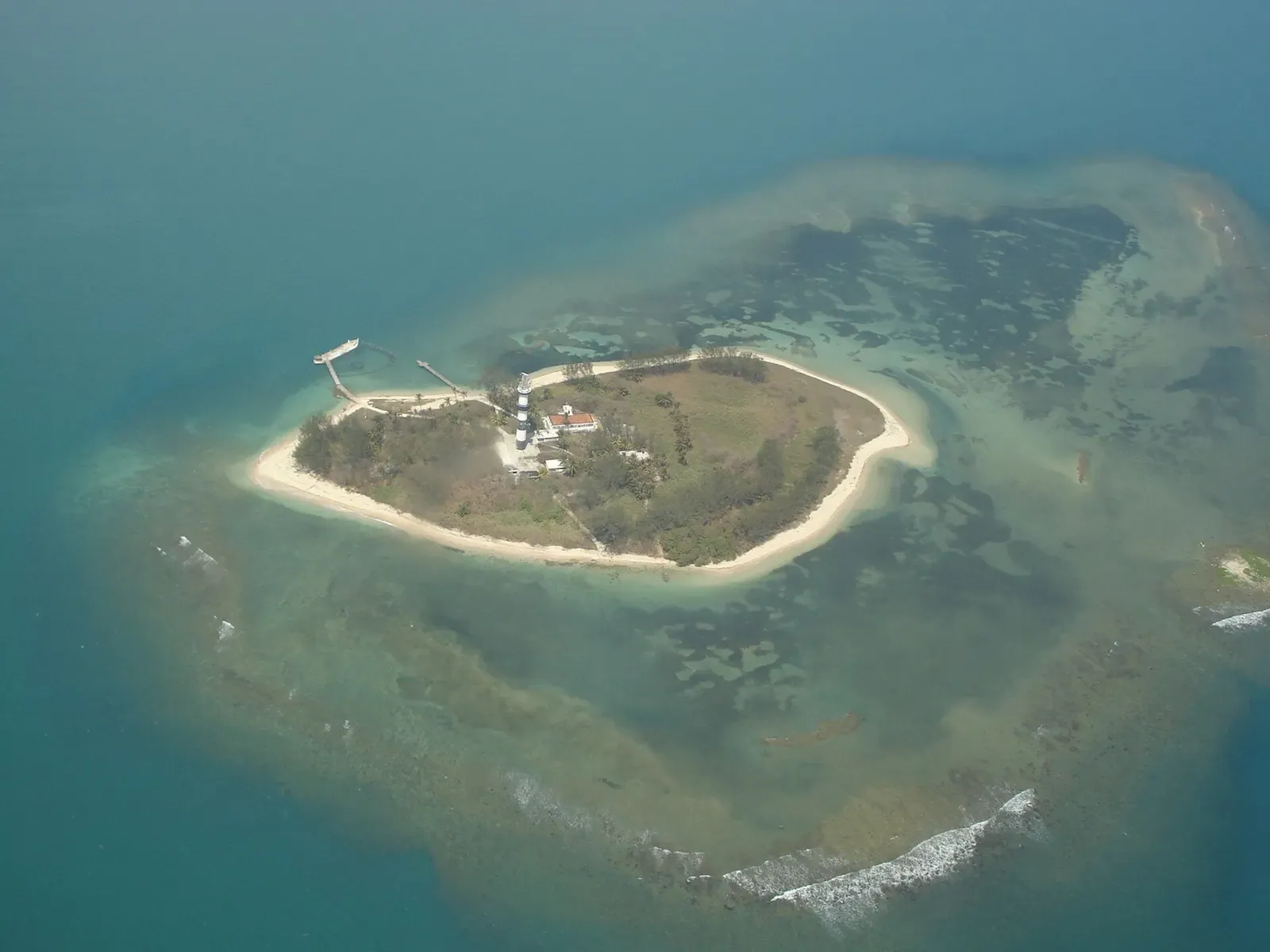
The Sistema Arrecifal Veracruzano is the largest reef complex in the Gulf of Mexico, some two dozen reefs and islands spread across the shelf off the port of Veracruz and protected as a national park and UNESCO biosphere reserve. Runoff from the Papaloapan and Jamapa rivers keeps visibility modest, but the reefs carry surprising coral cover for the Gulf, and several colonial-era and modern wrecks sit among them within recreational depth.
About diving in Veracruz Reef System
Diving is done from small open boats, and the harbour you leave from decides the day. The northern reefs and islands are worked out of Veracruz and Boca del Río, close enough that a two-tank morning is back in port for lunch, while the southern group is run from the fishing village of Antón Lizardo, a longer road transfer but a shorter crossing. Departures are early, before the afternoon wind gets up, and the boats are small enough that a marginal forecast cancels the trip rather than shortening it.
The reefs are flat-topped platforms rather than walls. Each has a shallow crest that breaks or nearly breaks in a swell, a sheltered back-reef of sand and rubble on the lee side, and a seaward slope running down into open sand well inside recreational depth. Massive brain and star corals do the structural work, with gorgonians and sponges filling the rubble between them. Operators head for the outer reefs whenever the sea allows, since those sit farthest from the river mouths and generally hold the better water.
Plan the day around green-tinged water rather than against it: this is a place to look closely instead of far, and a macro lens earns its keep more often than a wide one. Short crossings, shallow platforms and mild conditions make it straightforward training and straightforward holiday diving, with a park briefing on what not to touch before anyone gets in. It rewards divers who are already in Veracruz for the city, the food and the port more than it rewards a long trip planned around the diving alone.
When to dive Veracruz Reef System
| Jan | Feb | Mar | Apr | May | Jun | Jul | Aug | Sep | Oct | Nov | Dec |
|---|---|---|---|---|---|---|---|---|---|---|---|
| Fair | Fair | Good | Good | Prime | Prime | Prime | Prime | Good | Fair | Fair | Fair |
May–Aug is calmest and clearest; the nortes that blow from October to March regularly shut the port to small boats.
Getting there
Fly into Veracruz, usually connecting through Mexico City, and base on the Boca del Río seafront or in the old city; both have dive shops. Boats for the northern reefs and islands leave from Veracruz and Boca del Río, and those for the southern group from Antón Lizardo, half an hour down the coast. Everything is day-boat.
Wildlife calendar
Reef fish are the constant: grunt and snapper schools over the crests, groupers under the coral heads, barracuda off the slope and stingrays on the back-reef sand. Turtles turn up through the year without ever being a sure thing. Nudibranchs and other small life make the murkier days worthwhile, and sightings come easiest in the calm May-to-August window.
Dive types & marine life
- Reef
- Wreck
- Coral garden
- Night
- Sea turtles
- Reef fish swarms
- Nudibranchs
- Macro critters
- Groupers
- Barracuda
- Stingrays
Notable dive sites in Veracruz Reef System
Isla de Sacrificios
Park island with shallow coral terraces and historic anchorage debris.
Isla Verde
Offshore island with the system's best coral cover in 8–20 m.
Isla de Enmedio
Southern island with a lagoon, sand flats and a shallow wreck.
Anegada de Adentro
Submerged reef at 12–22 m, the most-dived site out of Veracruz.
Dive videos
Buceo en los arrecifes Anegada de Adentro e Isla Verde (Veracruz) · Roberto González Gómez on YouTube
Best of diving near Veracruz, Mexico · Alex Aucoin on YouTube
Photo credits
- Aerial view of a small coral island in the Veracruz Reef System, ringed by turquoise reef flats by Pigman, CC BY 3.0, via Wikimedia Commons
Similar destinations
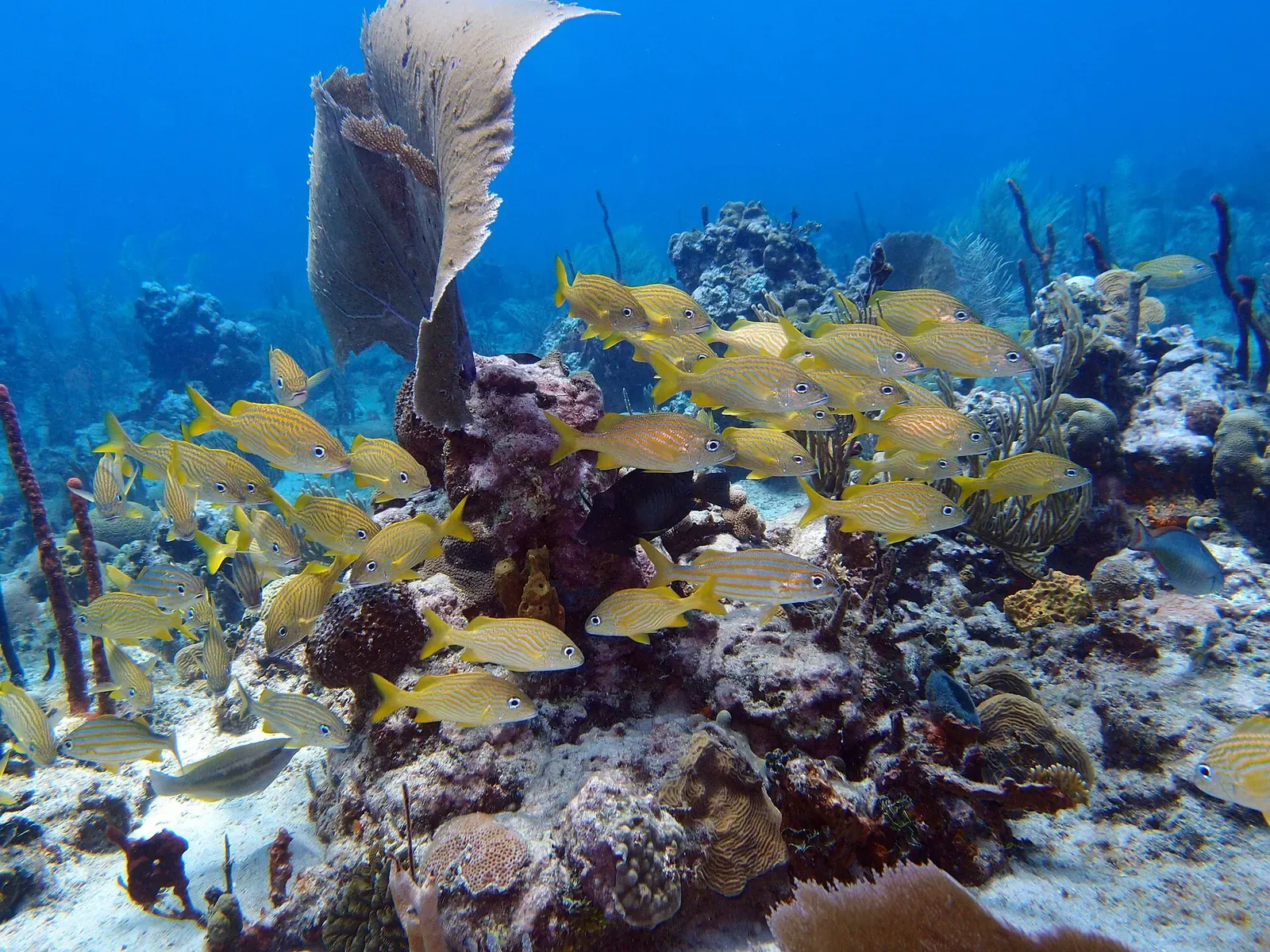
Walk down the stairs at Casino Point straight into a giant kelp forest
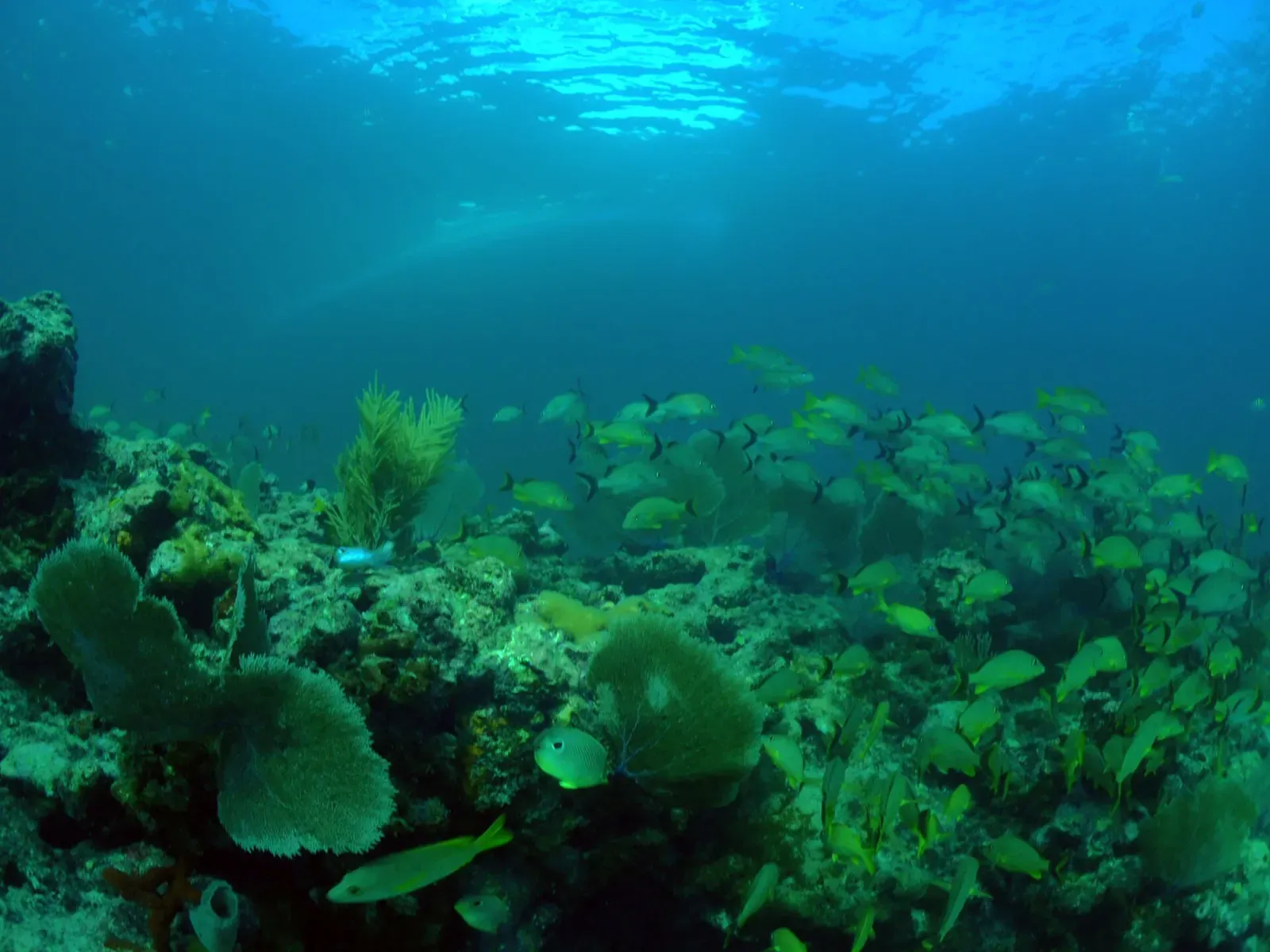
Warm shallow reefs and famous wrecks stretching from Key Largo to Key West.
A recovered coral reef with dense jack schools and seasonal bull sharks.
.jpg)
Market squid spawn in their millions over the sand on winter nights