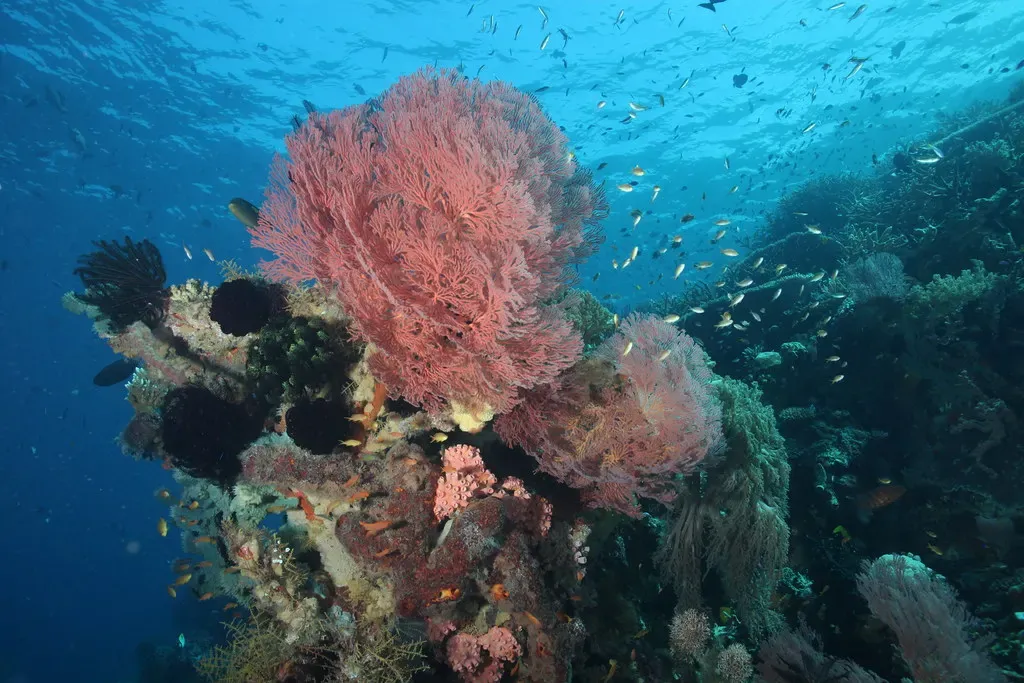
Wakatobi, a remote archipelago off southeast Sulawesi named for its four main islands, centers on a private reserve where local customary law restricts fishing, producing an exceptionally intact house reef directly off the resort jetty. Beyond the house reef, boat dives visit walls and coral gardens with dense fish life and consistently good visibility. The area is resort-based with minimal current at most sites, making it accessible to divers across experience levels and popular with underwater photographers.
About diving in Wakatobi
Days settle into a fixed rhythm: two boat dives through the morning, one after lunch, then as much time on the jetty reef as you care to spend, including after dark. Boats are laid out for the schedule rather than the crossing, with a set place for each diver's kit and camera, and most sites are a short run offshore. Rather than swim out against the reef, divers are usually dropped up-current by tender and drift back to the jetty, which turns a fourth or fifth dive into a matter of walking down the pier.
The islands sit on their own platform with deep water around it, so the same structure repeats from site to site with variations: sand or rubble close in, a shoulder of hard coral, then a drop into open water. Dives are generally run as multilevel profiles, deepest at the start and finishing shallow on the reef top where coral cover is thickest and the light holds. With little water movement to fight, you can hold station over one sea fan until your gas runs low, which is a large part of why so many divers turn up with cameras.
The signature is not a single animal but condition and time. Sponges, whip corals and gorgonians have grown out far enough that fish life stacks above them, and guides work small groups slowly, turning up pygmy seahorses on the fans, frogfish parked on sponge and nudibranchs in the shallows. Photographers tend to return to one subject across several days rather than covering ground, and the after-dark shift off the jetty brings out crustaceans and hunting cephalopods that the morning boat never sees.
It suits divers who would rather log a lot of relaxed dives than a few demanding ones: newer divers building experience, photographers who need repeat visits, and mixed groups where not everyone is in the water. The trade-offs are real. This is a packaged destination rather than somewhere to improvise, the fly-in access is priced accordingly, and the larger animals are incidental to the plot rather than the reason to come. Diving runs all year, with July to September the most settled stretch.
When to dive Wakatobi
| Jan | Feb | Mar | Apr | May | Jun | Jul | Aug | Sep | Oct | Nov | Dec |
|---|---|---|---|---|---|---|---|---|---|---|---|
| Fair | Fair | Fair | Good | Good | Good | Prime | Prime | Prime | Good | Good | Fair |
Diveable year-round; July–September dry season typically brings the clearest water.
Getting there
Most divers arrive on the resort charter from Bali to the airstrip on Tomia, booked as part of the package. Independent travellers route through Makassar or Kendari to Wangi-Wangi, the archipelago's main town island, then continue by local boat to simpler lodges and dive centres on Hoga. Either way the last leg is the slow one.
Wildlife calendar
Reef sharks, eagle rays and napoleon wrasse pass along the walls rather than gathering, so they register as encounters on an ordinary dive rather than as the reason to book. The dependable life is small and resident, year-round: pygmy seahorses on the gorgonians, frogfish, nudibranchs and other macro in the shallows. July to September mostly buys longer visibility for wide-angle work.
Dive types & marine life
- Wall
- Reef
- Muck & macro
- Pristine corals
- Reef sharks
- Napoleon wrasse
- Pygmy seahorses
- Nudibranchs
- Frogfish
- Eagle rays
- Macro critters
Notable dive sites in Wakatobi
House Reef
Jetty-front reef protected by local customary law, dived day and night.
Roma
Coral garden known for dense soft coral and reef fish.
Blade
Narrow ridge wall dive with clear water and steep drop-offs.
Cornucopia
Sloping reef with exceptional coral cover and visibility.
Photos from Wakatobi
q.phia · CC BY 2.0
q.phia · CC BY 2.0
q.phia · CC BY 2.0
q.phia · CC BY 2.0
Dive videos
Indonesia's Hidden Paradise | Underwater Wakatobi 4K · Ocean First on YouTube
Scuba Diving Wakatobi Dive Resort Indonesia · Nadia Aly Underwater on YouTube
Photo credits
- Sunlit coral bommie draped in pink gorgonian sea fans with schooling reef fish by q.phia, CC BY 2.0, via Openverse
- Silhouette of a large black sea fan coral against sunlit blue water with schooling fish by q.phia, CC BY 2.0, via Openverse
- A hawksbill turtle gliding over a coral reef in clear blue water by q.phia, CC BY 2.0, via Openverse
- A blue, black and yellow Chromodoris nudibranch crossing the reef by q.phia, CC BY 2.0, via Openverse
- A clownfish sheltering in the folds of a large pale anemone on the reef by q.phia, CC BY 2.0, via Openverse
Similar destinations
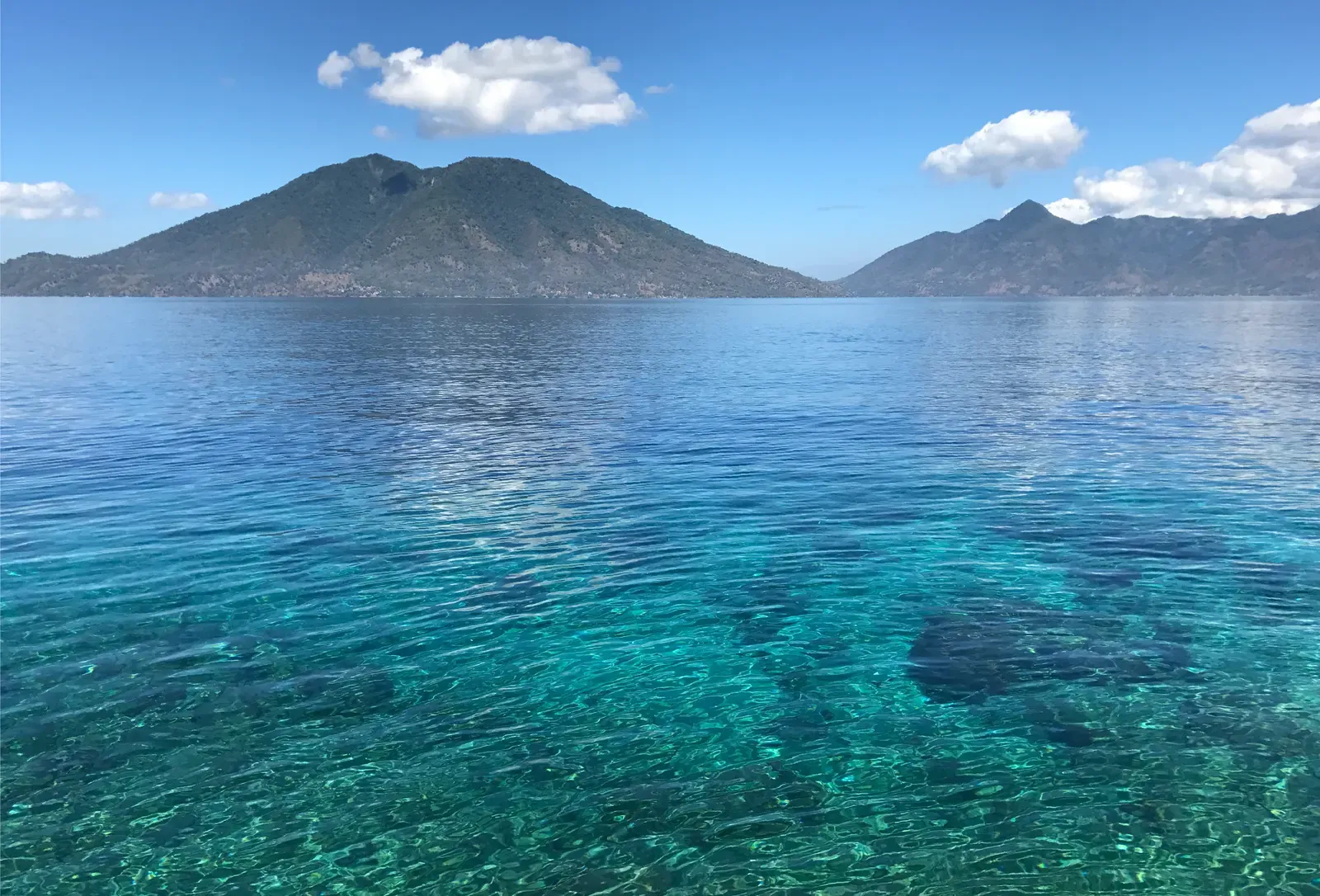
Strong straits sweep past pristine coral cover between remote volcanic islands.
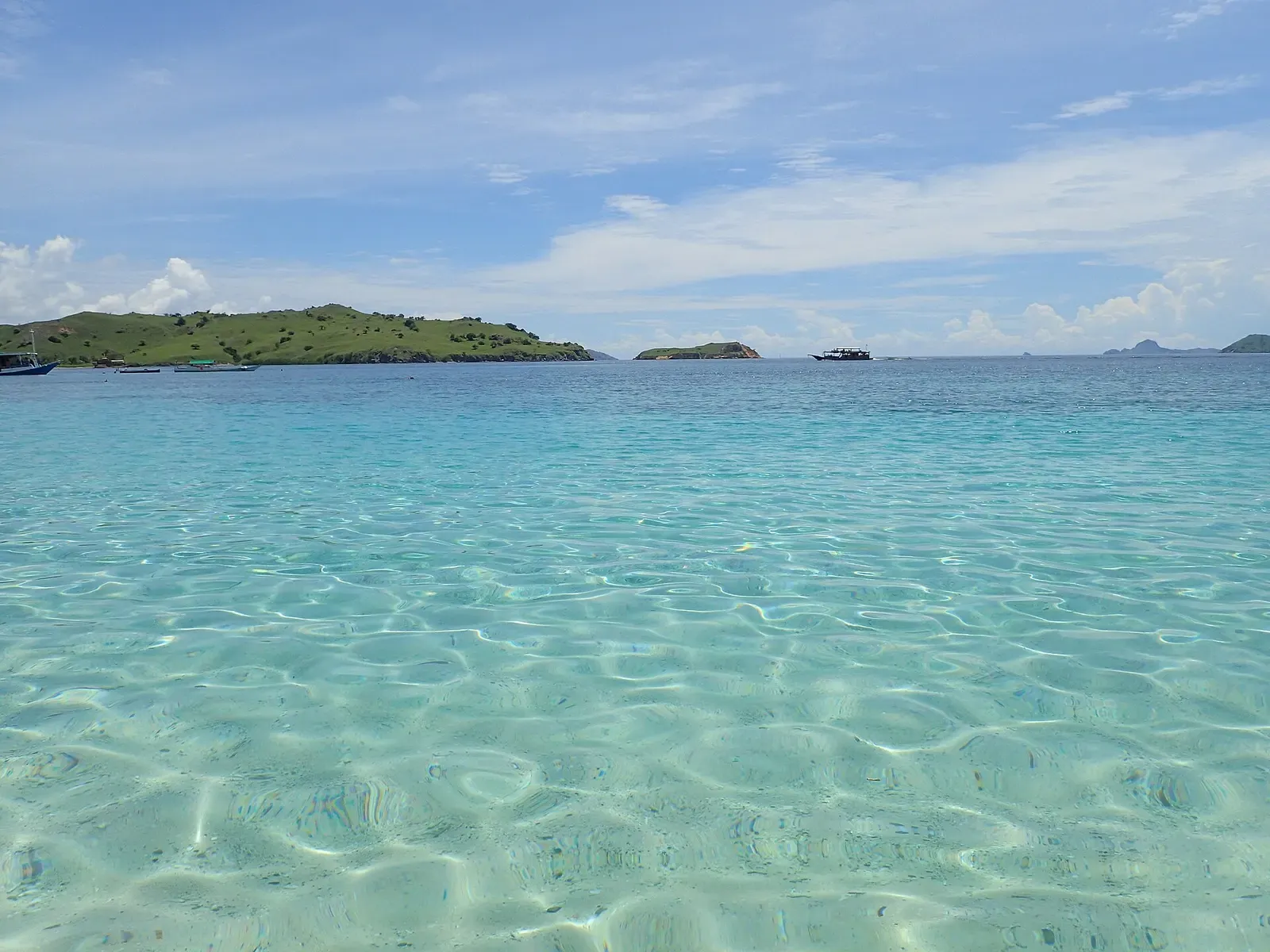
Cold upwellings feed current-swept pinnacles thick with sharks and schooling trevally.
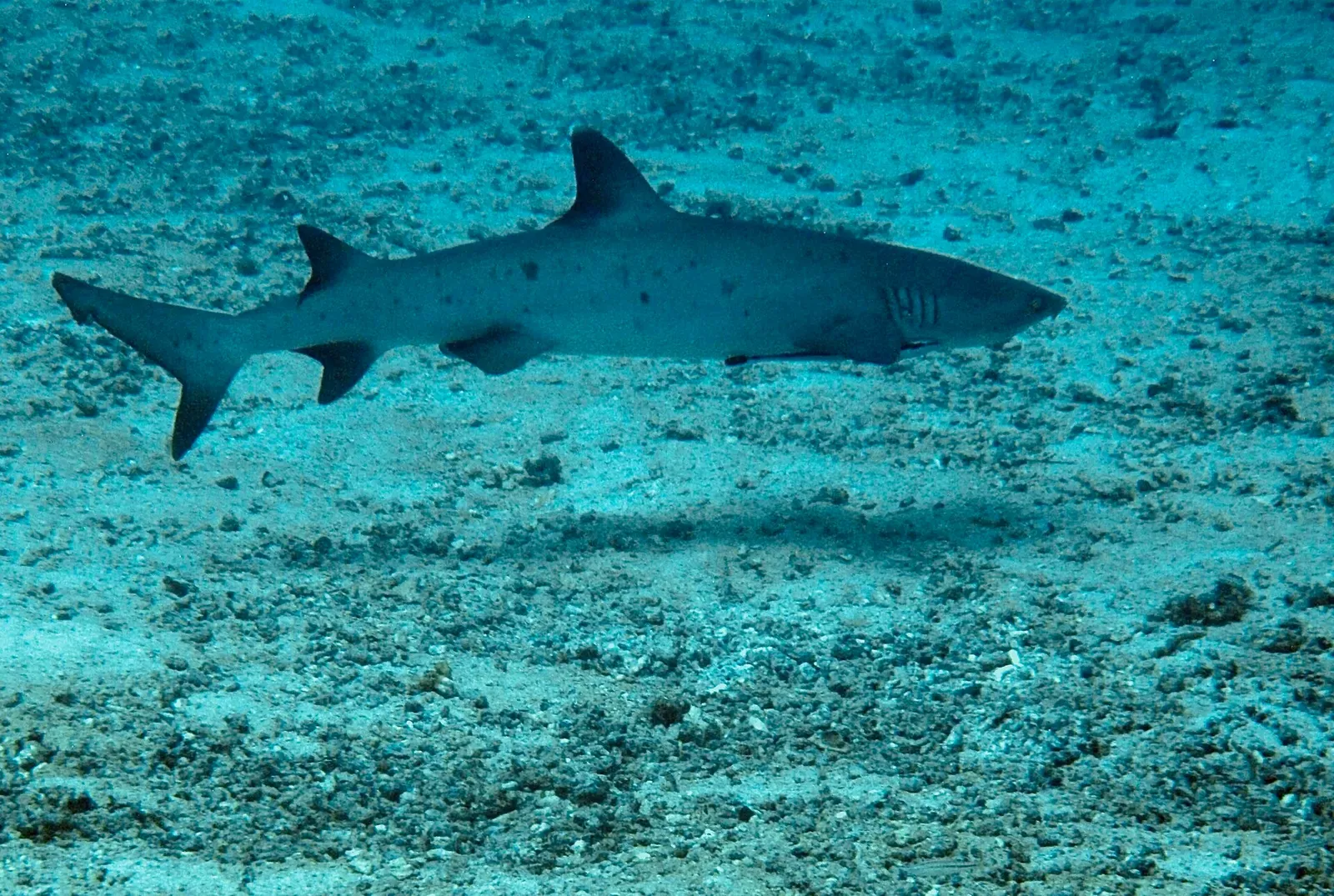
Bali's best walls, sheltered enough to dive in almost any weather
Manta rays hold at cleaning stations in the world's most biodiverse reef system.