Mediterranean · Croatia
Kornati Islands
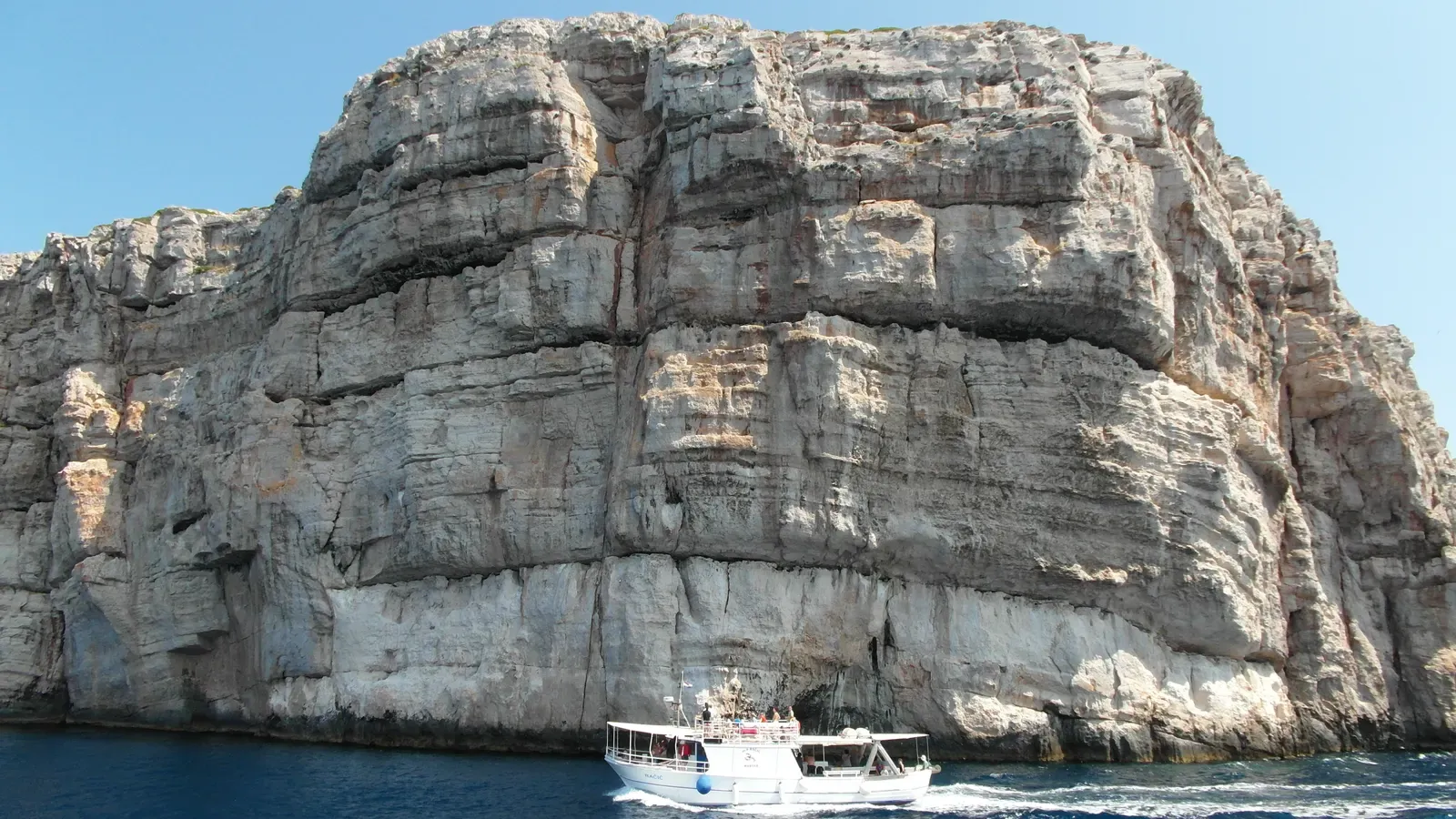
Sheer limestone crowns dropping past 80 m into the open Adriatic
Photo: ANDREJ NEUHERZ · CC BY-SA 3.0
The Kornati are a national park of 89 largely bare limestone islands, and their seaward edges form the crowns — cliffs that rise from the Adriatic and continue underwater as sheer walls dropping past 80 m. Diving is permit-controlled and concentrated on a handful of these drop-offs, where the wall is hung with sponges, cup coral and gorgonians below 30 m. The topside landscape of white rock and empty islands is as much a part of the trip as the diving.
About diving in Kornati Islands
Kornati is a day out rather than a dive site round the corner. Boats run from Murter and the mainland towns, and a trip means a long ride, two dives with a surface interval between bare islands, and little ashore beyond a few seasonal konobas, so tanks, water and lunch come on the boat. Diving is permit-controlled and led by licensed operators inside designated zones, which keeps the site list short and brings the same handful of walls round again and again.
Those walls are the point. The crowns on the seaward side of the outer islands drop vertically, in places undercut, from just below the surface into open blue, and you dive them by swimming a contour with the rock on one shoulder and nothing underneath; Mana is the best known of them. The top few metres are bare sunlit limestone, then growth thickens as the light goes, with sponges and cup coral on the upper wall and gorgonians below 30 m. The inner sides offer boulder slopes and small caverns instead.
Depth discipline matters more here than skill in current, which is usually mild: the wall runs far deeper than any recreational plan, so the dive ends on your gauge rather than on the bottom. That makes the outer crowns Advanced ground, while the sheltered sides are fine for Open Water. Weather is the other variable, as the bura shuts the exposed walls at short notice and days shift to sheltered inner-side sites. It suits divers who want structure, scenery and quiet over fish action.
When to dive Kornati Islands
| Jan | Feb | Mar | Apr | May | Jun | Jul | Aug | Sep | Oct | Nov | Dec |
|---|---|---|---|---|---|---|---|---|---|---|---|
| Off-season | Off-season | Fair | Good | Good | Prime | Prime | Prime | Prime | Good | Fair | Off-season |
The park licenses diving Apr–Oct, warmest Jul–Sep; the bura wind closes the exposed outer walls at short notice.
Getting there
Murter is the closest base and most day boats leave from there, with others running out of Zadar, Šibenik, Vodice and Biograd; Zadar and Split are the nearest airports. Liveaboards take it in as part of longer Adriatic trips. There is no shore diving, and every dive needs a park permit arranged through a licensed operator.
Wildlife calendar
Fixed life is the draw rather than fish: sponges, cup coral and gorgonians below 30 m, with nudibranchs and small crustaceans in the cracks right through the licensed April–October season. Dusky grouper and octopus are resident on the walls, and barracuda and shoaling fish are most visible over the shallower rock in the warm June–September peak.
Dive types & marine life
- Wall
- Reef
- Cave & cavern
- Drift
- Groupers
- Octopus & cuttlefish
- Nudibranchs
- Reef fish swarms
- Macro critters
- Barracuda
Notable dive sites in Kornati Islands
Mana
The park's best-known wall, dropping vertically from the surface.
Purara
Strict-protection zone island with the densest growth on the wall.
Borovnik
Small island with a wall and overhangs from 15 m to past 50 m.
Klobučar
Sheltered site with boulder slopes, used when the bura blows.
Samograd
Outer islet with a steep drop and reliable visibility.
Photos from Kornati Islands
Argo Navis · CC BY-SA 4.0
Dive videos
Diving in Croatia - Kornati National Park · DeeperBlue Diving on YouTube
Photo credits
- Excursion boat passing beneath a sheer limestone cliff rising from the Adriatic in the Kornati islands by ANDREJ NEUHERZ, CC BY-SA 3.0, via Wikimedia Commons
- Sunlit limestone cliff face of Rašip Veli dropping into deep blue water in Kornati National Park by Argo Navis, CC BY-SA 4.0, via Wikimedia Commons
Similar destinations
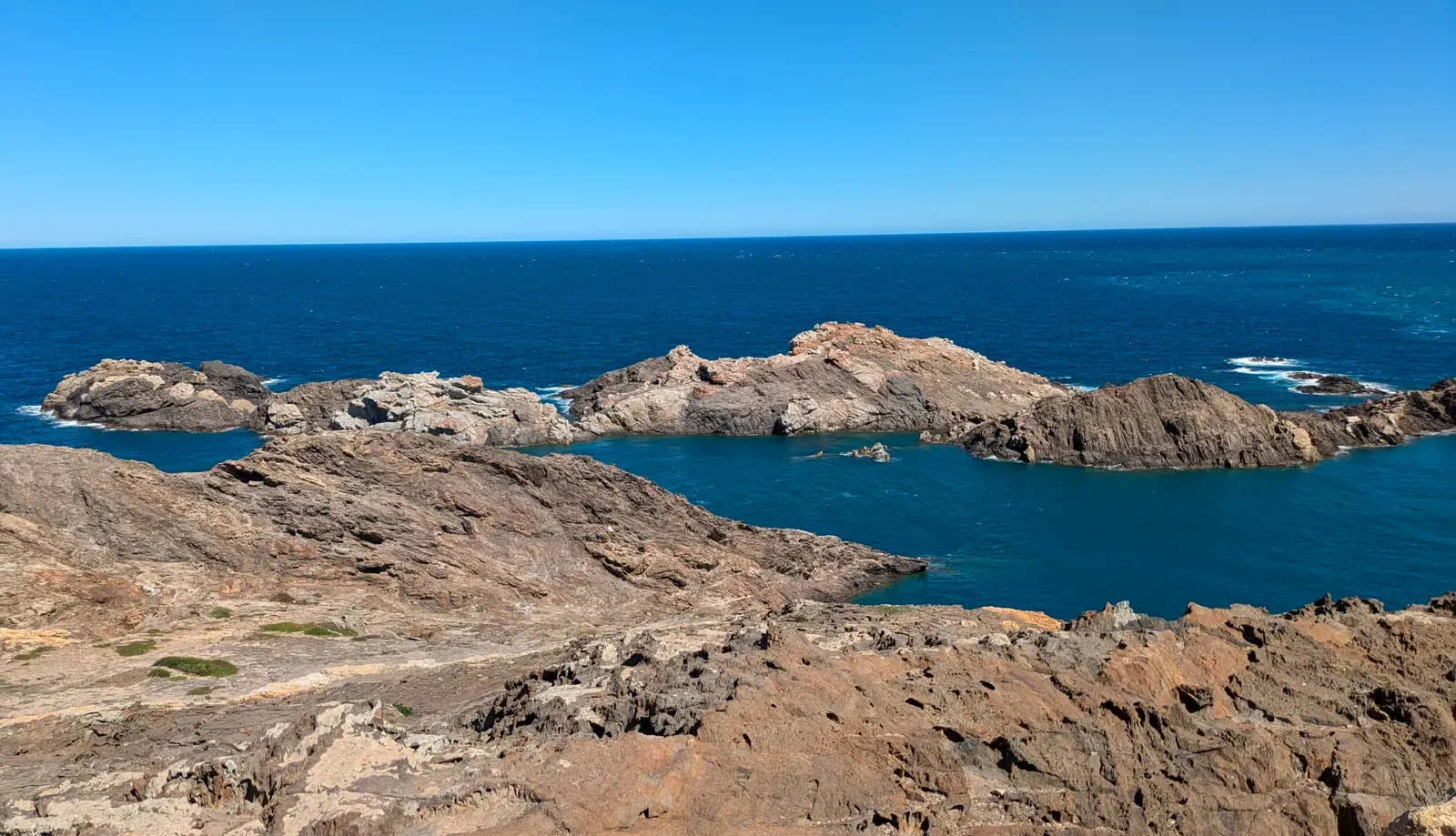
Schist walls, tunnels and red gorgonian fans at the Pyrenees' end
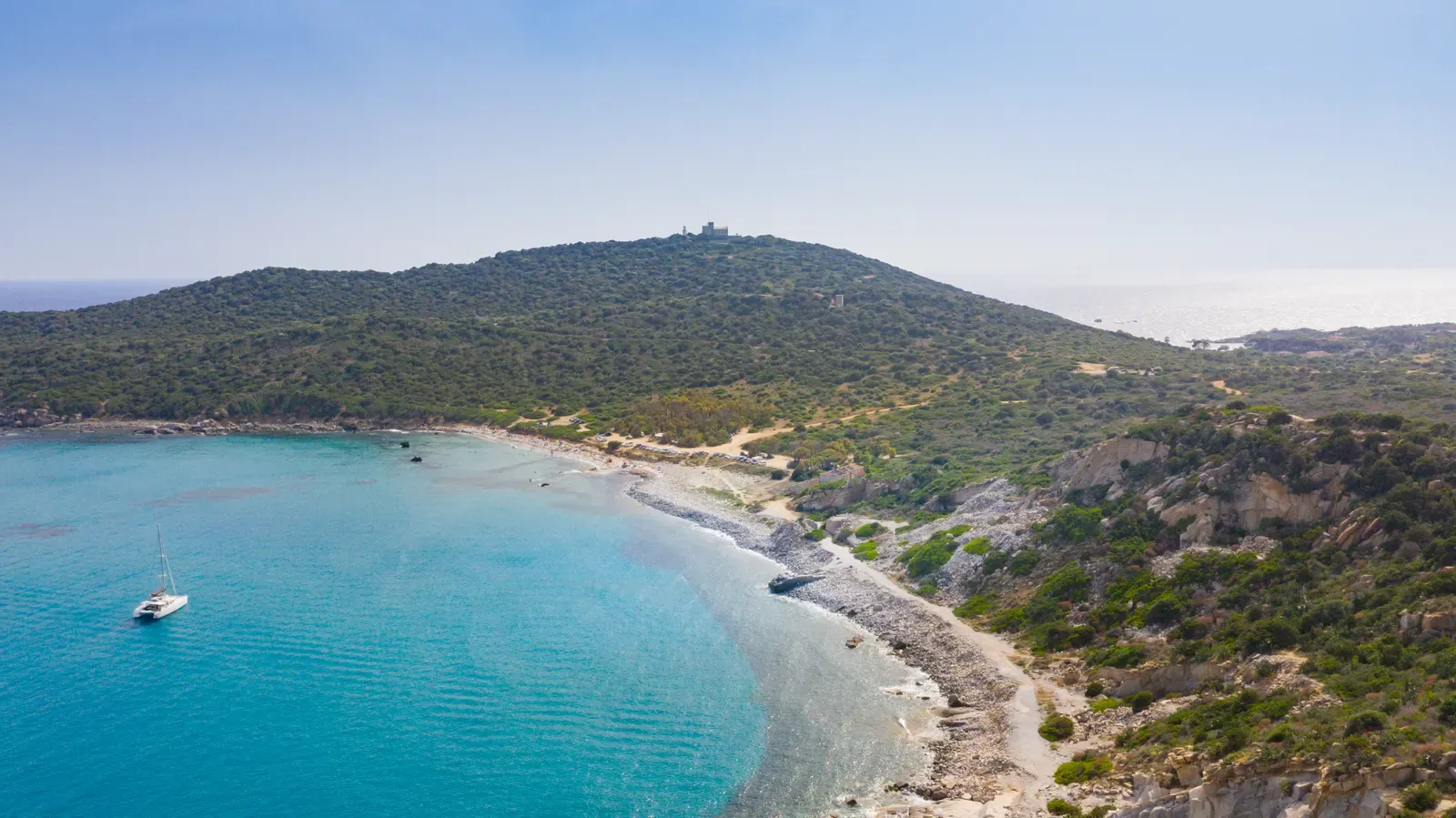
Granite seamounts rising to the surface off Sardinia's south-east corner
Where Cousteau ran the first underwater archaeological dig in 1952


A hot spring vents into the sea off Karaada's caves