Mediterranean · Croatia
Premuda
Limestone chimneys lit from above, and a 1918 battleship at 66 m
Premuda is a thinly populated island in the northern Adriatic with two very different claims on divers. The Cathedral is a complex of vertical limestone chimneys and chambers running from 10 m down past 40, lit through fissures in the roof and generally reckoned the finest cave dive in Croatia. Twelve kilometres offshore lies the battleship SS Szent István, torpedoed in 1918 and filmed as she rolled over; she rests upside down at 66 m and is a technical dive.
About diving in Premuda
Diving here is boat diving and little else. Premuda is thinly populated and carries no resort scene, so divers come out with a centre from the mainland or a neighbouring island, dive two sites in a morning and spend the surface interval anchored in a bay rather than back on land. The sites sit close together along the island's flanks, so running times are short and the day is unhurried, with the weather forecast doing most of the planning.
The Cathedral rewards divers who move slowly. It is less a single cave than a linked set of vertical chimneys and chambers cut into the limestone, running from about 10 m down past 40, and the appeal is the light: beams drop through fissures in the roof and swing as the sun moves, so the same passage reads differently early in the day and at midday. Torch handling and buoyancy matter as much as depth, and centres run it as a cavern dive, with Advanced and cavern training expected.
Away from the cave the diving is classic northern Adriatic rock: limestone falling away in steps and overhangs, sponges and gorgonians on the deeper, colder faces, and cracks worth searching with a torch. Cape Lopata, a headland wall dropping from about 15 m to 40 m, is the natural pairing with the cave and suits divers who like to work one wall properly rather than cover ground. Currents are generally mild, but the exposed outer side picks up when the wind turns.
It is an island for confident intermediate divers rather than newcomers. The best of the cave lies deep enough to eat gas quickly, and the water below the thermocline stays cool well into summer, so an extra layer is normal even in August. Technically trained divers come for one thing only: the battleship Szent István, torpedoed in 1918 and lying inverted at 66 m some twelve kilometres offshore, which is trimix diving arranged through a centre equipped for it. Build in spare days, because the bura can shut the crossing at a few hours' notice.
When to dive Premuda
| Jan | Feb | Mar | Apr | May | Jun | Jul | Aug | Sep | Oct | Nov | Dec |
|---|---|---|---|---|---|---|---|---|---|---|---|
| Off-season | Off-season | Fair | Good | Good | Prime | Prime | Prime | Prime | Good | Fair | Off-season |
Apr–Oct is the season with the clearest water in late summer; the bura closes the exposed offshore wreck at short notice.
Getting there
Most divers fly into Zadar and continue by ferry through the archipelago, or dive Premuda as a day trip with a centre based on the mainland or a neighbouring island. There is no shore diving worth the name, everything runs from a boat, and the offshore wreck needs a settled forecast.
Wildlife calendar
Expect Adriatic residents rather than big animals: dusky groupers holding station under the overhangs, octopus and cuttlefish in the rubble, barracuda off the drop-offs and clouds of small fish through the chimneys. Nudibranchs and other macro reward a slow wall dive. June to September is the settled stretch, with the clearest water in late summer.
Dive types & marine life
- Cave & cavern
- Wall
- Wreck
- Reef
- Groupers
- Octopus & cuttlefish
- Nudibranchs
- Reef fish swarms
- Macro critters
- Barracuda
Notable dive sites in Premuda
Katedrala
The Cathedral — vertical chimneys and chambers from 10 m past 40 m.
SS Szent István
Austro-Hungarian battleship sunk in 1918, inverted at 66 m.
Cape Lopata
Island headland with a wall and overhangs from 15 m to 40 m.
Dive videos
KATEDRALA - PREMUDA, More - HRT · Tomislav Rataj on YouTube
Similar destinations
Granite seamounts rising to the surface off Sardinia's south-east corner
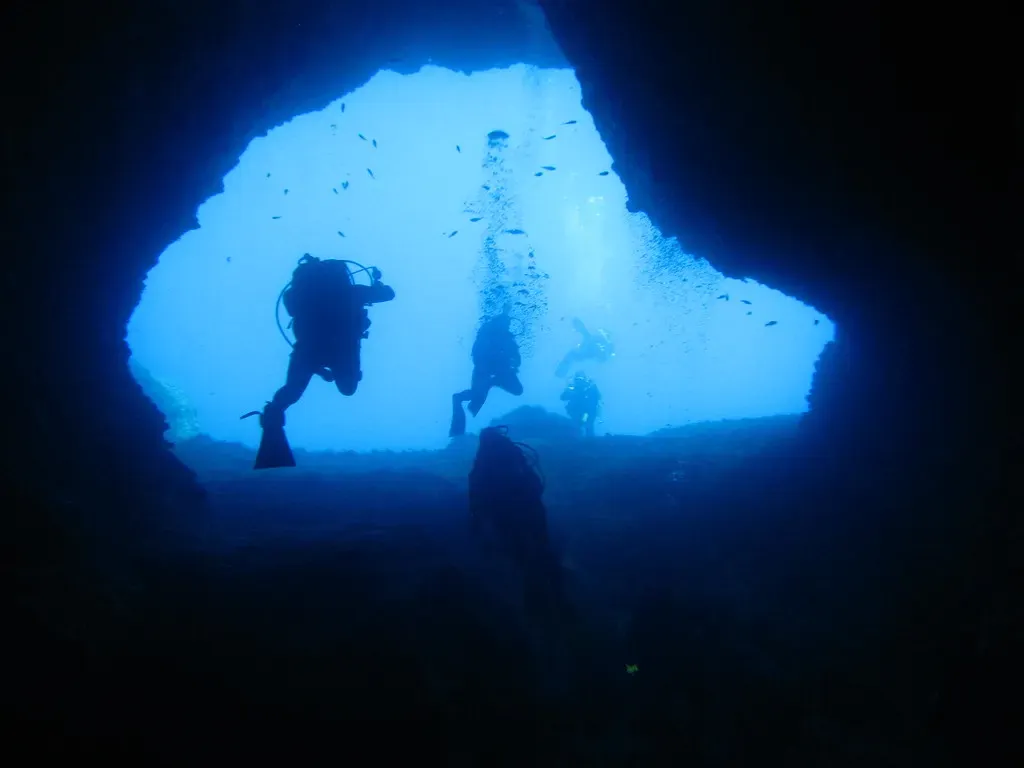
Fossil elephant tusks inside a cave whose entrance is now at 10 m
Where Cousteau ran the first underwater archaeological dig in 1952
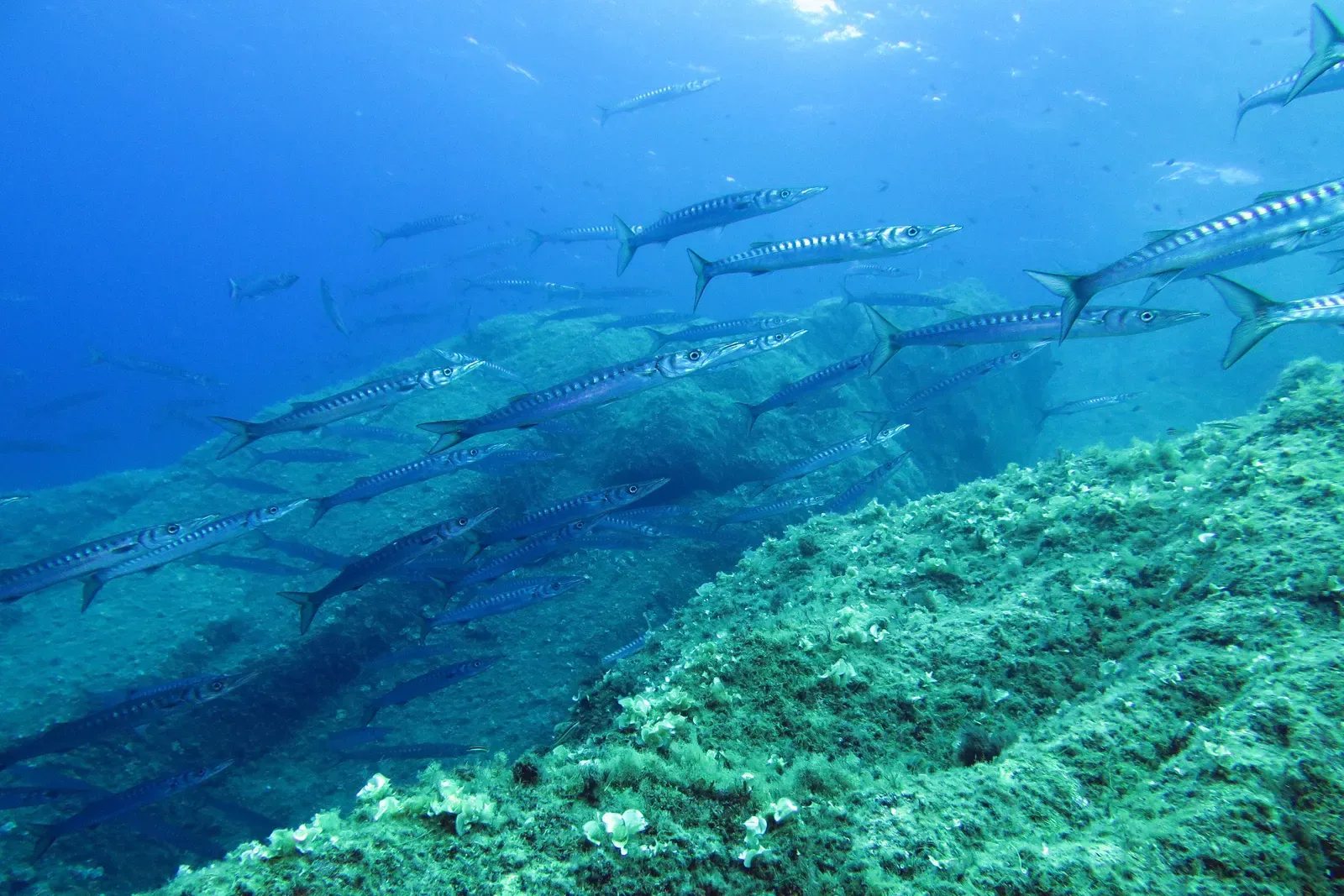
Dozens of dusky groupers hold station on the rock face at La Gabinière