Cold Water · United Kingdom
Scapa Flow
Dive intact WWI German battleships scuttled in 1919
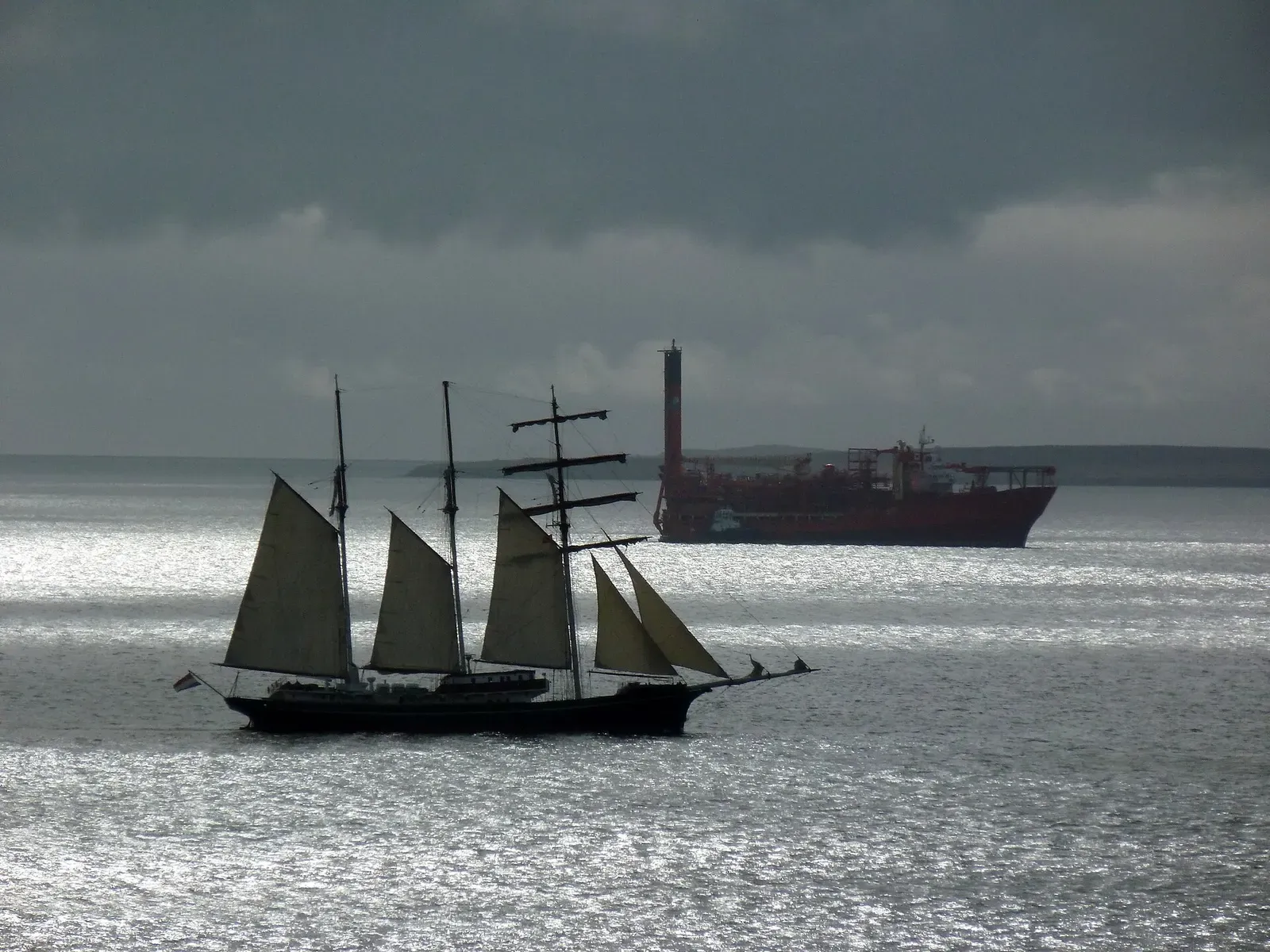
Photo: Derek Mayes · CC BY-SA 2.0
Scapa Flow in Orkney holds the remains of the German High Seas Fleet, scuttled by its own crews in June 1919 after internment following WWI. Most of the 74 ships were later salvaged for scrap, but three battleships and four light cruisers remain on the seabed at depths from about 12 to 45 m, alongside deliberately sunk WWI and WWII blockships. The wrecks are heavily encrusted with plumose anemones and sit in cold, current-swept water reached by day-boat charters out of Stromness and Kirkwall.
About diving in Scapa Flow
Diving works off hard boats out of Stromness, with some charters based in Kirkwall. Most carry a lift, an onboard compressor and bunks, so groups often live aboard for the week rather than book a hotel. The pattern is two dives a day, the deeper one first and something shallower after a long surface interval. Skippers shot the wreck, brief it on the run out, and set the order from tide tables and forecast rather than a fixed weekly schedule. Nitrox is widely available and many regulars dive twinsets or rebreathers.
The ships read very differently depending on how they landed. The three surviving battleships are all König class, and all capsized as they sank, so what you swim is an inverted hull with the armour belt and casemate guns emerging along the flanks: impressive, but hard to make sense of without a guide or several repeat visits. The cruisers settled onto their sides, which leaves decks, gun mounts and rangefinders legible. Salvage crews worked the fleet for decades, mostly between the wars, and the cutting and blasting they left behind is much of what you now swim through.
The Flow's other layer is defensive rather than German. The eastern sounds were closed with sunken blockships and then sealed by the Churchill Barriers, built largely with Italian prisoner-of-war labour after Royal Oak was lost. What sits in Burra Sound lies in hard tidal flow: shallow and straightforward once you are in, dived only in the short slack, and usually the clearest water on the roster. HMS Royal Oak, torpedoed at anchor in October 1939, is a protected war grave and closed to sport diving. Carry a proper torch, because even at midsummer the hulls sit in their own shadow.
This suits divers who came for history and are content with dark water and a great deal of steel. On the battleships the upturned keel sits around 20 m, but the armour belt and guns are down at the seabed, so the detail is the deep part of the dive; the cruisers and the shallow blockships are the forgiving end of the roster. Orkney absorbs weather days well, with Skara Brae, Maeshowe and the Ring of Brodgar a short drive from Stromness, and long northern daylight keeps the summer pace unhurried. Divers after reef life will find little of it.
When to dive Scapa Flow
| Jan | Feb | Mar | Apr | May | Jun | Jul | Aug | Sep | Oct | Nov | Dec |
|---|---|---|---|---|---|---|---|---|---|---|---|
| Off-season | Off-season | Off-season | Fair | Good | Prime | Prime | Prime | Good | Fair | Off-season | Off-season |
Charter boats run most reliably in the calmer, longer-daylight summer months; winter North Sea weather frequently cancels trips.
Getting there
Kirkwall takes flights from Aberdeen, Edinburgh, Glasgow and Inverness. NorthLink runs the Scrabster-Stromness crossing, about ninety minutes, plus an overnight Aberdeen-Kirkwall boat; Pentland Ferries sail Gills Bay to St Margaret's Hope. Stromness is the main dive base, and since most charters include berths aboard, a car is optional.
Wildlife calendar
Grey and common seals are resident and often come down to look at divers. Nudibranchs are easiest to find on shallow plating and hydroid turf in late spring and early summer; pollack and saithe shoal over the hulls through the June-to-August peak, and edible crab and lobster hold in the salvage debris and under loose plate.
Dive types & marine life
- Wreck
- Drift
- Seals & sea lions
- Macro critters
- Nudibranchs
Notable dive sites in Scapa Flow
SMS Markgraf
Battleship resting upside down near 45 m, the deepest of the three.
SMS König
Battleship hull inverted on the seabed, a major deep-wreck attraction.
SMS Köln
Light cruiser lying on its side, accessible in the 12-35 m range.
SMS Dresden
Light cruiser wreck popular for its intact deck features and gun mounts.
Tabarka
Blockship in Burra Sound, a shallower wreck suited to less experienced divers.
Photos from Scapa Flow
George Brown · CC BY-SA 2.0
Dive videos
I Explored Every Wreck in Scapa Flow | Here's What I Found · Deep Wreck Diver on YouTube
The battleship SMS Markgraf at Scapa Flow · Andrew Leng on YouTube
Photo credits
- A gaff-rigged sailing ship crosses Scapa Flow at dusk, silhouetted against silver water with an anchored tanker beyond by Derek Mayes, CC BY-SA 2.0, via Wikimedia Commons
- A grey Atlantic seal rests on a mooring buoy in the calm blue water of Scapa Flow, Orkney by George Brown, CC BY-SA 2.0, via Wikimedia Commons
Similar destinations
Cold Water
Lundy Island
United Kingdom
England's first marine reserve, and its grey seals follow divers around
The Rondo stands almost vertical, stern at 15 m and bow at 50
Four ore carriers torpedoed at their pier in 1942, still lying at 27–40 m


Sweden's only cold-water coral reefs, inside its first marine national park