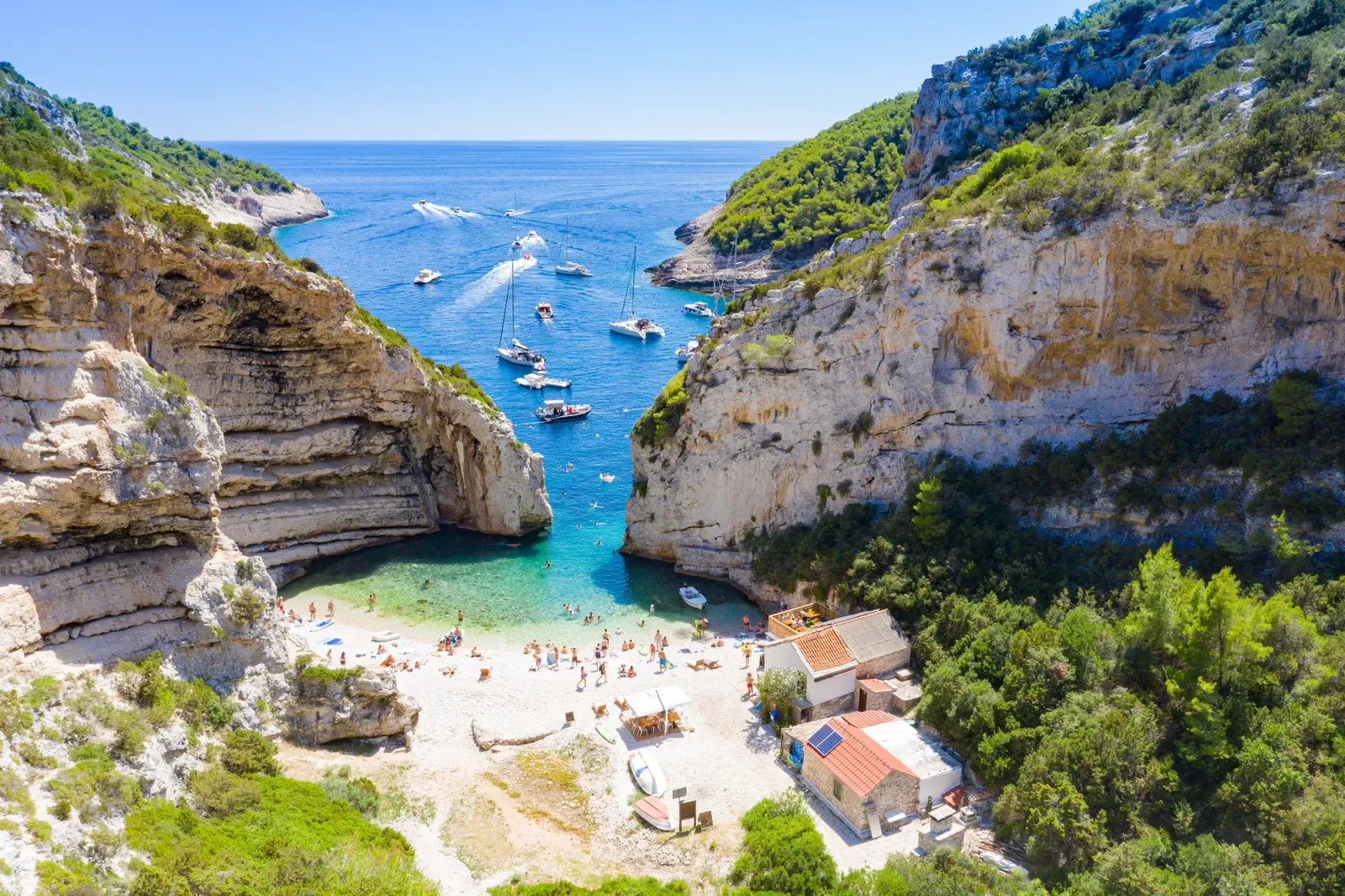
Closed as a Yugoslav military base until 1989, Vis kept its waters undisturbed longer than most of the Adriatic and is now Croatia's wreck-diving capital. The WWII steamship Teti sits at 32 meters, a rare Junkers Ju 87 Stuka dive bomber discovered in 2014 lies remarkably intact, and a B-24 Liberator bomber rests far deeper for technical divers. Zelena Špilja adds an underwater arch and cavern lit by shafts of green light, while dusky grouper, bottlenose dolphins, and summer tuna round out the marine life.
About diving in Vis
Diving Vis is a boat operation out of the island's two harbours, and the day is built around wrecks rather than reefs. Centres typically run one deeper dive on a hull followed by something shallower on rock or in a cavern, with nitrox commonly used to make the profiles work. Some of these wrecks are protected as cultural heritage and are dived with a licensed centre under permit rather than independently, so the plan is agreed before anyone gets in the water.
The seabed around the island is Adriatic karst: pale limestone dropping away in steps and slabs, undercut with arches and caverns, giving way to sand and silt where the wrecks lie. Cool, clean water and mild current have kept them well preserved and the visibility long. The flip side is that the water stays noticeably cooler than the southern Mediterranean, and the season is correspondingly short, running roughly mid-April to mid-October.
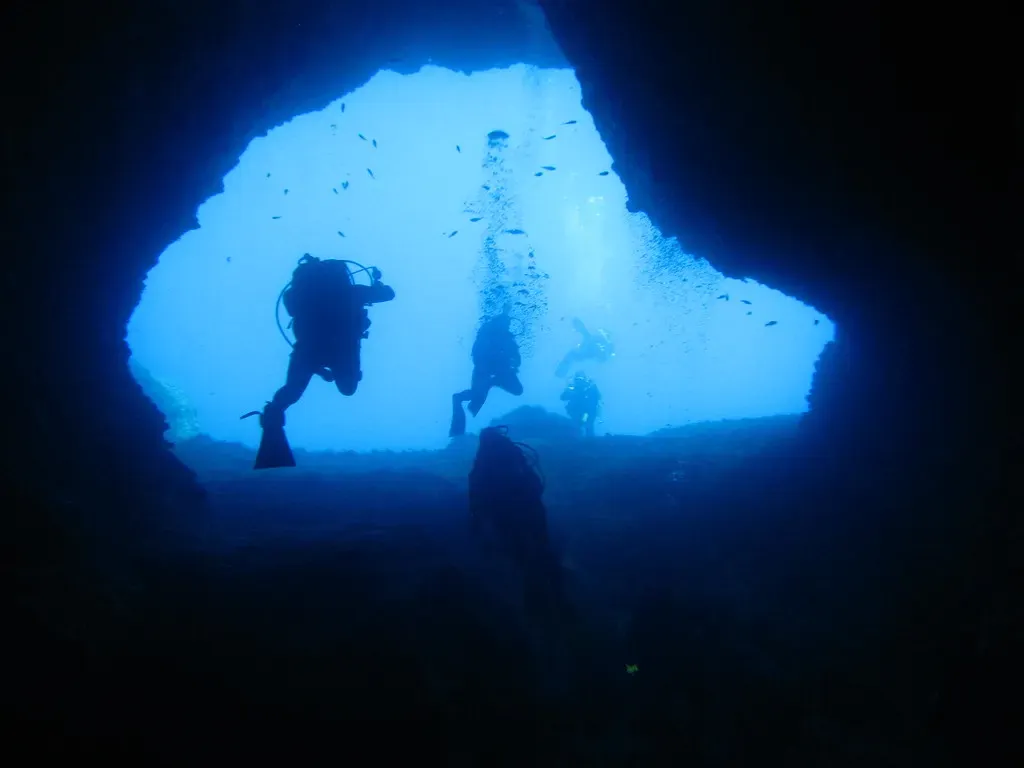
The wrecks carry the trip. The steamship Teti sits at around 32 m and demands a proper plan; a Junkers Ju 87 Stuka found in 2014 lies on the bottom with its shape still legible; and a B-24 Liberator rests deep enough to be firmly technical. Zelena Špilja, the Green Cave, is the counterweight to all that metal — an arch and cavern where the filtered light turns green, which is exactly what gives it its name.
This is a destination for wreck divers who already have depth experience. Advanced Open Water plus a wreck course is a fair minimum, the deepest sites are technical, and good buoyancy matters around silty interiors. Divers after warm water, easy shore entries or heavy fish life will be better served elsewhere in the Mediterranean. Anyone drawn to intact metal, cool clear water and military history is in the right place.
When to dive Vis
| Jan | Feb | Mar | Apr | May | Jun | Jul | Aug | Sep | Oct | Nov | Dec |
|---|---|---|---|---|---|---|---|---|---|---|---|
| Off-season | Off-season | Off-season | Fair | Good | Prime | Prime | Prime | Prime | Good | Off-season | Off-season |
Dive season runs mid-April to mid-October; Jun–Sep gives the warmest water, near 24°C, and calmest conditions for the wreck sites.
Getting there
Split is the mainland gateway, with a catamaran and a car ferry running out to the island. Vis town and Komiža are the two bases and centres in both work the wreck sites. Everything is done by boat, and some Adriatic liveaboards include the island on longer routes.
Wildlife calendar
Marine life is a supporting act to the wrecks: grouper holding in the structure, octopus and cuttlefish on the surrounding rock, nudibranchs in the shade, and tuna passing in open water during the prime June-to-September months. Bottlenose dolphins are an occasional sighting, usually on crossings rather than on dives.
Dive types & marine life
- Wreck
- Cave & cavern
- Reef
- Groupers
- Dolphins
- Tuna
- Octopus & cuttlefish
- Nudibranchs
Notable dive sites in Vis
Teti
WWII Italian steamship at 32 m, one of the Adriatic's finest wreck dives
B-24 Liberator
WWII bomber wreck at extreme depth, a benchmark technical dive
Zelena Špilja
Underwater arch and cavern lit by shafts of green light
Stuka Wreck
WWII dive bomber found in 2014, remarkably well preserved
Dive videos
Wreck Diving a WWII B-17 Flying Fortress with a Rebreather · Divesoft on YouTube
Photo credits
- Steep limestone cliffs and anchored boats around the turquoise water of Stiniva Bay on Vis by dronepicr, CC BY 2.0, via Wikimedia Commons
Similar destinations
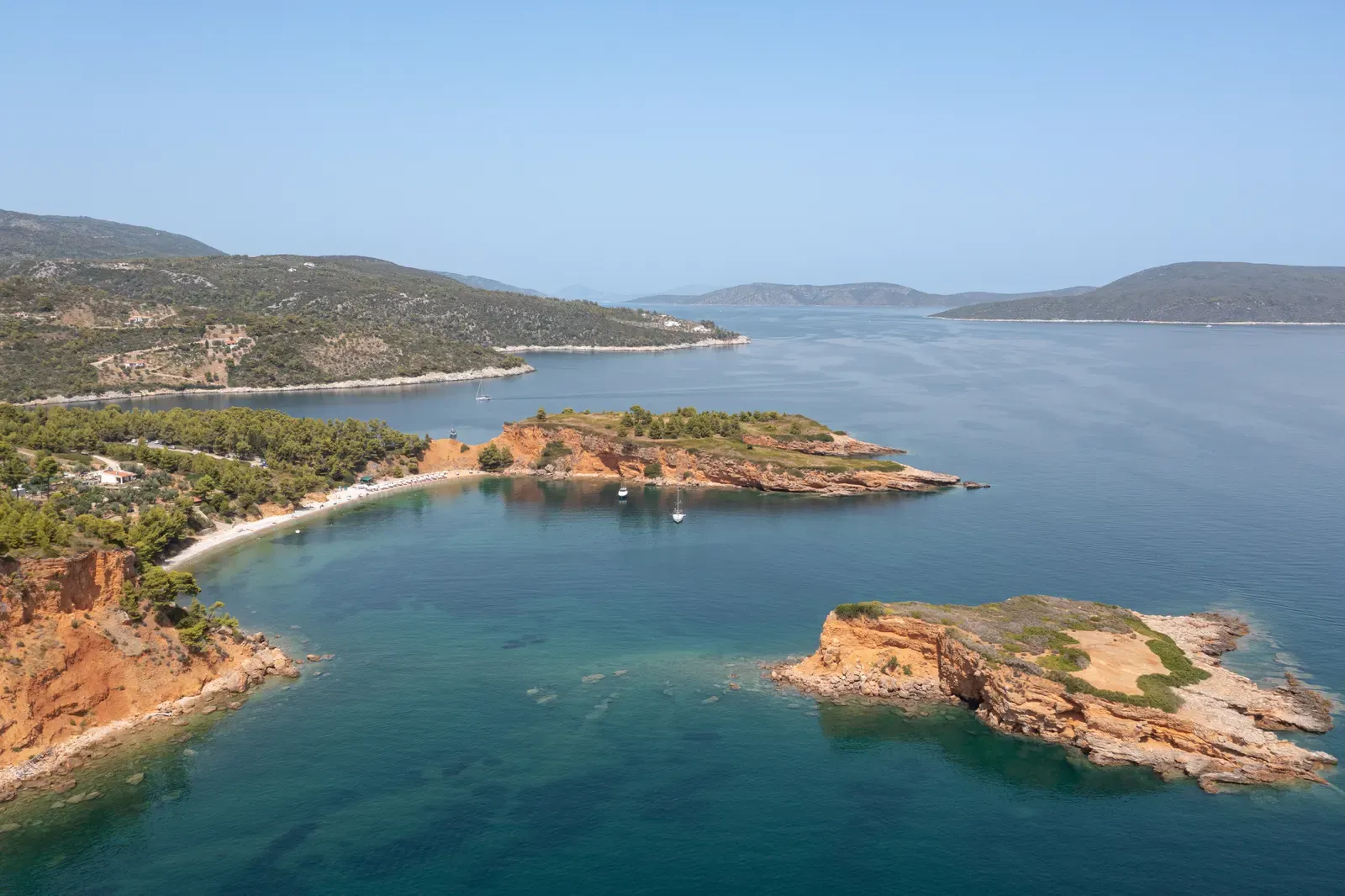
Four thousand Classical amphorae still stacked on the seabed at 25 m
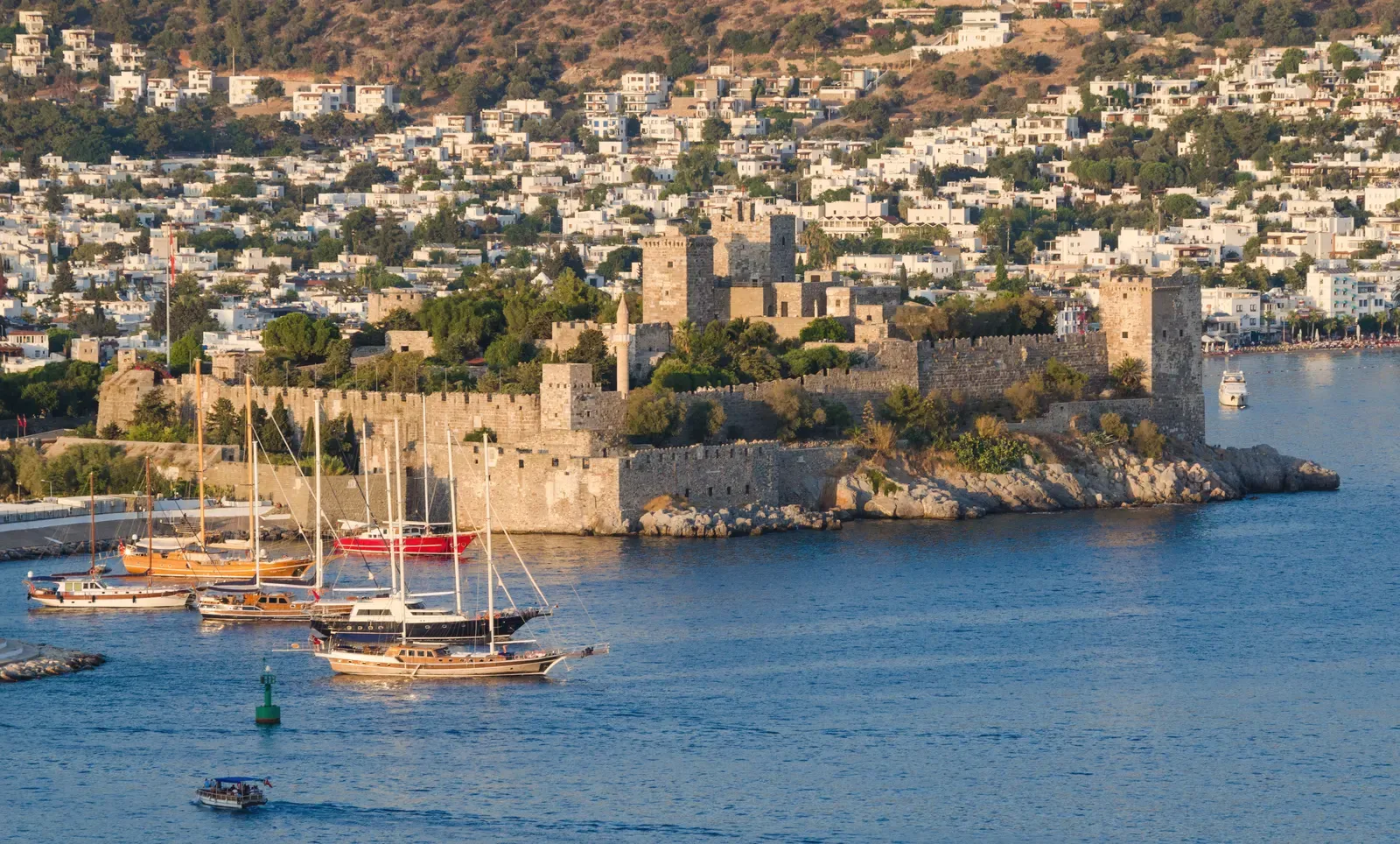
A hot spring vents into the sea off Karaada's caves
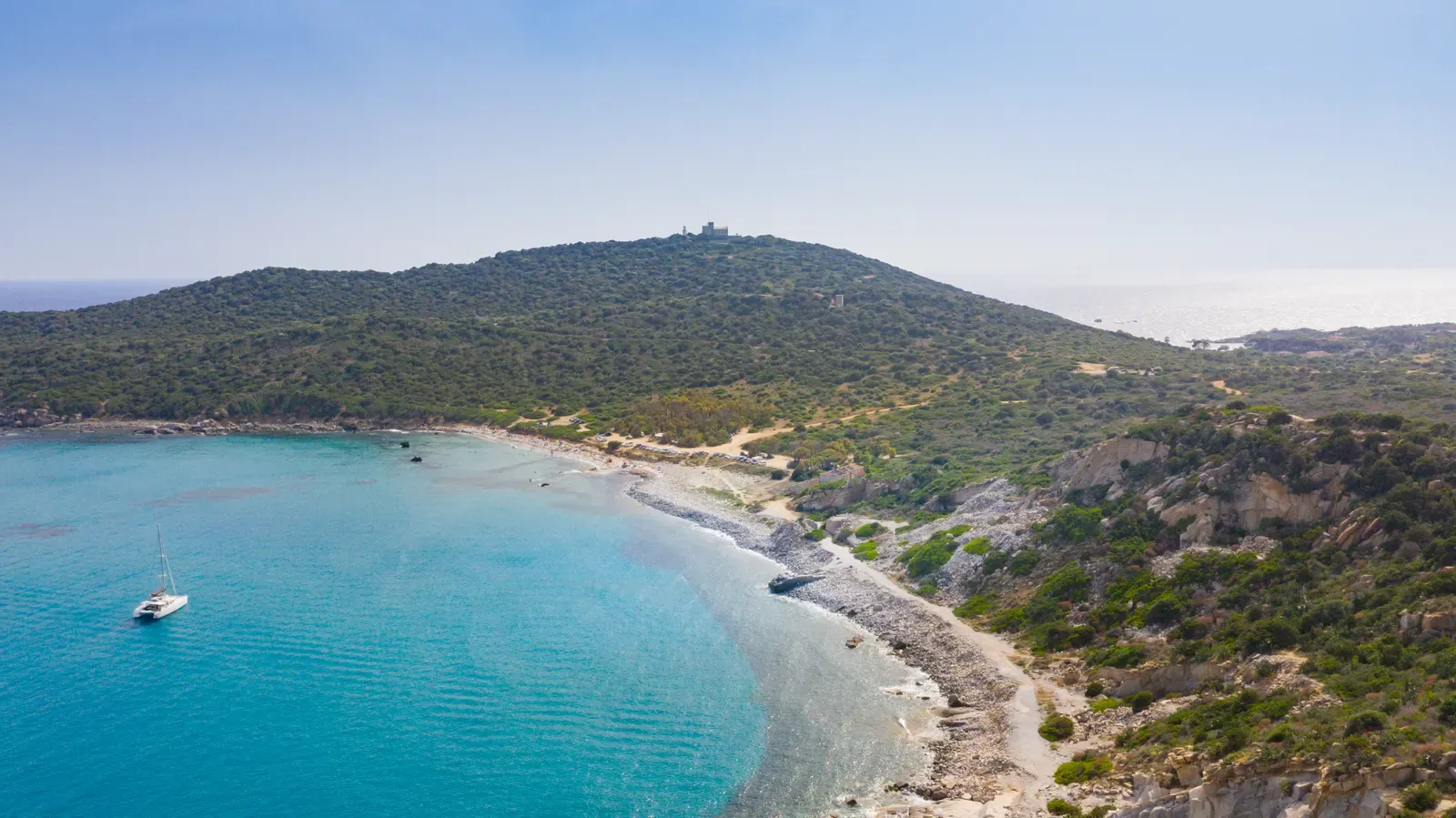
Granite seamounts rising to the surface off Sardinia's south-east corner
.jpg)
Fossil elephant tusks inside a cave whose entrance is now at 10 m